
Managing Plantar Fasciitis: Your Complete Guide to Heel Pain Relief
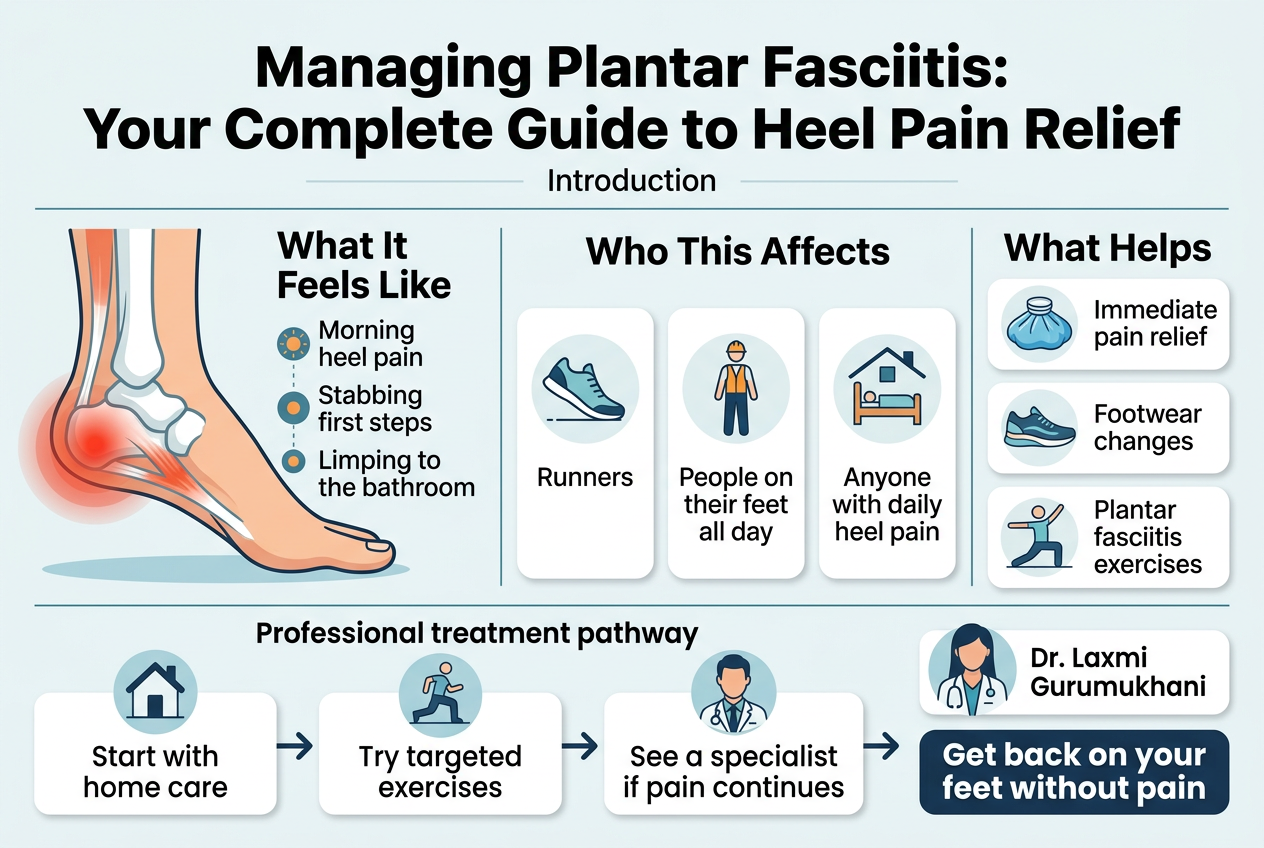
Morning heel pain got you limping to the bathroom every day? You’re dealing with plantar fasciitis, and you’re not alone. This common foot condition affects millions of people who want practical solutions that actually work.
This guide is for anyone struggling with heel pain – whether you’re a runner dealing with sudden onset pain, someone whose job keeps you on your feet all day, or just tired of that stabbing sensation with your first steps each morning.
We’ll walk through immediate pain relief strategies you can start today, plus essential footwear changes that make a real difference in your daily comfort. You’ll also discover targeted plantar fasciitis exercises and professional treatment options, including when it’s time to see a specialist like Dr. Laxmi Gurumukhani for expert plantar fasciitis treatment.
Ready to get back on your feet without pain? Let’s dive into what works for lasting heel pain relief.
Understanding Your Foot Pain Condition
Recognize Early Warning Signs and Symptoms
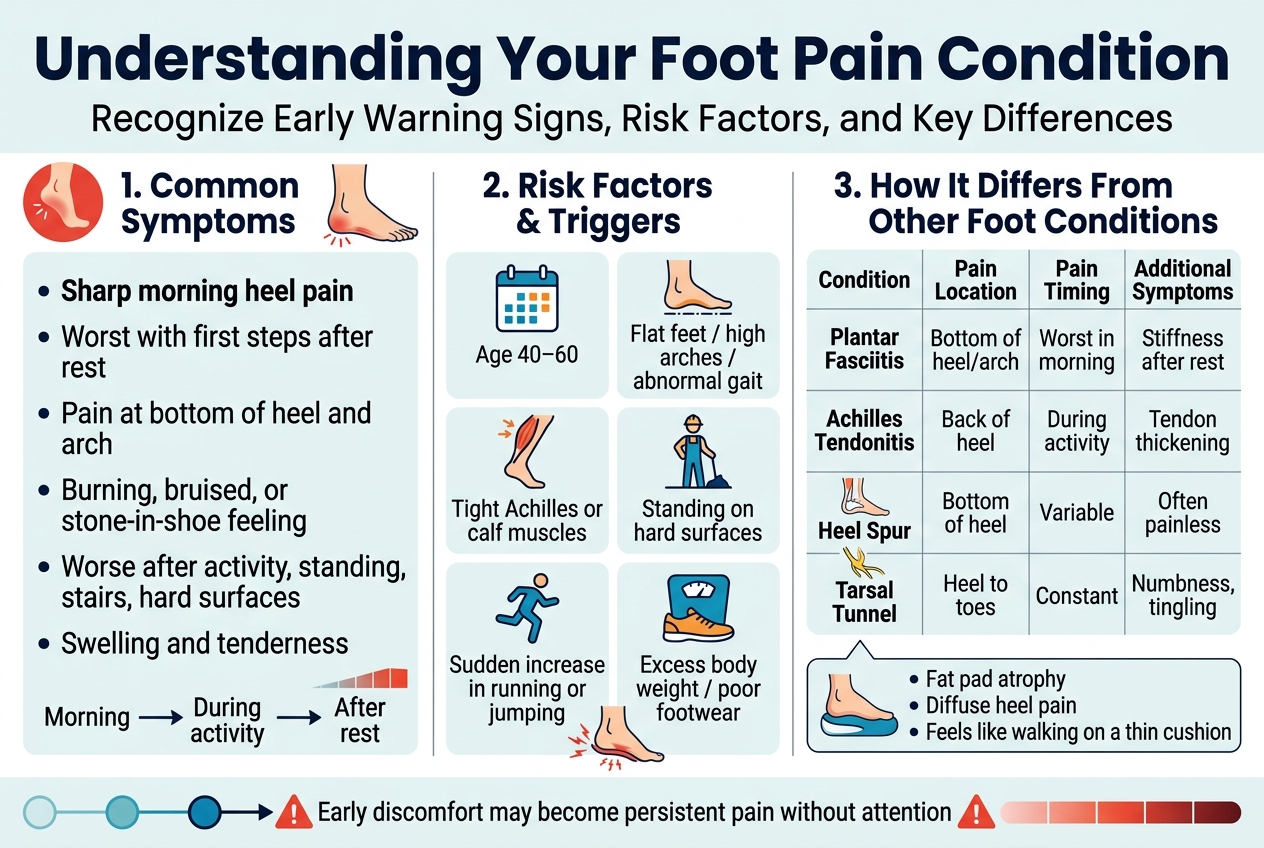
The most telling sign of plantar fasciitis is sharp, stabbing heel pain that strikes hardest during your first steps in the morning. This morning heel pain feels like walking on broken glass and typically eases as you move around, only to return after sitting or lying down for extended periods.
Beyond the classic morning stiffness, watch for pain that develops along the bottom of your foot, particularly near the heel bone. This discomfort often radiates toward your arch and can range from a dull ache to intense burning sensations. Many people describe the feeling as having a stone stuck in their shoe or experiencing deep bruising in the heel area.
Pain typically worsens after physical activity rather than during it. You might feel fine during your morning jog but experience increased discomfort later in the day. Standing for long periods, climbing stairs, or walking on hard surfaces can intensify symptoms. Some people also notice swelling around the heel or increased tenderness when pressing on the bottom of the foot.
The progression of symptoms often follows a predictable pattern. Initial discomfort may seem minor and sporadic, but without proper attention, it can develop into persistent, debilitating pain that affects daily activities like walking, working, or exercising.
Identify Common Risk Factors and Triggers
Several factors increase your likelihood of developing plantar fasciitis, with age being a primary consideration. People between 40 and 60 face the highest risk as the plantar fascia naturally loses elasticity and becomes more prone to tiny tears and inflammation.
Your foot structure plays a significant role in plantar fasciitis development. Flat feet, high arches, or abnormal walking patterns create uneven weight distribution across the foot, placing extra stress on the plantar fascia. People with tight Achilles tendons or calf muscles also face increased risk because this tightness limits ankle flexibility and strains the heel area.
Weight-bearing activities and occupational hazards contribute significantly to heel pain development. Jobs requiring prolonged standing on hard surfaces – like teaching, factory work, or retail – create repetitive stress on the feet. Sudden increases in physical activity, particularly high-impact exercises like running or jumping, can overwhelm the plantar fascia’s capacity to adapt.
Excess body weight compounds these risks by increasing the load on your feet with every step. Poor footwear choices, including worn-out shoes, high heels, or completely flat shoes without arch support, fail to provide adequate cushioning and support for the plantar fascia.
Distinguish Between Plantar Fasciitis and Other Foot Conditions
Plantar fasciitis often gets confused with other foot problems, but specific characteristics help differentiate it from similar conditions. Unlike Achilles tendonitis, which causes pain at the back of the heel and along the tendon, plantar fasciitis pain concentrates on the bottom of the heel and arch area.
Heel spurs frequently accompany plantar fasciitis but aren’t always the pain source. While heel spur treatment may be discussed alongside plantar fasciitis treatment, the sharp pain typically comes from the inflamed plantar fascia rather than the bony growth itself. X-rays can reveal heel spurs, but their presence doesn’t automatically indicate they’re causing your discomfort.
Tarsal tunnel syndrome mimics plantar fasciitis but includes numbness, tingling, or burning sensations that extend into the toes. This condition involves nerve compression rather than fascia inflammation. Stress fractures in the heel bone cause constant, throbbing pain that worsens with any weight-bearing activity, unlike plantar fasciitis pain that often improves with movement.
| Condition | Pain Location | Pain Timing | Additional Symptoms |
|---|---|---|---|
| Plantar Fasciitis | Bottom of heel/arch | Worst in morning | Stiffness after rest |
| Achilles Tendonitis | Back of heel | During activity | Tendon thickening |
| Heel Spur | Bottom of heel | Variable | Often painless |
| Tarsal Tunnel | Heel to toes | Constant | Numbness, tingling |
Fat pad atrophy, common in older adults, causes diffuse heel pain that feels like walking on a thin cushion. This condition lacks the sharp, localized pain characteristic of plantar fasciitis and doesn’t show the typical morning stiffness pattern.
Immediate Pain Relief Strategies
Apply Ice Therapy for Acute Inflammation
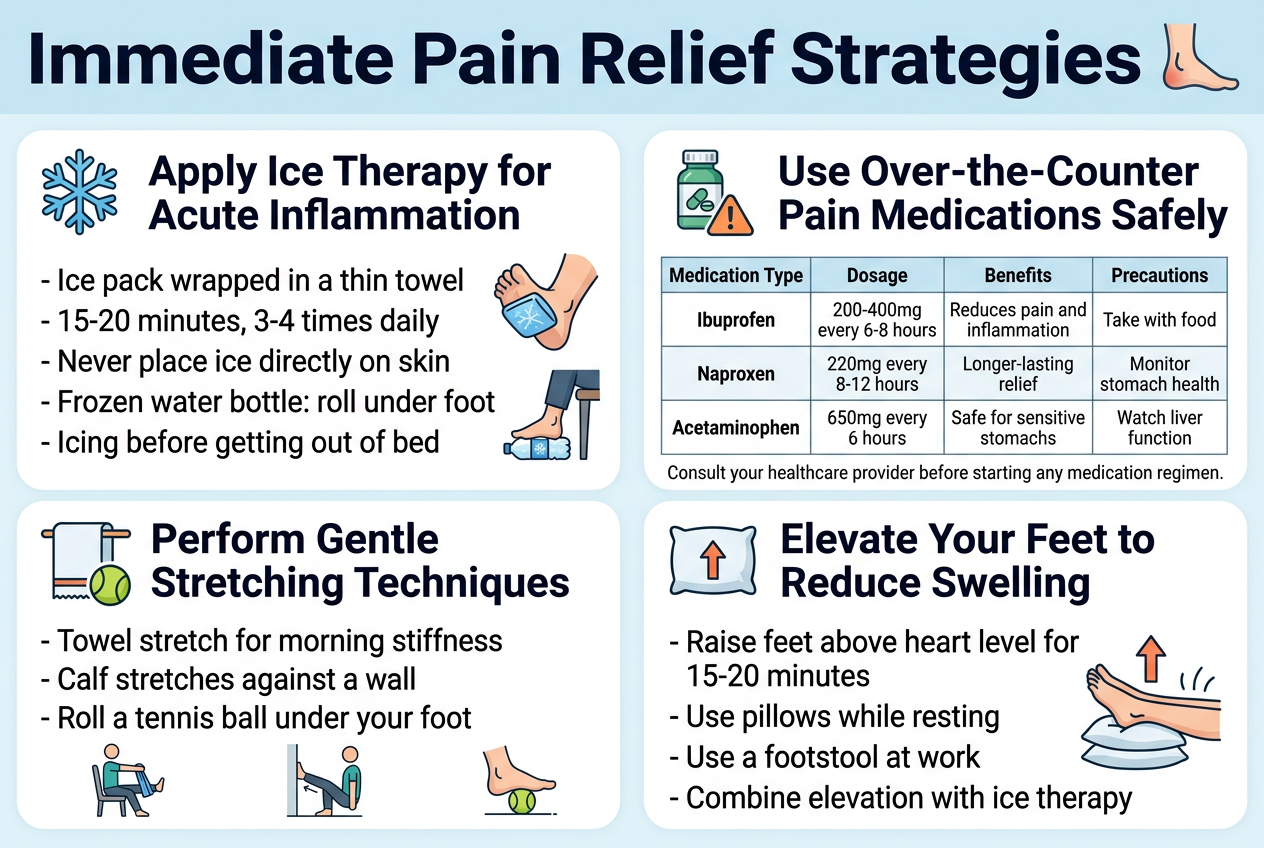
Cold therapy works wonders for reducing inflammation and numbing heel pain relief when plantar fasciitis flares up. Apply an ice pack wrapped in a thin towel to the bottom of your foot for 15-20 minutes, 3-4 times daily. Never place ice directly on your skin to avoid frostbite.
A frozen water bottle makes an excellent alternative – roll it under your foot while sitting, combining ice therapy with gentle massage. This technique helps break up scar tissue while providing cooling relief. For morning heel pain, try icing your feet before getting out of bed to reduce that first-step agony.
Use Over-the-Counter Pain Medications Safely
Non-steroidal anti-inflammatory drugs (NSAIDs) like ibuprofen and naproxen reduce both pain and inflammation associated with plantar fasciitis treatment. Follow dosing instructions carefully and take with food to prevent stomach irritation.
Acetaminophen offers pain relief without anti-inflammatory properties, making it suitable for those who can’t tolerate NSAIDs. Always consult your healthcare provider before starting any medication regimen, especially if you have existing health conditions or take other medications.
| Medication Type | Dosage | Benefits | Precautions |
|---|---|---|---|
| Ibuprofen | 200-400mg every 6-8 hours | Reduces pain and inflammation | Take with food |
| Naproxen | 220mg every 8-12 hours | Longer-lasting relief | Monitor stomach health |
| Acetaminophen | 650mg every 6 hours | Safe for sensitive stomachs | Watch liver function |
Perform Gentle Stretching Techniques
Simple plantar fasciitis exercises can provide immediate relief while preventing future flare-ups. The towel stretch works perfectly for morning stiffness – sit on your bed with a towel looped around the ball of your foot, gently pulling your toes toward your shin.
Calf stretches target tight muscles that contribute to plantar fascia tension. Stand arm’s length from a wall, place your hands flat against it, and step your affected foot back. Keep your heel down while leaning forward to stretch your calf muscle.
Rolling a tennis ball under your foot provides targeted pressure to tight spots in the plantar fascia. Apply gentle pressure while rolling from heel to toe, spending extra time on tender areas.
Elevate Your Feet to Reduce Swelling
Elevation helps gravity drain excess fluid from inflamed tissues, reducing swelling and pressure on the plantar fascia. Raise your feet above heart level for 15-20 minutes several times throughout the day.
Use pillows to prop your feet up while watching TV or reading. At work, place a footstool under your desk to keep feet elevated during breaks. This simple technique works especially well after long periods of standing or walking that aggravate foot pain.
Combine elevation with ice therapy for maximum benefit – the cold reduces inflammation while elevation promotes drainage of inflammatory fluids from the affected area.
Essential Footwear and Support Solutions
Choose Proper Athletic and Daily Shoes
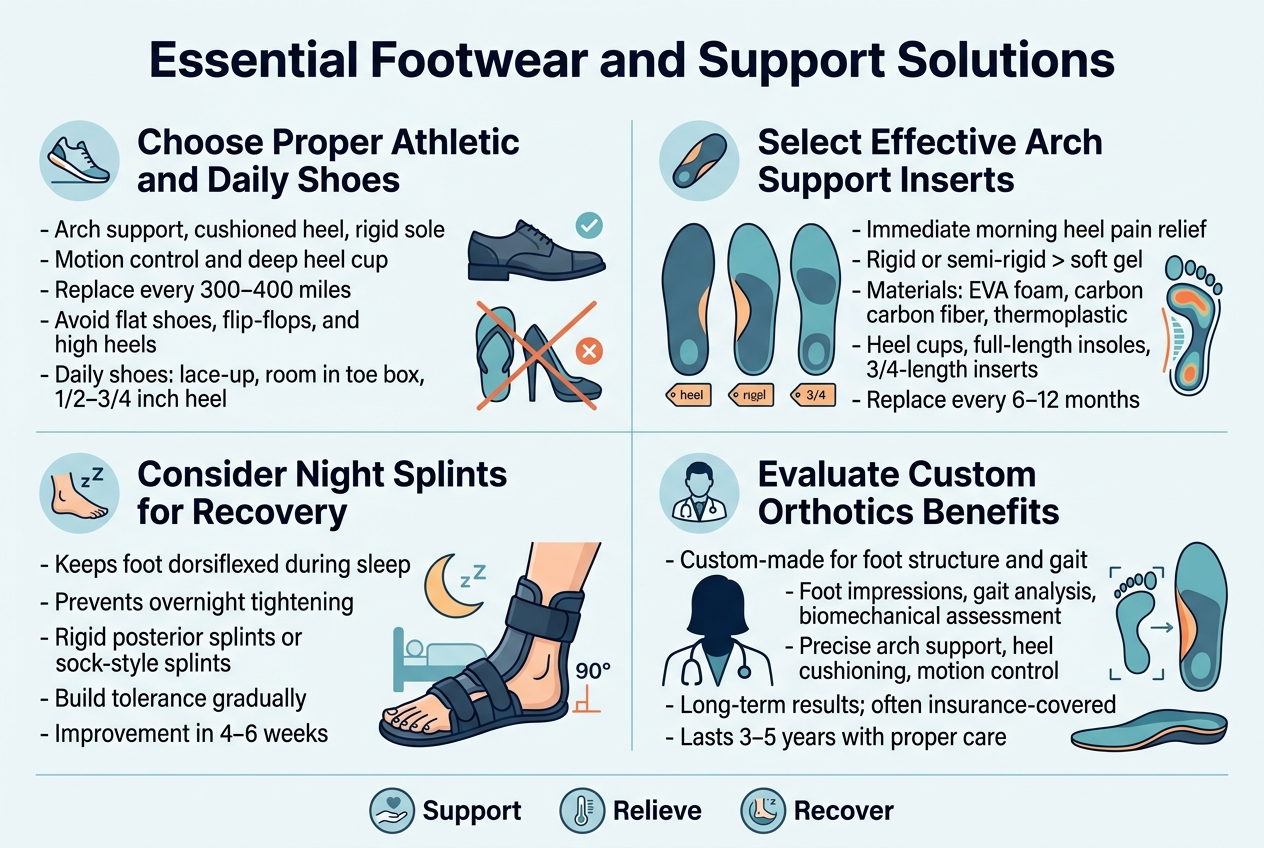
Your choice of footwear plays a critical role in plantar fasciitis treatment and heel pain relief. Well-designed shoes provide the foundation your feet need to heal and prevent further injury. Look for shoes with excellent arch support, cushioned heel areas, and rigid sole construction that prevents excessive foot flexing.
Athletic shoes should feature motion control technology and deep heel cups that cradle your foot properly. Replace running or walking shoes every 300-400 miles, as worn-out soles lose their shock-absorbing properties. Avoid flat shoes, flip-flops, and high heels, which place excessive strain on your plantar fascia.
For daily wear, choose leather or synthetic shoes with lace-up closures that allow proper fit adjustment. The toe box should provide adequate room without being too loose. Many people find relief by selecting shoes with a slight heel elevation (1/2 to 3/4 inch) rather than completely flat soles.
Select Effective Arch Support Inserts
Over-the-counter arch support inserts can provide immediate morning heel pain relief when custom orthotics aren’t available. These inserts work by redistributing pressure across your foot and supporting the plantar fascia during weight-bearing activities.
Rigid or semi-rigid inserts typically offer better support than soft gel versions for plantar fasciitis treatment. Look for inserts made from materials like EVA foam, carbon fiber, or thermoplastic that maintain their shape under body weight. The insert should match your foot type – high arches need different support than flat feet.
Popular options include heel cups that specifically target heel pain, full-length insoles that provide comprehensive support, and 3/4-length inserts that fit in most shoe types. Replace inserts every 6-12 months depending on usage, as they lose effectiveness over time.
Consider Night Splints for Recovery
Night splints represent one of the most effective conservative treatments for plantar fasciitis. These devices maintain your foot in a dorsiflexed position while sleeping, preventing the plantar fascia from tightening overnight and reducing morning heel pain.
Two main types exist: rigid posterior splints that extend up the back of your leg, and more comfortable sock-style splints that provide gentler stretching. Most people tolerate the sock-style versions better for long-term use, though rigid splints may provide faster initial results.
Start wearing night splints for short periods to build tolerance, gradually increasing to full nights. Most people experience significant improvement within 4-6 weeks of consistent use. The key is maintaining proper ankle positioning at approximately 90 degrees throughout sleep.
Evaluate Custom Orthotics Benefits
Custom orthotics from a qualified professional represent the gold standard for foot pain physiotherapy support. Unlike over-the-counter options, these devices are crafted specifically for your foot structure, gait pattern, and condition severity.
A qualified physiotherapist or podiatrist creates custom orthotics through detailed foot impressions, gait analysis, and biomechanical assessment. The resulting devices provide precise arch support, heel cushioning, and motion control tailored to your needs. Materials range from rigid thermoplastics for maximum control to softer accommodative materials for comfort.
While custom orthotics require higher initial investment, they often provide superior long-term results compared to generic inserts. Most insurance plans cover custom orthotics when prescribed for medical conditions like plantar fasciitis. The devices typically last 3-5 years with proper care, making them cost-effective over time.
Professional fitting ensures optimal positioning and comfort, with follow-up adjustments as needed during the healing process.
Targeted Exercises and Stretching Routines
Master Morning Foot Stretches
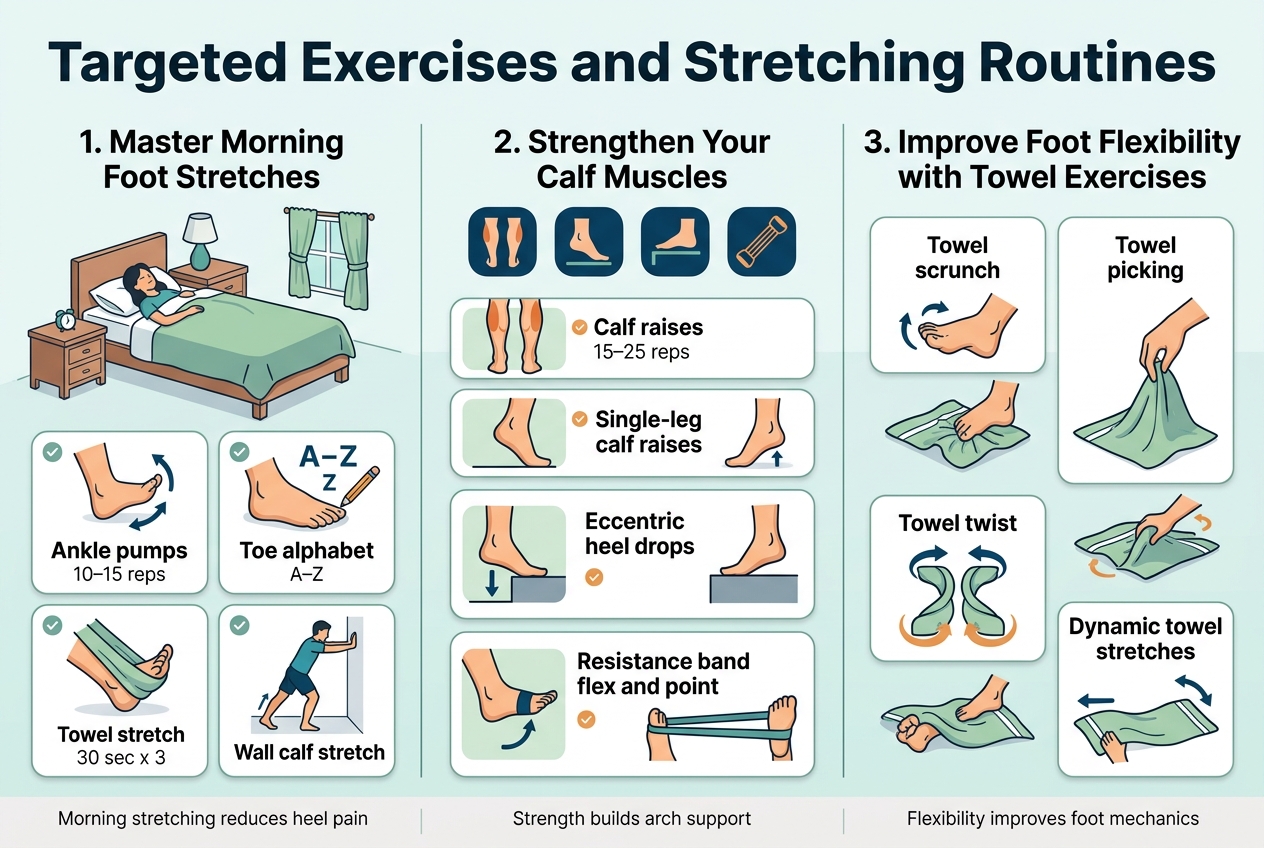
Morning heel pain strikes hardest when you take those first steps out of bed. Your plantar fascia tightens overnight, making that initial contact with the floor feel like stepping on broken glass. The key to reducing this morning heel pain lies in gentle stretching before you even stand up.
Start with ankle pumps while still lying in bed. Point your toes toward the ceiling, then flex them back toward your shin. Repeat this motion 10-15 times to wake up your foot muscles gradually. Next, perform alphabet draws with your toes – simply trace the letters A through Z in the air using your big toe as a pencil. This movement activates multiple muscle groups and improves circulation.
The towel stretch works wonders for plantar fasciitis treatment. Keep a towel by your bedside and loop it around the ball of your foot while your leg extends straight. Gently pull the towel toward you, feeling the stretch along your calf and the bottom of your foot. Hold for 30 seconds and repeat three times on each foot.
Standing calf stretches against your bedroom wall complete your morning routine. Place your hands flat against the wall, step your affected foot back about three feet, and lean forward while keeping your heel on the ground. This targets the gastrocnemius muscle, which directly impacts plantar fascia tension.
Strengthen Your Calf Muscles
Weak calf muscles often contribute to plantar fasciitis by failing to support your foot’s natural arch properly. Building strength in these muscles creates a stable foundation that reduces stress on your plantar fascia during daily activities.
Calf raises represent the gold standard for strengthening these crucial muscles. Stand with your feet hip-width apart, slowly rise onto your toes, hold for three seconds, then lower back down with control. Start with 15 repetitions and gradually increase to 25 as your strength improves. For added challenge, perform single-leg calf raises or hold dumbbells.
Eccentric heel drops provide exceptional benefits for heel pain relief. Stand on a step with just the balls of your feet on the edge, allowing your heels to hang off. Slowly lower your heels below the step level, feeling a deep stretch in your calves. Use your opposite foot to push back to the starting position, then repeat the controlled lowering motion. This exercise specifically targets the Achilles tendon and calf muscle connection.
Resistance band exercises add variety and progressive overload to your routine. Sit with your legs extended and loop a resistance band around the ball of your foot. Point your toes against the band’s resistance, then slowly flex them back. This movement pattern strengthens both your calf muscles and the small stabilizing muscles in your feet.
Improve Foot Flexibility with Towel Exercises
Towel exercises offer incredible versatility for plantar fasciitis exercises while requiring minimal equipment. These movements target specific areas that traditional stretching often misses, making them essential components of any comprehensive foot pain physiotherapy program.
The towel scrunch exercise builds strength in your foot’s intrinsic muscles. Place a small towel flat on the floor and use only your toes to scrunch it toward you. Perform 10-15 repetitions, focusing on using your toes rather than your whole foot. Add marbles or small objects to the towel for increased difficulty as you progress.
Towel picking challenges your toe dexterity and arch support muscles. Spread a towel on the floor and practice picking it up using only your toes, then transferring it from one foot to the other. This exercise improves coordination while strengthening the muscles responsible for maintaining your foot’s arch structure.
The towel twist exercise targets rotational flexibility often overlooked in basic stretching routines. Sit in a chair with a towel under your affected foot. Use your foot to twist the towel clockwise and counterclockwise, engaging muscles throughout your foot and ankle. This movement pattern helps restore normal foot mechanics and reduces compensatory movement patterns that can perpetuate plantar fasciitis symptoms.
Dynamic towel stretches combine flexibility work with functional movement. Place the towel under your foot and perform pointing and flexing motions while maintaining tension on the towel. This creates active stretching that better prepares your foot for weight-bearing activities than passive stretching alone.
Professional Treatment Options
Physical Therapy Benefits and Techniques
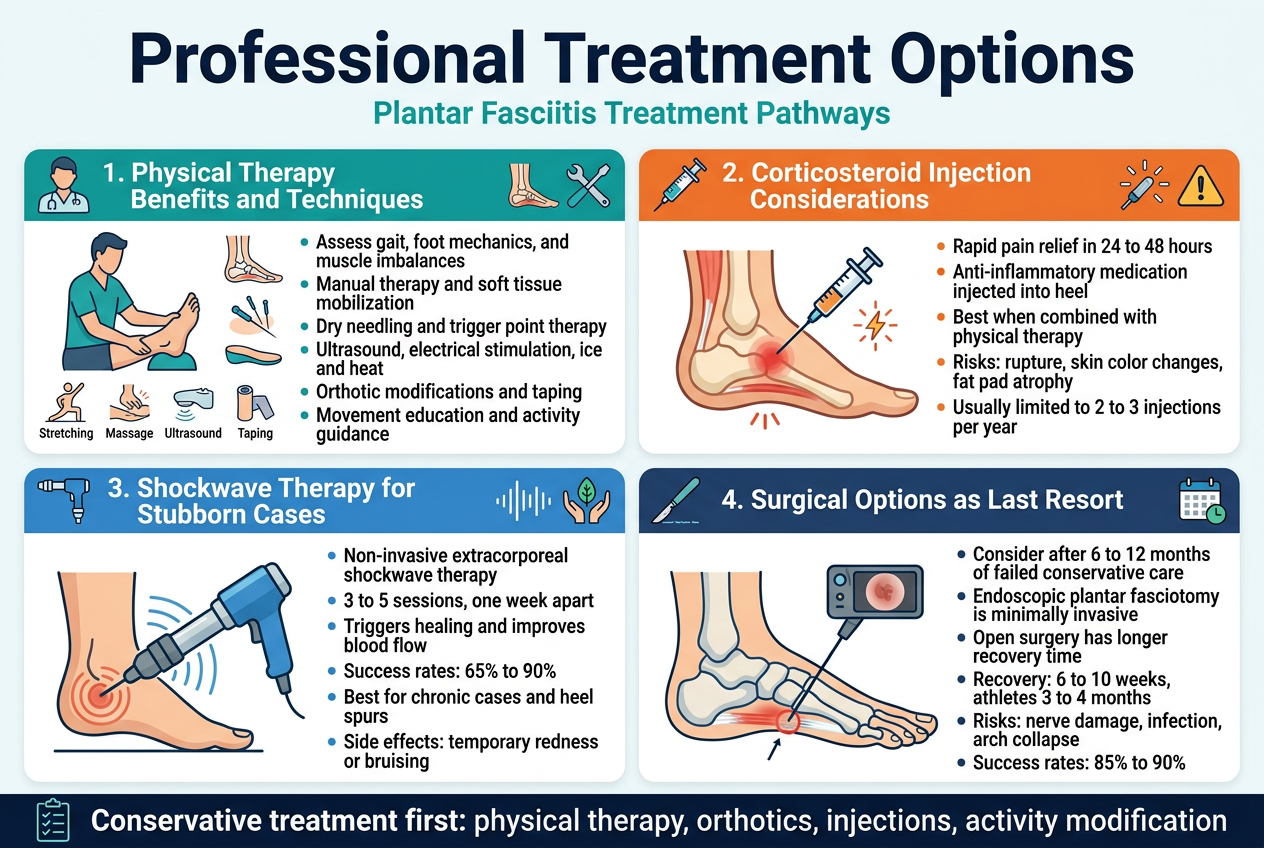
Working with a qualified physiotherapist offers the most comprehensive approach to plantar fasciitis treatment. Physical therapy goes beyond basic stretching to address biomechanical issues that contribute to your heel pain. A skilled physiotherapist will assess your gait, foot mechanics, and muscle imbalances to create a personalized treatment plan.
Manual therapy techniques like soft tissue mobilization and joint manipulation help restore normal foot movement patterns. Your therapist might use specialized tools for instrument-assisted soft tissue mobilization, breaking down scar tissue in the plantar fascia. Dry needling and trigger point therapy target specific muscle knots that refer pain to your heel.
Therapeutic modalities such as ultrasound, electrical stimulation, and ice/heat therapy accelerate healing and provide immediate pain relief. These treatments increase blood flow to the affected area and reduce inflammation. Your physiotherapist will also teach you proper taping techniques and recommend orthotic modifications tailored to your specific foot structure.
The real value lies in learning movement patterns that prevent future episodes. A good physiotherapist educates you about activities to avoid during acute phases and gradually reintroduces high-impact exercises as your condition improves.
Corticosteroid Injection Considerations
Corticosteroid injections offer rapid pain relief for severe plantar fasciitis cases that don’t respond to conservative treatment. These injections deliver powerful anti-inflammatory medication directly to the inflamed plantar fascia, providing relief that can last several months.
The procedure involves injecting a corticosteroid, typically combined with a local anesthetic, into the most tender area of your heel. Most patients experience significant pain reduction within 24-48 hours. The anti-inflammatory effect helps break the cycle of pain and inflammation that keeps your condition active.
However, these injections aren’t without risks. Repeated corticosteroid injections can weaken the plantar fascia, potentially leading to rupture. This complication, while rare, can cause worse long-term problems than the original condition. Most healthcare providers limit patients to two or three injections per year.
Side effects might include temporary increased pain at the injection site, skin color changes, or fat pad atrophy under the heel. The injection itself can be quite painful, though the discomfort typically subsides quickly. Some patients experience a temporary increase in blood sugar levels, particularly those with diabetes.
Timing matters with corticosteroid injections. They work best when combined with other treatments like physical therapy and activity modification, not as standalone solutions.
Shockwave Therapy for Stubborn Cases
Extracorporeal shockwave therapy (ESWT) represents a breakthrough treatment for chronic plantar fasciitis that hasn’t responded to traditional methods. This non-invasive procedure uses high-energy sound waves to stimulate healing in damaged tissue and break up calcific deposits.
The treatment works by creating controlled micro-trauma in the plantar fascia, triggering your body’s natural healing response. This process increases blood flow to the area, promotes new blood vessel formation, and helps dissolve calcium buildups that contribute to heel spurs. Most patients require three to five sessions scheduled one week apart.
During treatment, a specialized device delivers focused shockwaves to the exact location of your pain. Sessions typically last 15-20 minutes, and while some discomfort occurs during the procedure, it’s generally well-tolerated. Many patients notice improvement within a few weeks, with continued progress over several months.
Success rates for shockwave therapy range from 65-90%, making it an excellent option before considering surgery. The treatment works particularly well for patients with heel spurs or chronic cases lasting more than six months. Side effects are minimal, usually limited to temporary redness or minor bruising at the treatment site.
Not everyone qualifies for shockwave therapy. Pregnant women, patients with blood clotting disorders, or those taking certain medications may not be candidates for this treatment.
Surgical Options as Last Resort
Surgery becomes necessary when conservative treatments fail after 6-12 months of consistent effort. Plantar fascia release surgery aims to reduce tension in the plantar fascia by partially cutting the ligament, allowing it to lengthen and reduce stress on the heel bone attachment.
The most common procedure is endoscopic plantar fasciotomy, performed through small incisions using a tiny camera for guidance. This minimally invasive approach reduces recovery time and surgical risks compared to open surgery. Surgeons cut approximately 50% of the plantar fascia fibers, leaving enough intact tissue to maintain foot arch support.
Traditional open surgery involves a larger incision and direct visualization of the plantar fascia. While this approach allows for more precise tissue removal and treatment of heel spurs, it requires longer recovery periods and carries higher complication risks.
Recovery typically takes 6-10 weeks for return to normal activities, with athletes requiring 3-4 months before resuming full sports participation. Physical therapy starts within days of surgery to prevent scar tissue formation and maintain ankle mobility.
Surgical risks include nerve damage, infection, arch collapse, and incomplete pain relief. Some patients develop chronic pain or require additional procedures. Success rates hover around 85-90%, but the irreversible nature of surgery makes it truly a last resort option.
Most surgeons require documented failure of conservative treatment, including physical therapy, orthotics, injections, and activity modification, before recommending surgical intervention.
Lifestyle Modifications for Long-Term Success
Maintain Healthy Body Weight
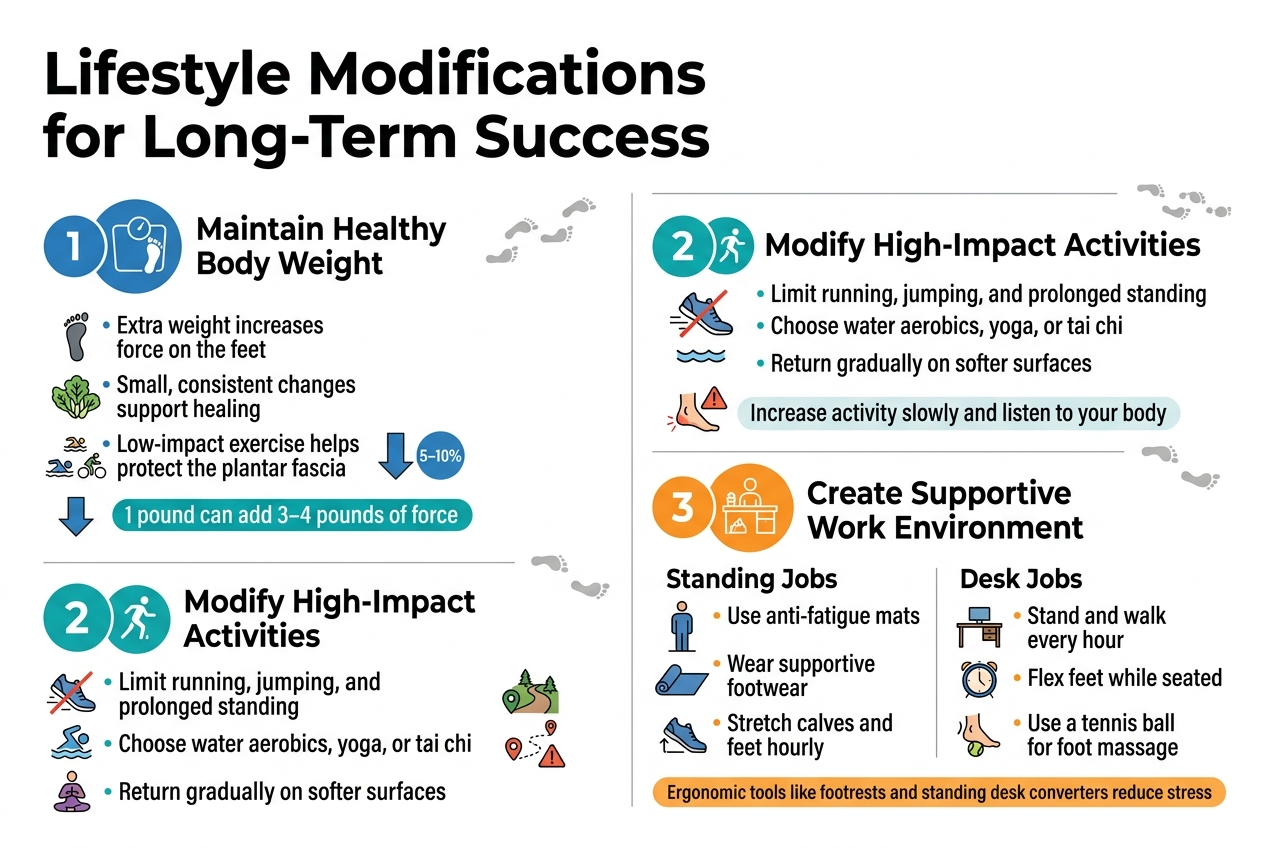
Extra pounds put tremendous pressure on your feet, especially the delicate plantar fascia tissue. Each additional pound of body weight translates to roughly three to four pounds of extra force on your feet when walking. This increased load makes healing from plantar fasciitis much more challenging and can trigger flare-ups even after successful treatment.
Weight management doesn’t require drastic measures. Small, consistent changes often yield the best long-term results. Focus on nutrient-dense foods that reduce inflammation naturally – think colorful vegetables, lean proteins, and omega-3 rich fish. These foods support tissue healing while helping you maintain a healthy weight.
Low-impact activities work best during recovery. Swimming, cycling, and elliptical training allow you to stay active without aggravating foot pain. Even a 5-10% reduction in body weight can significantly decrease the mechanical stress on your plantar fascia, accelerating your recovery timeline.
Modify High-Impact Activities
Running, jumping, and prolonged standing on hard surfaces can derail your plantar fasciitis treatment progress. This doesn’t mean giving up your favorite activities forever – it means making smart adjustments during healing and beyond.
Replace high-impact exercises with gentler alternatives that keep you moving without triggering morning heel pain. Water aerobics provides excellent cardiovascular benefits while the buoyancy reduces foot stress. Yoga and tai chi improve flexibility and strength while being kind to your feet.
When you’re ready to return to higher-impact activities, do it gradually. Start with every other day, shorter durations, and always on softer surfaces when possible. Trail running on dirt paths beats pounding pavement every time. Listen to your body – if heel pain returns, scale back and allow more recovery time.
Create Supportive Work Environment
Your work environment plays a huge role in plantar fasciitis management, especially if you spend long hours on your feet or sit at a desk all day. Both scenarios can contribute to foot problems, but simple workplace modifications make a significant difference.
For standing jobs, invest in anti-fatigue mats and wear supportive footwear throughout your shift. Take regular breaks to stretch your calves and feet. Even 30-second calf stretches every hour help prevent tissue tightening.
Desk workers face different challenges. Prolonged sitting can cause calf muscles and plantar fascia to shorten, leading to painful morning first steps. Set hourly reminders to stand, walk, and perform gentle foot flexing exercises. Keep a tennis ball under your desk for foot massages during phone calls.
Consider ergonomic adjustments like footrests or standing desk converters. These tools help you vary your position throughout the day, reducing repetitive stress on your feet and supporting better overall posture.
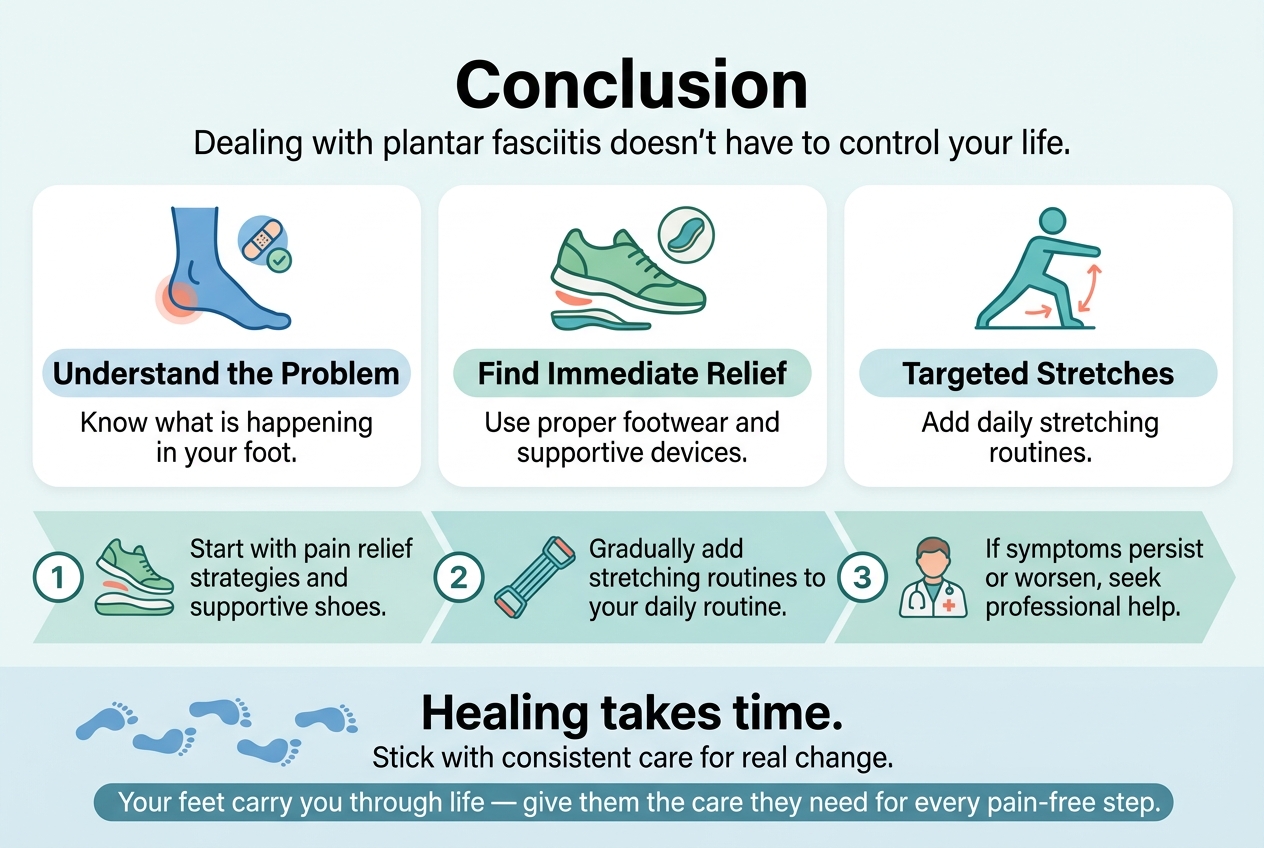
Dealing with plantar fasciitis doesn’t have to control your life. You now have a complete toolkit – from understanding what’s happening in your foot to finding immediate relief through proper footwear, supportive devices, and targeted stretches. The exercises and lifestyle changes we’ve covered can make a real difference when you stick with them consistently.
Remember, healing takes time, and what works best often combines several approaches. Start with the pain relief strategies and supportive shoes, then gradually add stretching routines to your daily routine. If your symptoms persist or worsen, don’t hesitate to seek professional help. Your feet carry you through life – giving them the care and attention they need will pay off with every pain-free step you take.