Uncategorized
Uncategorizedbyadmin-physiotherapistNo Comments

CAN PHYSIOTHERAPY HELP YOU TO AVOID BACK SURGERY?

introduction

Can Physiotherapy Help You Avoid Back Surgery?

If your doctor has mentioned surgery as a possible option for your back pain, it’s completely normal to feel nervous — and to wonder if there’s another way. The good news? For many people, physiotherapy for back pain is a real, effective path that can help you avoid going under the knife altogether.

This guide is for anyone dealing with persistent lower back pain — whether you’ve been told surgery might be needed, or you simply want to explore non-surgical treatment for back pain before making any big decisions.

Here’s what we’ll walk you through:

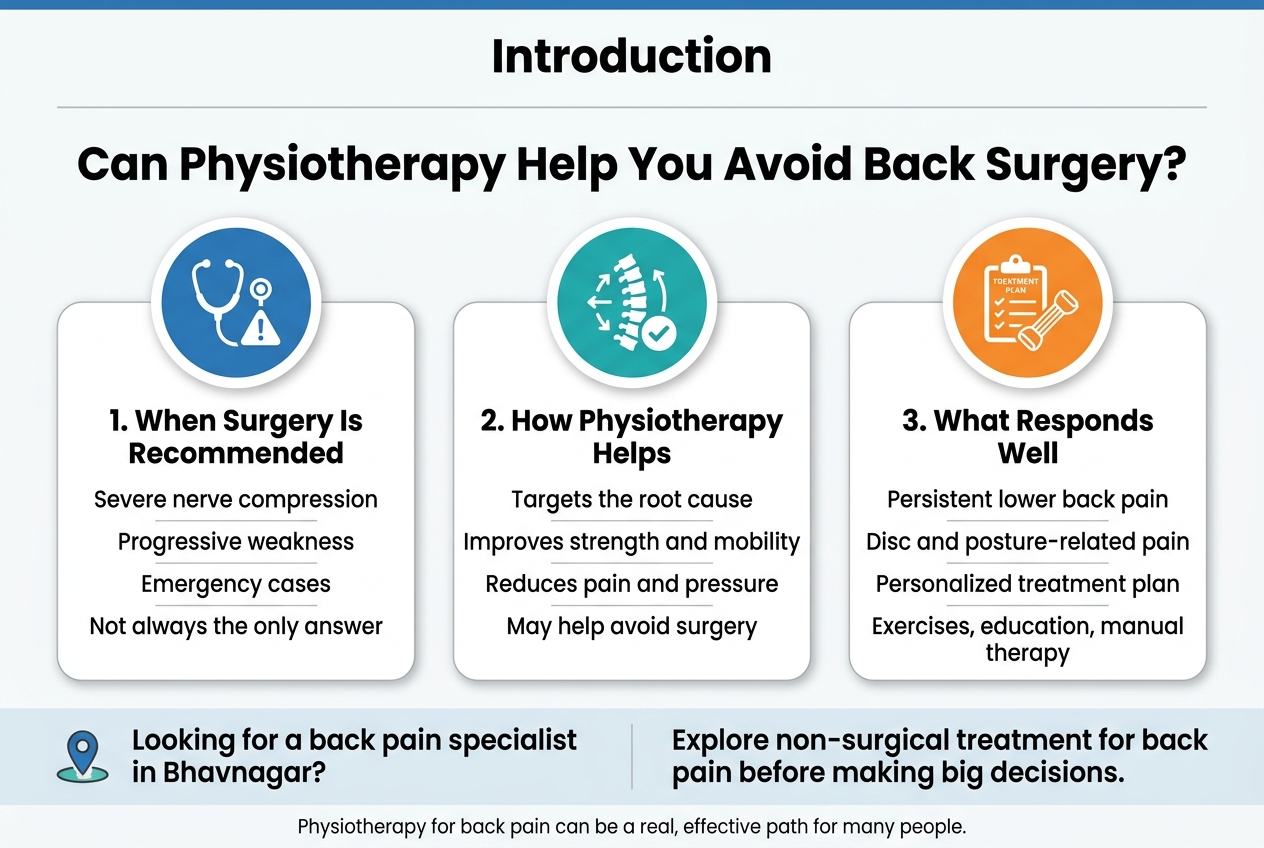
  • When surgery is actually recommended — and when it’s not the only answer
  • How physiotherapy addresses the root cause of back pain, not just the symptoms
  • What conditions respond well to back pain physiotherapy — and what a real treatment plan looks like

If you’re searching for a back pain specialist in Bhavnagar or want to know whether physiotherapy can prevent surgery in your specific case, you’re in the right place. Let’s break it all down in plain, simple terms.

Understanding When Back Surgery Is Recommended

Understanding When Back Surgery Is Recommended

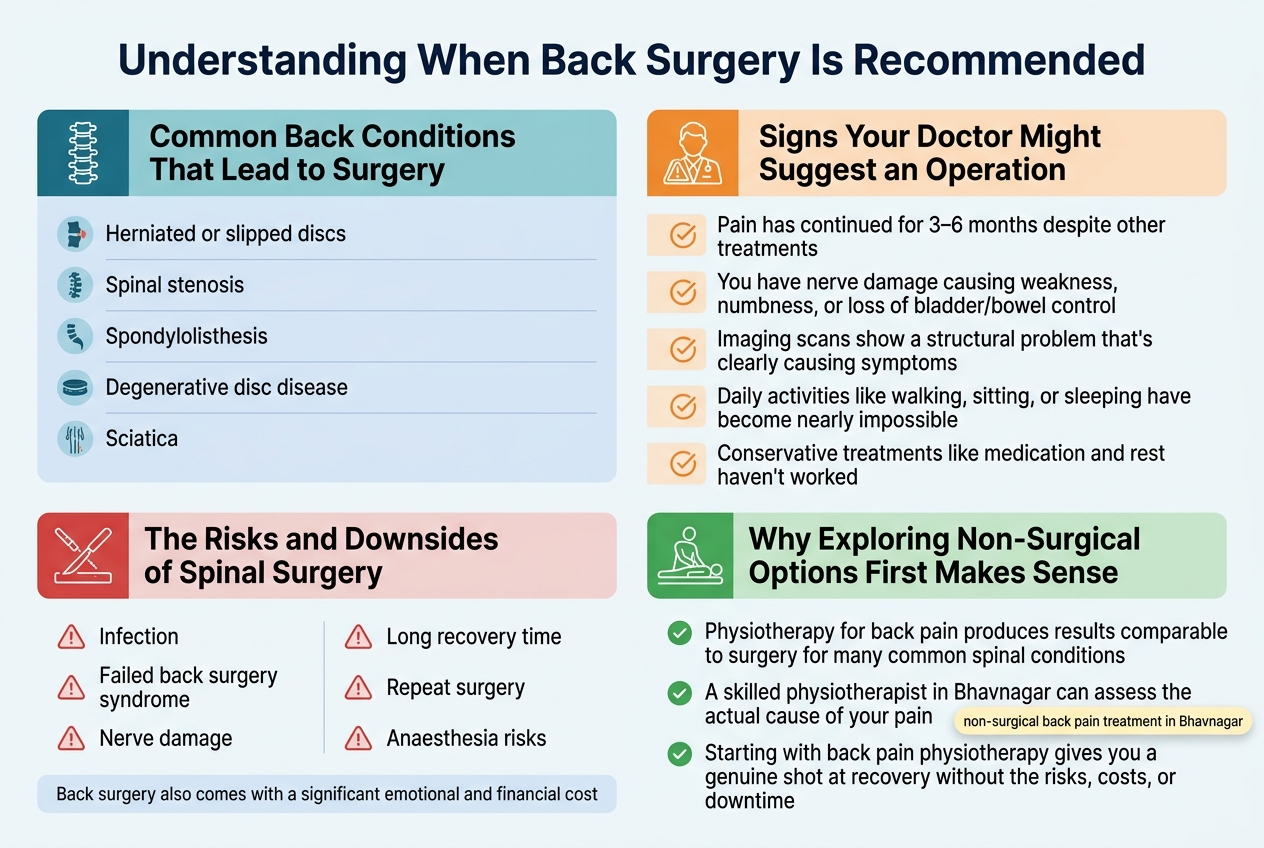
Common Back Conditions That Lead to Surgery

Some back problems are more likely to land people in a surgeon’s office than others. The most common ones include:

  • Herniated or slipped discs – when the soft cushion between vertebrae pushes out and presses on nearby nerves
  • Spinal stenosis – a narrowing of the spinal canal that squeezes the spinal cord or nerve roots
  • Spondylolisthesis – when one vertebra slips forward over another, causing pain and instability
  • Degenerative disc disease – gradual wear and tear of spinal discs over time
  • Sciatica – sharp, shooting pain running down the leg, often caused by nerve compression

Signs Your Doctor Might Suggest an Operation

Doctors don’t jump straight to surgery. They typically bring it up when:

  • Pain has continued for 3–6 months despite other treatments
  • You have nerve damage causing weakness, numbness, or loss of bladder/bowel control
  • Imaging scans show a structural problem that’s clearly causing symptoms
  • Daily activities like walking, sitting, or sleeping have become nearly impossible
  • Conservative treatments like medication and rest haven’t worked

The Risks and Downsides of Spinal Surgery

Spinal surgery isn’t a guaranteed fix — and that surprises a lot of people. Here’s what many patients don’t fully consider before going under the knife:

RiskWhat It Means
InfectionSurgical site infections can delay recovery significantly
Failed back surgery syndromePain persists or worsens even after a successful operation
Nerve damageAccidental injury to surrounding nerves during the procedure
Long recovery timeMonths of restricted movement and rehabilitation
Repeat surgerySome patients need a second or third operation
Anaesthesia risksEspecially relevant for older patients or those with health conditions

Back surgery also comes with a significant emotional and financial cost — time off work, physiotherapy post-surgery, and the mental toll of a slow recovery.


Why Exploring Non-Surgical Options First Makes Sense

Before agreeing to any operation, it’s worth giving your body a real chance to heal on its own — with the right support. Research consistently shows that physiotherapy for back pain produces results comparable to surgery for many common spinal conditions, without any of the surgical risks.

A skilled physiotherapist in Bhavnagar can assess the actual cause of your pain — not just treat the symptoms — and build a personalised plan to strengthen the muscles supporting your spine, improve posture, restore mobility, and reduce nerve irritation. For people searching for non-surgical back pain treatment in Bhavnagar, this is often the smarter, safer first step.

The question isn’t just can physiotherapy help avoid back surgery — for many patients, it absolutely can. Starting with back pain physiotherapy gives you a genuine shot at recovery without the risks, costs, or downtime that come with going straight to surgery.

How Physiotherapy Addresses the Root Cause of Back Pain

How Physiotherapy Addresses the Root Cause of Back Pain

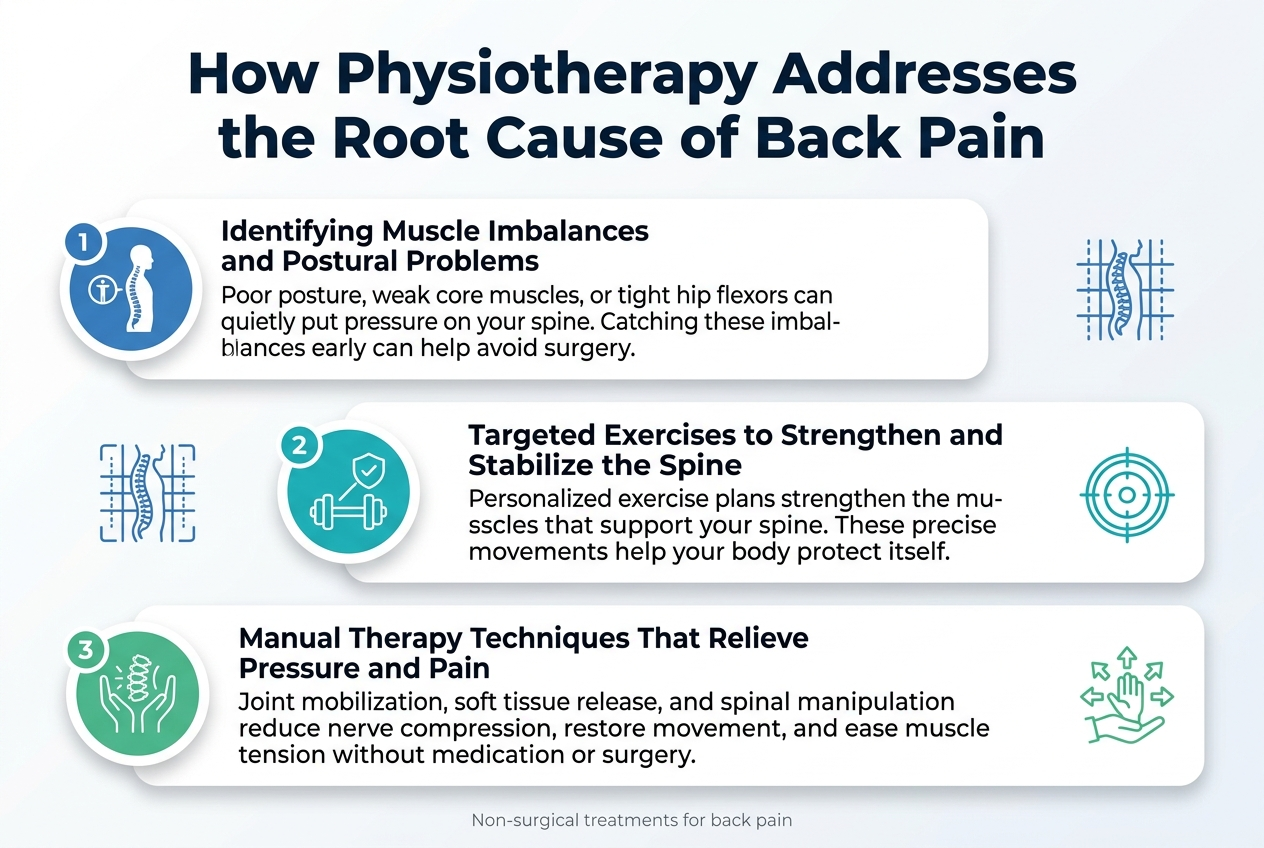
Identifying Muscle Imbalances and Postural Problems

A skilled physiotherapist doesn’t just treat your pain — they dig deeper to find out why it started in the first place. Poor posture, weak core muscles, or tight hip flexors can quietly put enormous pressure on your spine over time. Catching these imbalances early is often the key to avoiding surgery altogether.


Targeted Exercises to Strengthen and Stabilize the Spine

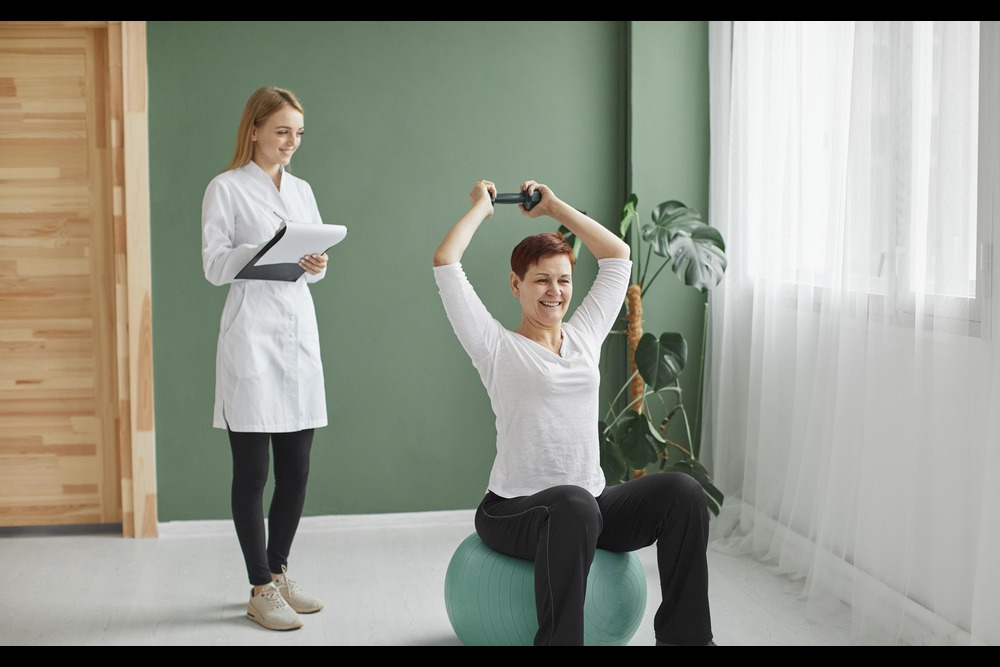
Once the root cause is identified, your physiotherapist builds a personalized exercise plan designed to strengthen the muscles that support your spine. These aren’t generic gym workouts — they’re precise, condition-specific movements that train your body to protect itself. Many patients seeking back pain treatment in Bhavnagar are surprised by how much relief targeted exercises alone can bring.


Manual Therapy Techniques That Relieve Pressure and Pain

Hands-on techniques like joint mobilization, soft tissue release, and spinal manipulation can make a dramatic difference. A back pain physiotherapist in Bhavnagar uses these methods to reduce nerve compression, restore movement, and ease muscle tension — all without medication or surgery. It’s one of the most effective non-surgical treatments for back pain available today.

Conditions Where Physiotherapy Can Replace Surgery

Conditions Where Physiotherapy Can Replace Surgery

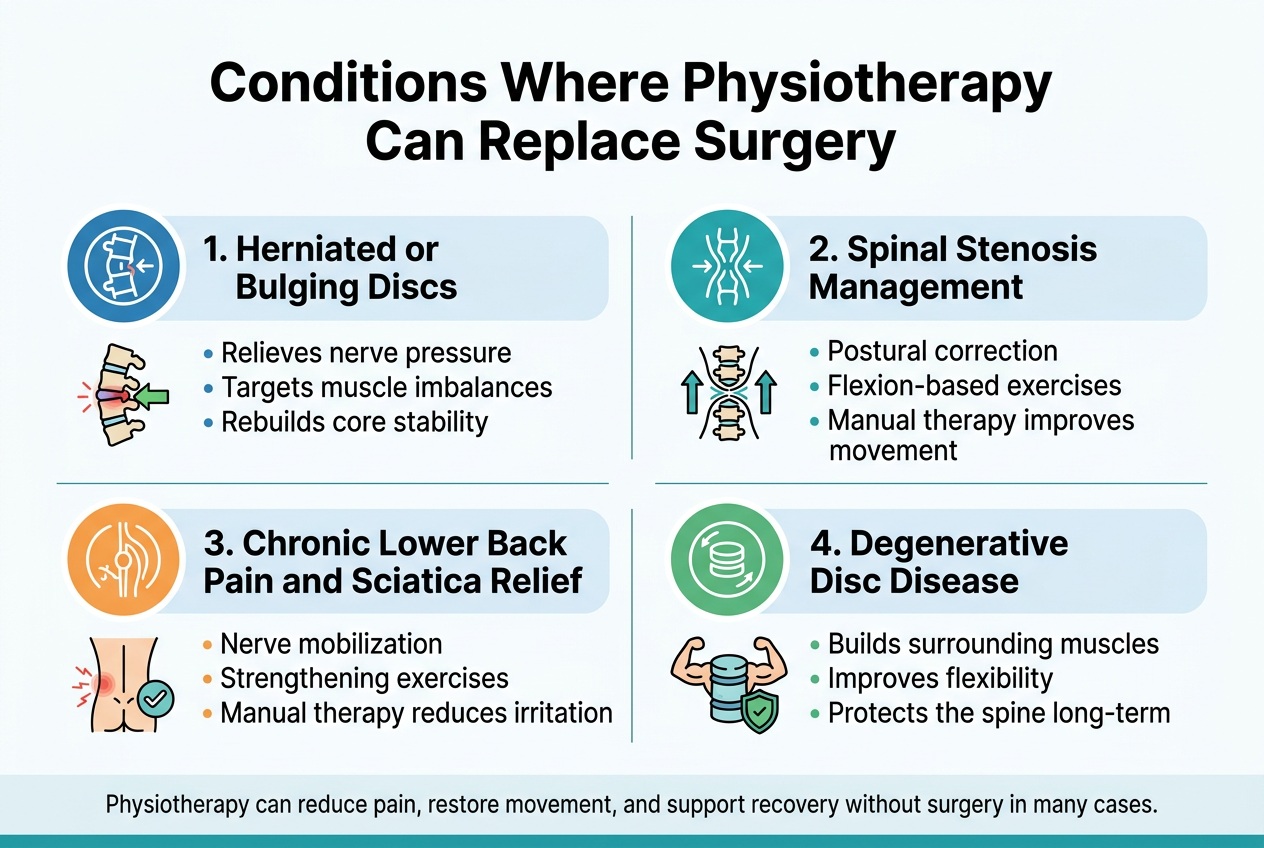
A. Herniated or Bulging Discs

A herniated disc doesn’t automatically mean you’re heading to the operating table. Many people with this diagnosis respond really well to physiotherapy for back pain, which targets muscle imbalances, relieves nerve pressure through targeted stretching, and rebuilds core stability — often getting patients fully back to daily life without surgery.

B. Spinal Stenosis Management Without Going Under the Knife

Spinal stenosis causes the spinal canal to narrow, putting pressure on nerves — but surgery isn’t always the only answer. A skilled physiotherapist in Bhavnagar can design a program using postural correction, flexion-based exercises, and manual therapy to open up movement, reduce pain, and genuinely improve quality of life over time.

C. Chronic Lower Back Pain and Sciatica Relief

Sciatica and chronic lower back pain are two of the most common reasons people consider surgery — yet non-surgical back pain treatment consistently proves effective for the majority of cases. Nerve mobilization, strengthening exercises, and hands-on manual therapy can calm sciatic irritation, reduce inflammation, and restore normal movement patterns without any surgical risks involved.

D. Degenerative Disc Disease and Long-Term Improvement

Degenerative disc disease sounds scary, but it’s manageable with the right approach. The best physiotherapy clinic in Bhavnagar will focus on building the surrounding muscles to offload pressure from the discs, improving flexibility, and teaching patients body mechanics that protect the spine long-term — slowing degeneration and keeping pain well under control.

What to Expect From a Physiotherapy Treatment Plan

What to Expect From a Physiotherapy Treatment Plan

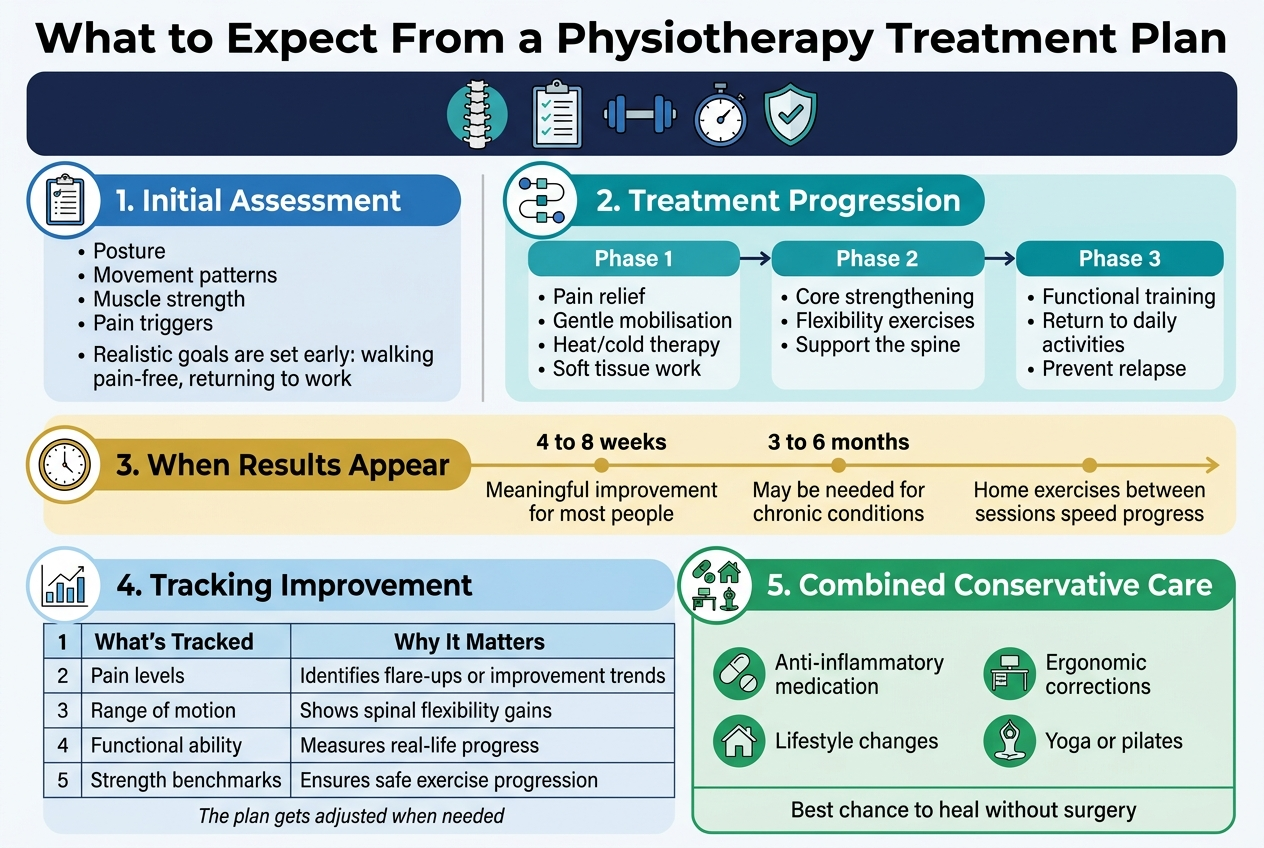
Initial Assessment and Setting Realistic Recovery Goals

Your physiotherapist will start by thoroughly evaluating your posture, movement patterns, muscle strength, and pain triggers before touching a single exercise. This helps build a treatment plan that’s specific to your back condition, not a generic routine. Realistic goals — like walking pain-free or returning to work — are set early.

Progression of Exercises and Therapies Over Time

Treatment doesn’t stay the same week after week. Your plan typically moves through stages:

  • Phase 1 – Pain relief through gentle mobilisation, heat/cold therapy, and soft tissue work
  • Phase 2 – Core strengthening and flexibility exercises to support the spine
  • Phase 3 – Functional training to return to daily activities and prevent relapse

How Long It Takes to See Meaningful Results

Most people doing consistent back pain physiotherapy notice genuine improvement within 4 to 8 weeks. Some feel better sooner; others with chronic conditions need 3 to 6 months. Sticking to your home exercise program between sessions makes a big difference in how quickly you progress.

Tracking Improvement and Adjusting the Plan

A good physiotherapist doesn’t just put you through the same routine every visit. They monitor:

What’s TrackedWhy It Matters
Pain levelsIdentifies flare-ups or improvement trends
Range of motionShows spinal flexibility gains
Functional abilityMeasures real-life progress
Strength benchmarksEnsures safe exercise progression

If something isn’t working, the plan gets adjusted — not ignored.

Combining Physiotherapy With Other Conservative Treatments

Physiotherapy works even better when paired with other non-surgical approaches. Many back pain specialists in Bhavnagar recommend combining physical therapy with:

  • Anti-inflammatory medication (short-term, as advised by your doctor)
  • Lifestyle changes like weight management and better sleep posture
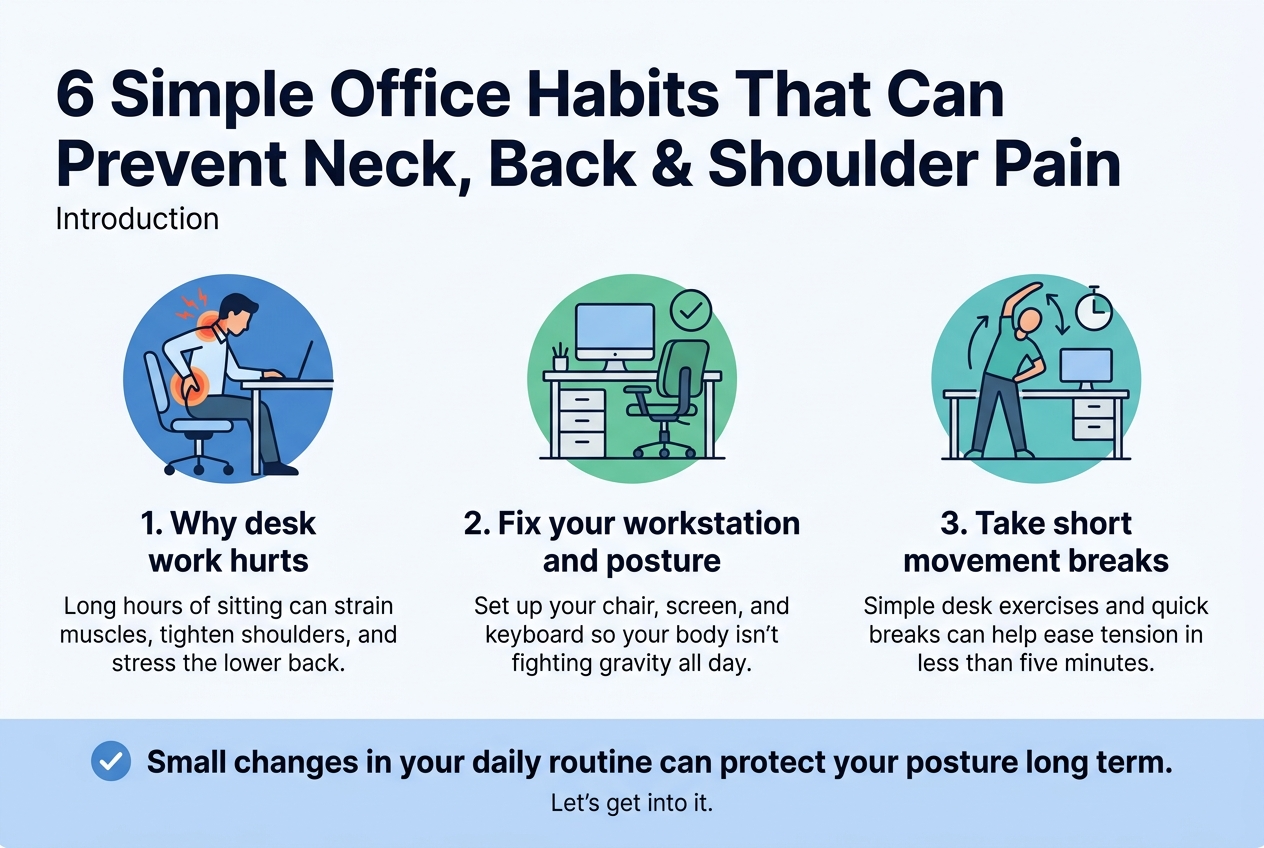
  • Ergonomic corrections at your workstation
  • Yoga or pilates for ongoing spine support

This combined approach gives your body the best possible chance to heal without going under the knife.

Key Benefits of Choosing Physiotherapy Before Surgery

Key Benefits of Choosing Physiotherapy Before Surgery

Avoiding the Risks and Recovery Time of an Operation

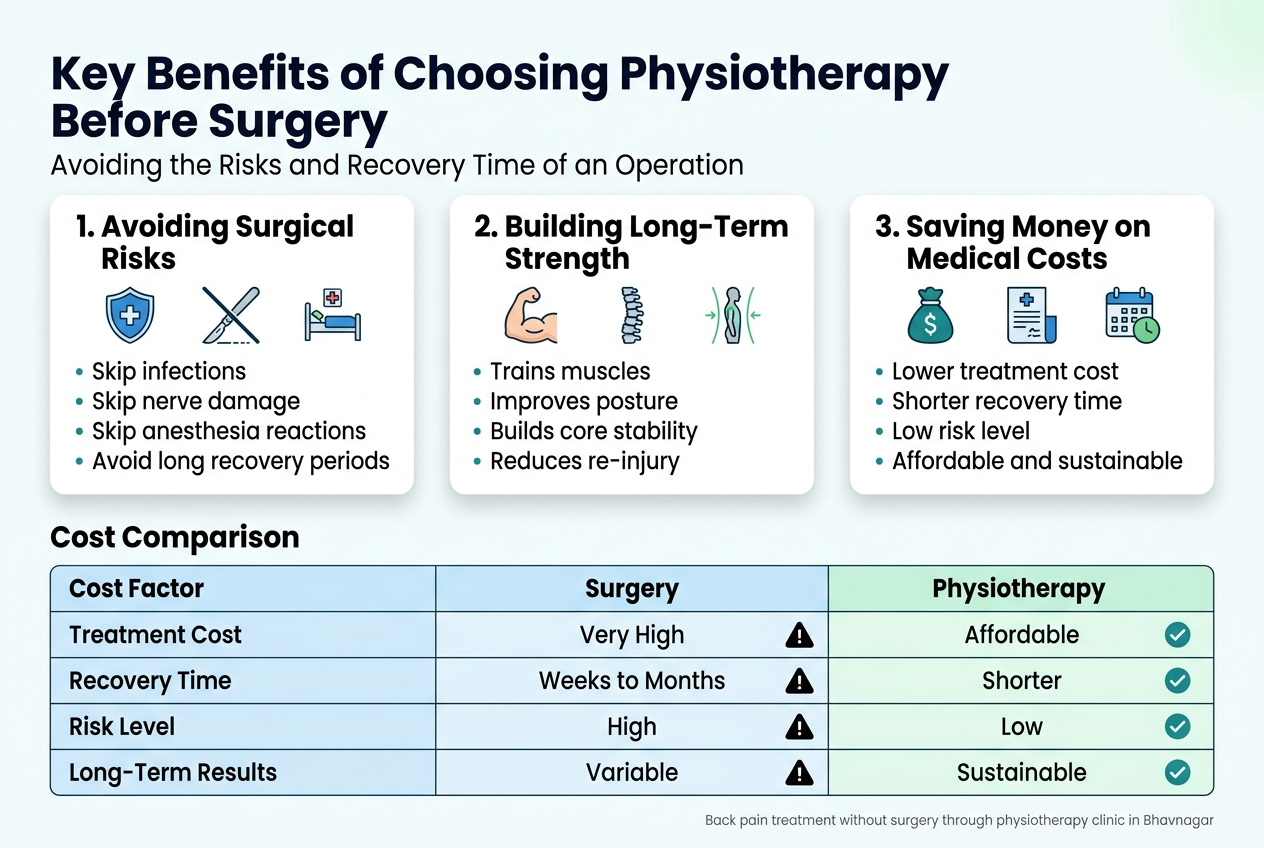
Choosing physiotherapy for back pain before going under the knife means skipping serious surgical risks like infections, nerve damage, anesthesia reactions, and long recovery periods that can keep you off your feet for months.


Building Long-Term Strength to Prevent Future Injuries

Non-surgical treatment for back pain through physiotherapy doesn’t just fix today’s problem — it trains your muscles, improves posture, and builds core stability so your spine stays protected long after treatment ends, reducing the chances of re-injury.


Saving Money on Medical and Surgical Costs

Surgery comes with a hefty price tag — hospital fees, surgical costs, post-op care, and missed workdays add up fast. Back pain treatment without surgery through a trusted physiotherapy clinic in Bhavnagar is a far more affordable path that still delivers real, lasting results.

Cost FactorSurgeryPhysiotherapy
Treatment CostVery HighAffordable
Recovery TimeWeeks to MonthsShorter
Risk LevelHighLow
Long-Term ResultsVariableSustainable

How to Get the Most Out of Your Physiotherapy Sessions

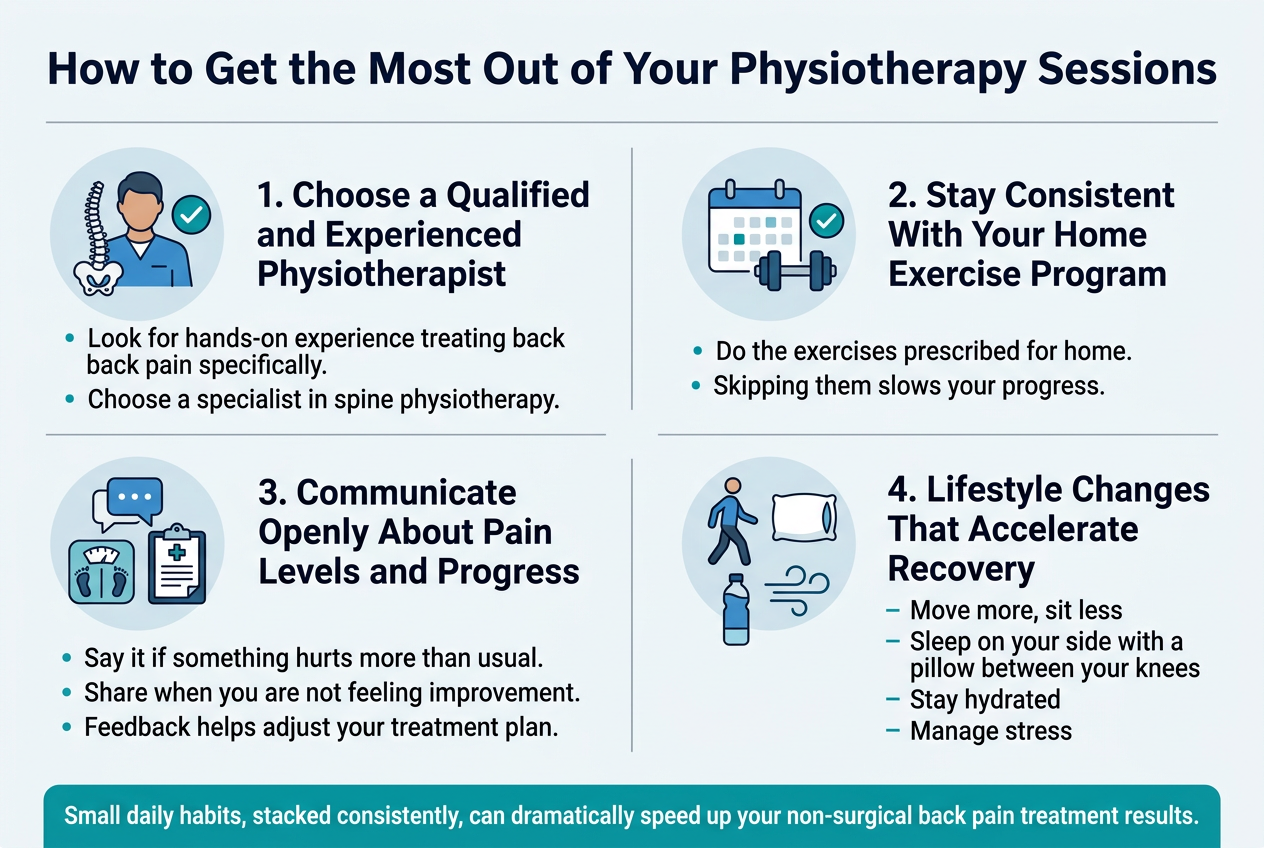
How to Get the Most Out of Your Physiotherapy Sessions

Choosing a Qualified and Experienced Physiotherapist

Finding the right physiotherapist makes a massive difference in your recovery. Look for someone with hands-on experience treating back pain specifically — not just a general practitioner. If you’re in Gujarat, working with the best physiotherapist in Bhavnagar who specialises in spine physiotherapy gives you a real edge in avoiding surgery altogether.


Staying Consistent With Your Home Exercise Program

Your progress doesn’t stop when you walk out of the clinic. The exercises your physiotherapist prescribes for home are just as important as the in-clinic sessions. Skipping them slows everything down. Think of it like charging your phone halfway — it works, but not as well as it could.


Communicating Openly About Pain Levels and Progress

Don’t tough it out silently. If something hurts more than usual, or you’re not feeling any improvement, say it. Your physiotherapist adjusts your treatment plan based on your feedback. Open communication helps them fine-tune the approach so your back pain treatment without surgery actually works for your body.


Lifestyle Changes That Accelerate Your Recovery

  • Move more, sit less — prolonged sitting compresses spinal discs
  • Sleep posture matters — sleeping on your side with a pillow between your knees reduces strain
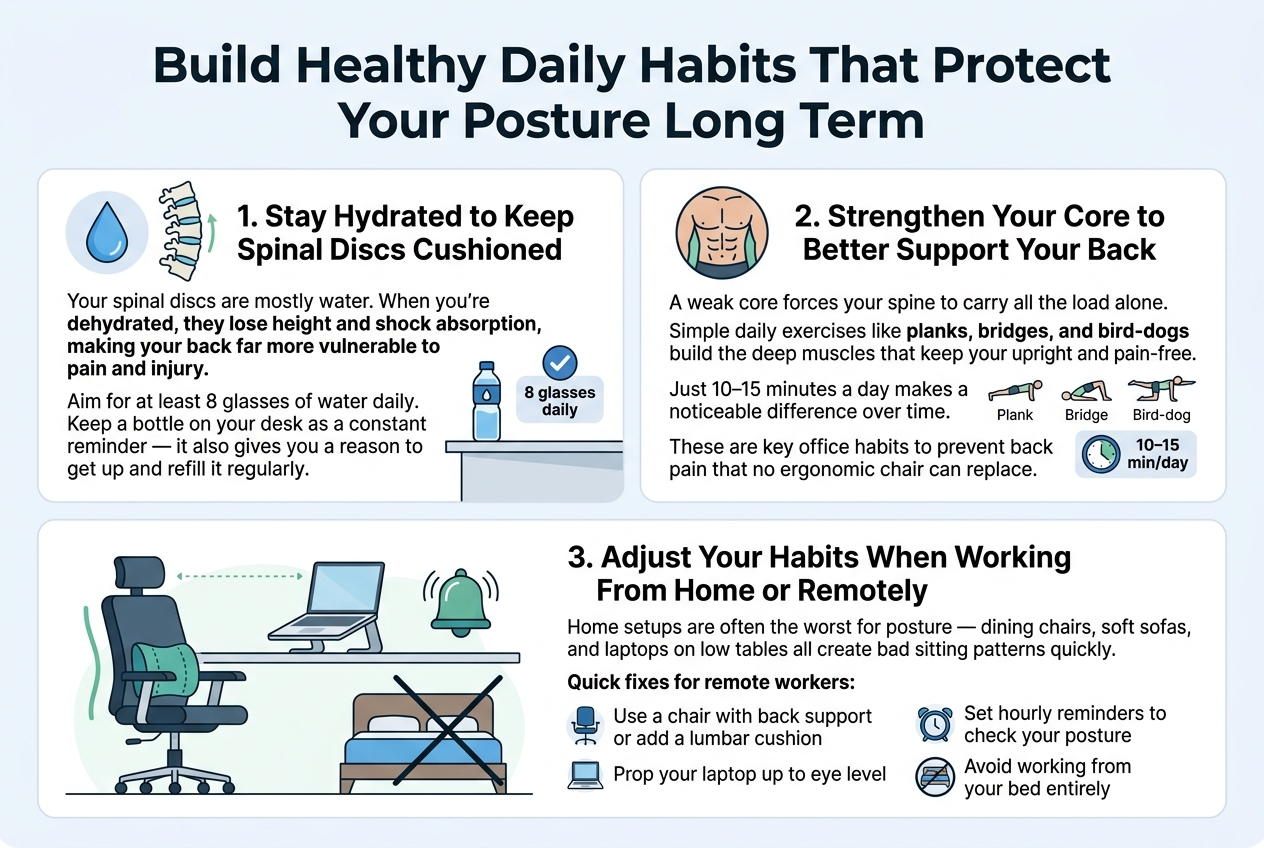
  • Stay hydrated — spinal discs need water to stay healthy
  • Manage stress — tension directly tightens the muscles around your spine

Small daily habits, stacked consistently, can dramatically speed up your non-surgical back pain treatment results.

conclusion

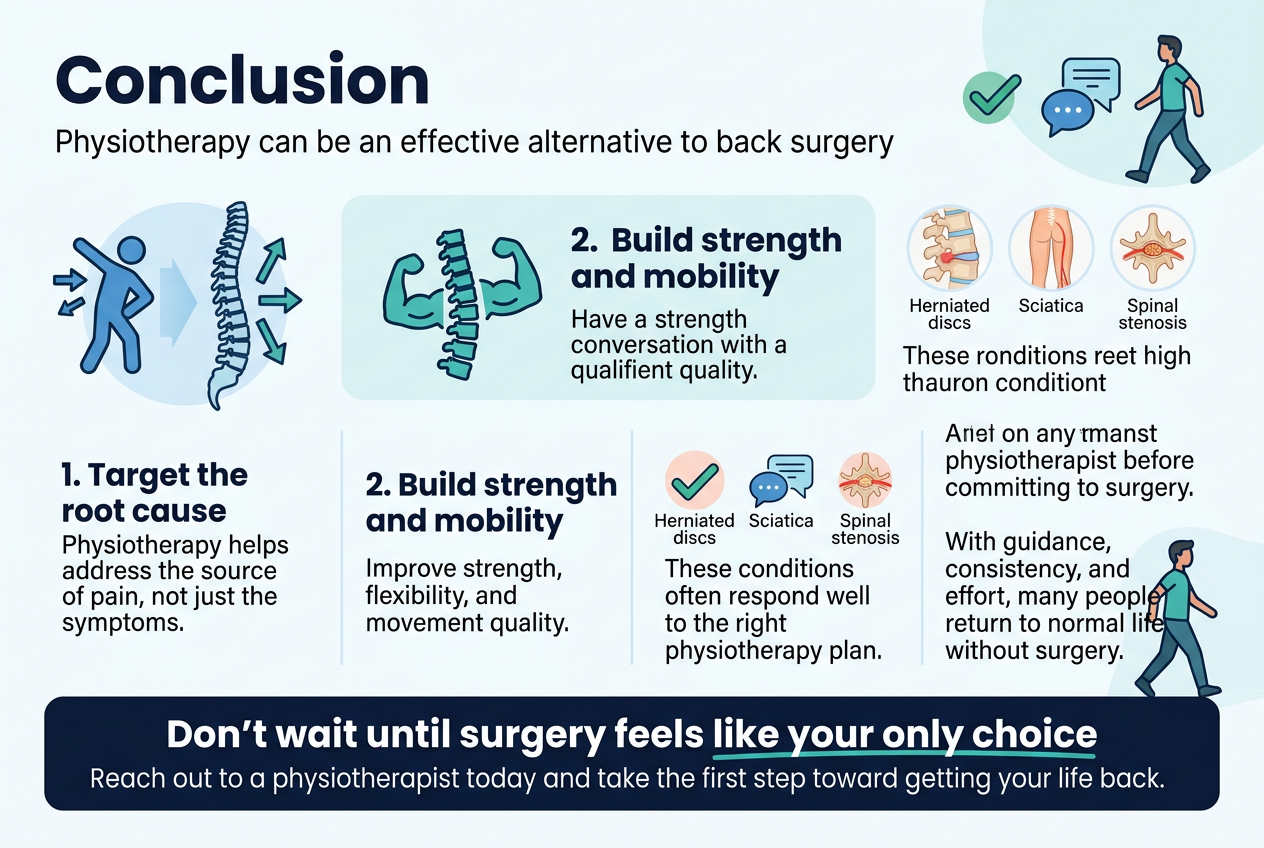
Back surgery can feel like the only way out when you’re dealing with persistent pain, but for many people, physiotherapy offers a real and effective alternative. By targeting the root cause of your pain, building strength, improving mobility, and teaching you how to move better, physiotherapy can help you avoid going under the knife altogether. Conditions like herniated discs, sciatica, and spinal stenosis have all responded well to the right physiotherapy plan, and many patients find that a structured, consistent approach gets them back to living their normal lives without surgery.

If you’re currently weighing your options, it’s worth having an honest conversation with a qualified physiotherapist before committing to surgery. With the right guidance, a personalized treatment plan, and a commitment to showing up and doing the work, you might be surprised at just how much progress you can make. Don’t wait until surgery feels like your only choice — reach out to a physiotherapist today and take that first step toward getting your life back.

Uncategorized
Uncategorizedbyadmin-physiotherapistNo Comments

MANAGING PLANTER FASCITIS

introduction

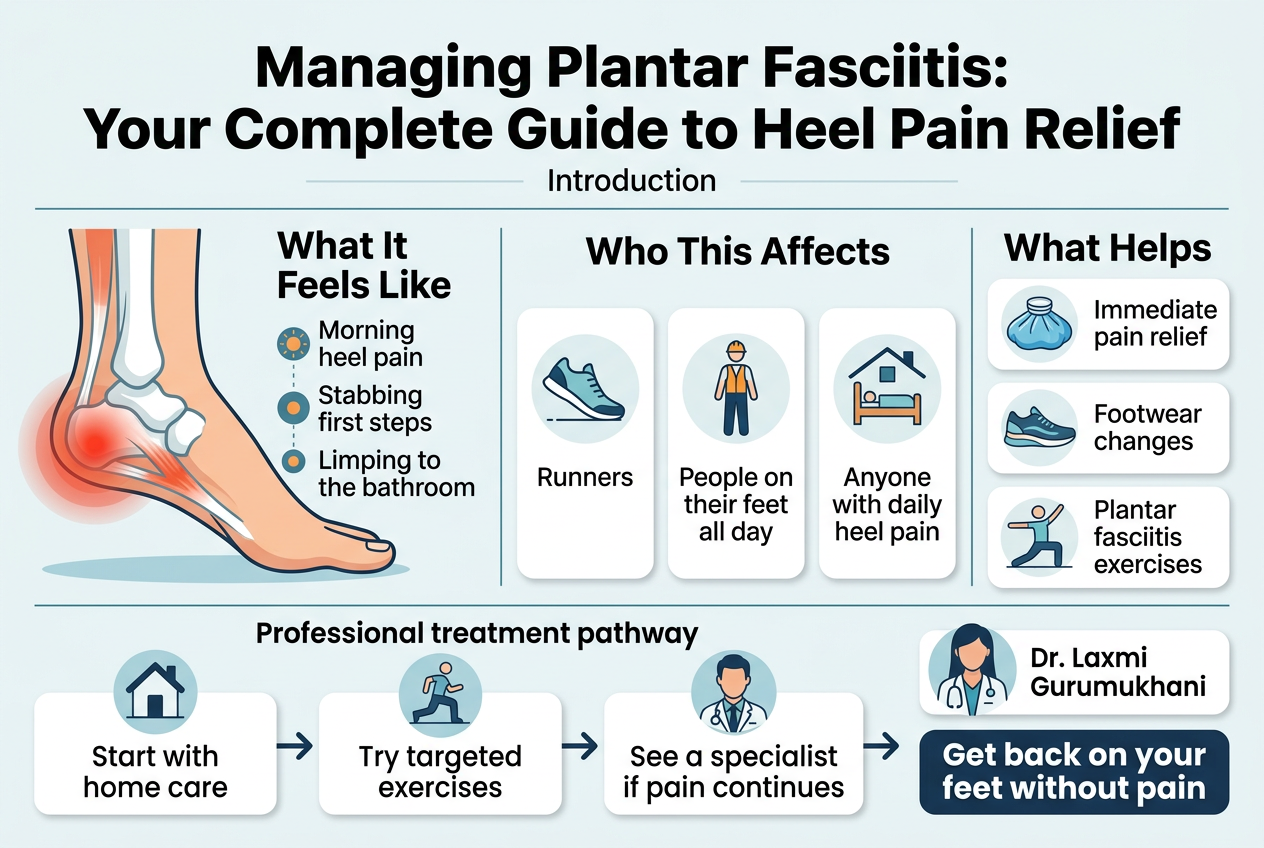
Managing Plantar Fasciitis: Your Complete Guide to Heel Pain Relief

Morning heel pain got you limping to the bathroom every day? You’re dealing with plantar fasciitis, and you’re not alone. This common foot condition affects millions of people who want practical solutions that actually work.

This guide is for anyone struggling with heel pain – whether you’re a runner dealing with sudden onset pain, someone whose job keeps you on your feet all day, or just tired of that stabbing sensation with your first steps each morning.

We’ll walk through immediate pain relief strategies you can start today, plus essential footwear changes that make a real difference in your daily comfort. You’ll also discover targeted plantar fasciitis exercises and professional treatment options, including when it’s time to see a specialist like Dr. Laxmi Gurumukhani for expert plantar fasciitis treatment.

Ready to get back on your feet without pain? Let’s dive into what works for lasting heel pain relief.

Understanding Your Foot Pain Condition

Understanding Your Foot Pain Condition

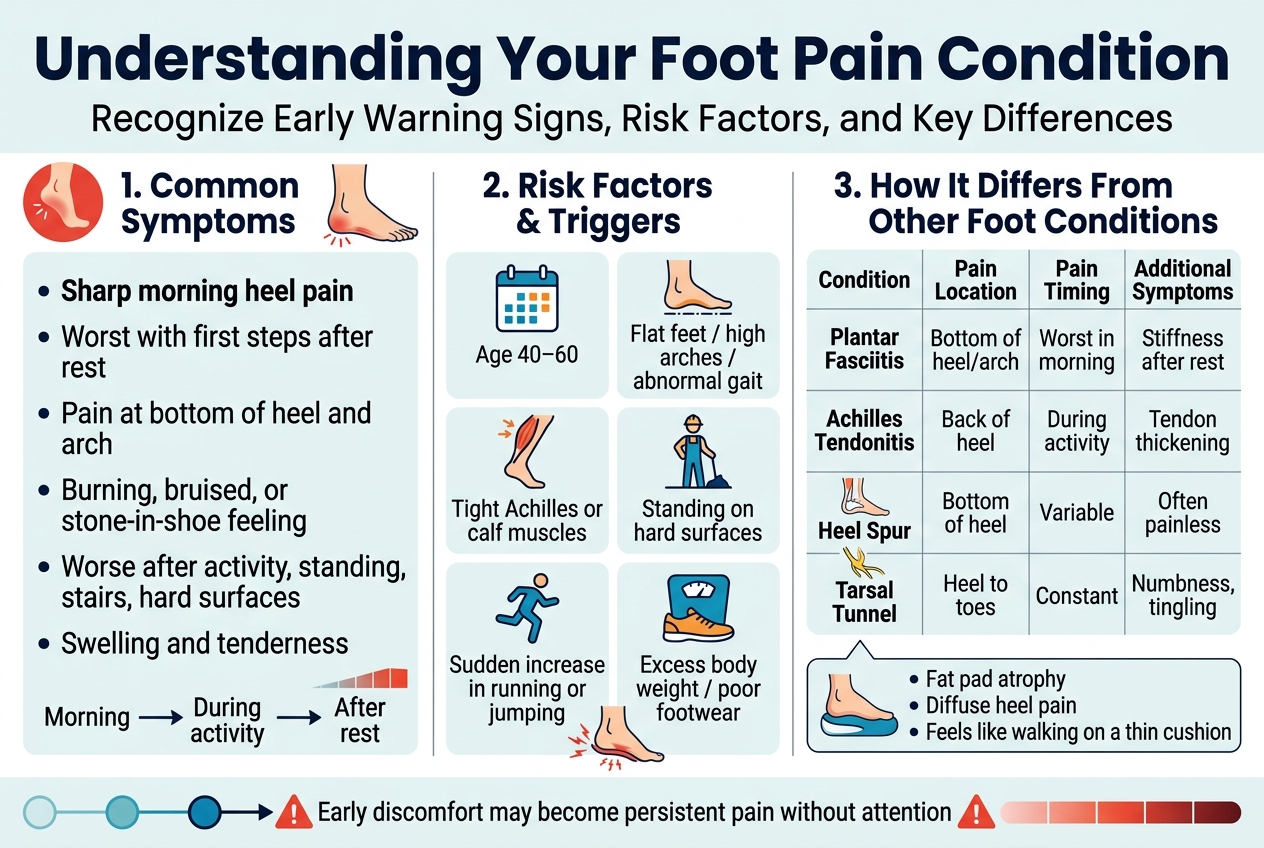
Recognize Early Warning Signs and Symptoms

The most telling sign of plantar fasciitis is sharp, stabbing heel pain that strikes hardest during your first steps in the morning. This morning heel pain feels like walking on broken glass and typically eases as you move around, only to return after sitting or lying down for extended periods.

Beyond the classic morning stiffness, watch for pain that develops along the bottom of your foot, particularly near the heel bone. This discomfort often radiates toward your arch and can range from a dull ache to intense burning sensations. Many people describe the feeling as having a stone stuck in their shoe or experiencing deep bruising in the heel area.

Pain typically worsens after physical activity rather than during it. You might feel fine during your morning jog but experience increased discomfort later in the day. Standing for long periods, climbing stairs, or walking on hard surfaces can intensify symptoms. Some people also notice swelling around the heel or increased tenderness when pressing on the bottom of the foot.

The progression of symptoms often follows a predictable pattern. Initial discomfort may seem minor and sporadic, but without proper attention, it can develop into persistent, debilitating pain that affects daily activities like walking, working, or exercising.

Identify Common Risk Factors and Triggers

Several factors increase your likelihood of developing plantar fasciitis, with age being a primary consideration. People between 40 and 60 face the highest risk as the plantar fascia naturally loses elasticity and becomes more prone to tiny tears and inflammation.

Your foot structure plays a significant role in plantar fasciitis development. Flat feet, high arches, or abnormal walking patterns create uneven weight distribution across the foot, placing extra stress on the plantar fascia. People with tight Achilles tendons or calf muscles also face increased risk because this tightness limits ankle flexibility and strains the heel area.

Weight-bearing activities and occupational hazards contribute significantly to heel pain development. Jobs requiring prolonged standing on hard surfaces – like teaching, factory work, or retail – create repetitive stress on the feet. Sudden increases in physical activity, particularly high-impact exercises like running or jumping, can overwhelm the plantar fascia’s capacity to adapt.

Excess body weight compounds these risks by increasing the load on your feet with every step. Poor footwear choices, including worn-out shoes, high heels, or completely flat shoes without arch support, fail to provide adequate cushioning and support for the plantar fascia.

Distinguish Between Plantar Fasciitis and Other Foot Conditions

Plantar fasciitis often gets confused with other foot problems, but specific characteristics help differentiate it from similar conditions. Unlike Achilles tendonitis, which causes pain at the back of the heel and along the tendon, plantar fasciitis pain concentrates on the bottom of the heel and arch area.

Heel spurs frequently accompany plantar fasciitis but aren’t always the pain source. While heel spur treatment may be discussed alongside plantar fasciitis treatment, the sharp pain typically comes from the inflamed plantar fascia rather than the bony growth itself. X-rays can reveal heel spurs, but their presence doesn’t automatically indicate they’re causing your discomfort.

Tarsal tunnel syndrome mimics plantar fasciitis but includes numbness, tingling, or burning sensations that extend into the toes. This condition involves nerve compression rather than fascia inflammation. Stress fractures in the heel bone cause constant, throbbing pain that worsens with any weight-bearing activity, unlike plantar fasciitis pain that often improves with movement.

ConditionPain LocationPain TimingAdditional Symptoms
Plantar FasciitisBottom of heel/archWorst in morningStiffness after rest
Achilles TendonitisBack of heelDuring activityTendon thickening
Heel SpurBottom of heelVariableOften painless
Tarsal TunnelHeel to toesConstantNumbness, tingling

Fat pad atrophy, common in older adults, causes diffuse heel pain that feels like walking on a thin cushion. This condition lacks the sharp, localized pain characteristic of plantar fasciitis and doesn’t show the typical morning stiffness pattern.

Immediate Pain Relief Strategies

Immediate Pain Relief Strategies

Apply Ice Therapy for Acute Inflammation

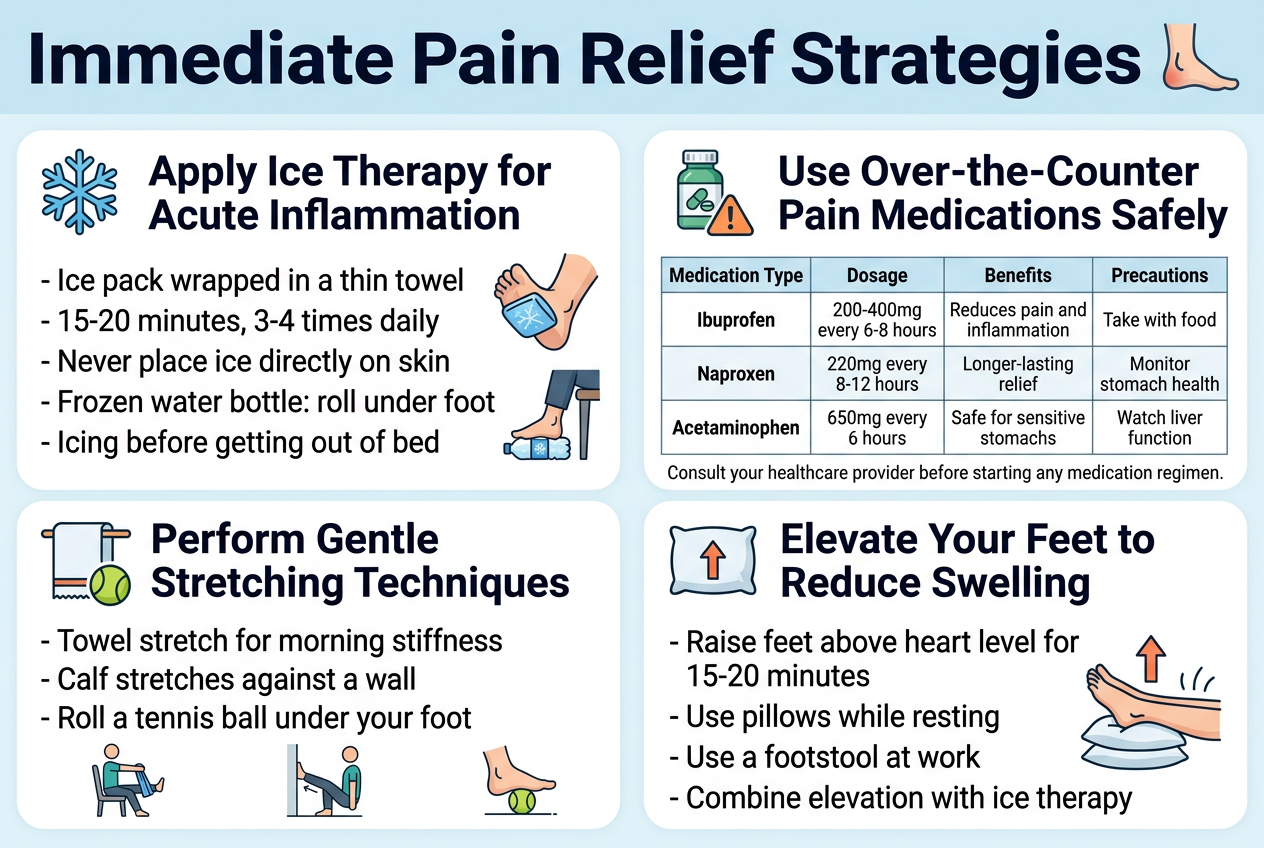
Cold therapy works wonders for reducing inflammation and numbing heel pain relief when plantar fasciitis flares up. Apply an ice pack wrapped in a thin towel to the bottom of your foot for 15-20 minutes, 3-4 times daily. Never place ice directly on your skin to avoid frostbite.

A frozen water bottle makes an excellent alternative – roll it under your foot while sitting, combining ice therapy with gentle massage. This technique helps break up scar tissue while providing cooling relief. For morning heel pain, try icing your feet before getting out of bed to reduce that first-step agony.

Use Over-the-Counter Pain Medications Safely

Non-steroidal anti-inflammatory drugs (NSAIDs) like ibuprofen and naproxen reduce both pain and inflammation associated with plantar fasciitis treatment. Follow dosing instructions carefully and take with food to prevent stomach irritation.

Acetaminophen offers pain relief without anti-inflammatory properties, making it suitable for those who can’t tolerate NSAIDs. Always consult your healthcare provider before starting any medication regimen, especially if you have existing health conditions or take other medications.

Medication TypeDosageBenefitsPrecautions
Ibuprofen200-400mg every 6-8 hoursReduces pain and inflammationTake with food
Naproxen220mg every 8-12 hoursLonger-lasting reliefMonitor stomach health
Acetaminophen650mg every 6 hoursSafe for sensitive stomachsWatch liver function

Perform Gentle Stretching Techniques

Simple plantar fasciitis exercises can provide immediate relief while preventing future flare-ups. The towel stretch works perfectly for morning stiffness – sit on your bed with a towel looped around the ball of your foot, gently pulling your toes toward your shin.

Calf stretches target tight muscles that contribute to plantar fascia tension. Stand arm’s length from a wall, place your hands flat against it, and step your affected foot back. Keep your heel down while leaning forward to stretch your calf muscle.

Rolling a tennis ball under your foot provides targeted pressure to tight spots in the plantar fascia. Apply gentle pressure while rolling from heel to toe, spending extra time on tender areas.

Elevate Your Feet to Reduce Swelling

Elevation helps gravity drain excess fluid from inflamed tissues, reducing swelling and pressure on the plantar fascia. Raise your feet above heart level for 15-20 minutes several times throughout the day.

Use pillows to prop your feet up while watching TV or reading. At work, place a footstool under your desk to keep feet elevated during breaks. This simple technique works especially well after long periods of standing or walking that aggravate foot pain.

Combine elevation with ice therapy for maximum benefit – the cold reduces inflammation while elevation promotes drainage of inflammatory fluids from the affected area.

Essential Footwear and Support Solutions

Essential Footwear and Support Solutions

Choose Proper Athletic and Daily Shoes

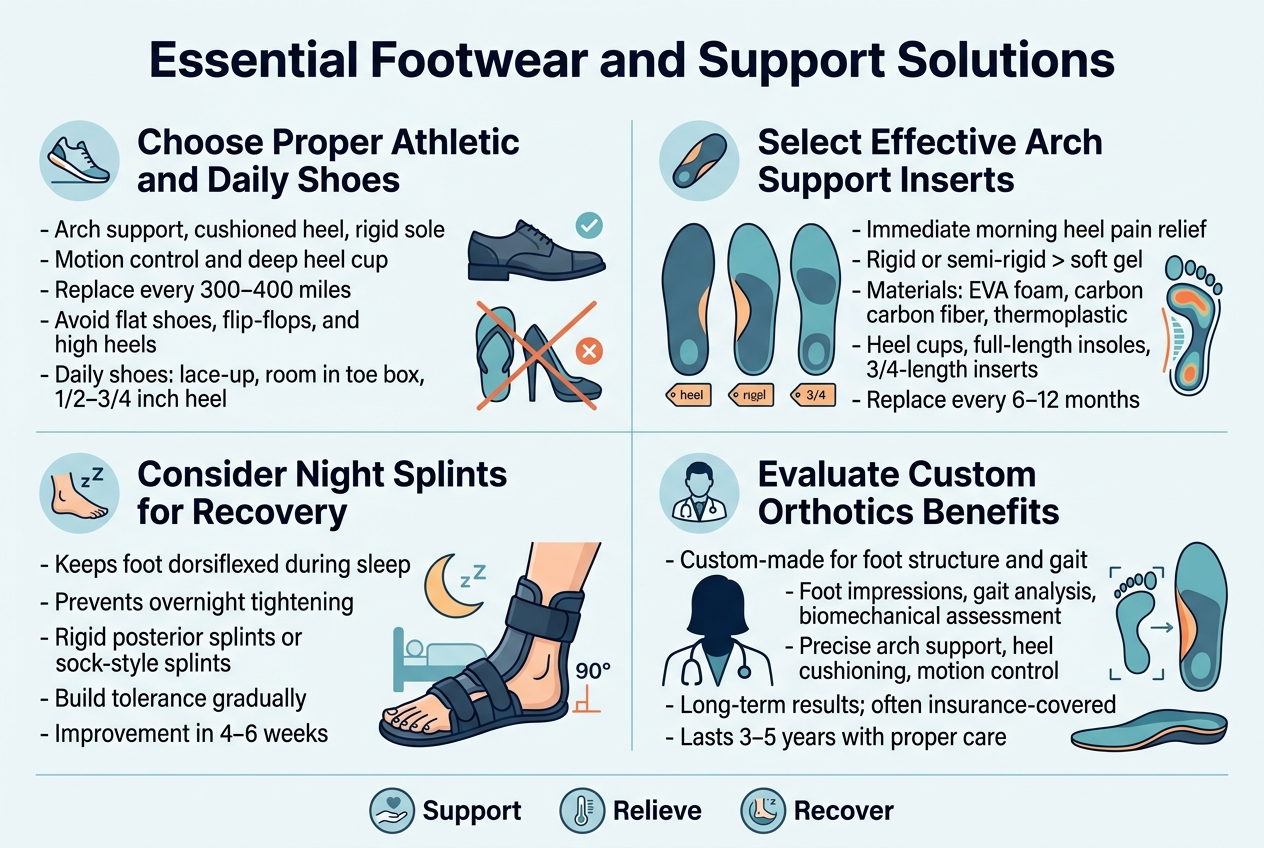
Your choice of footwear plays a critical role in plantar fasciitis treatment and heel pain relief. Well-designed shoes provide the foundation your feet need to heal and prevent further injury. Look for shoes with excellent arch support, cushioned heel areas, and rigid sole construction that prevents excessive foot flexing.

Athletic shoes should feature motion control technology and deep heel cups that cradle your foot properly. Replace running or walking shoes every 300-400 miles, as worn-out soles lose their shock-absorbing properties. Avoid flat shoes, flip-flops, and high heels, which place excessive strain on your plantar fascia.

For daily wear, choose leather or synthetic shoes with lace-up closures that allow proper fit adjustment. The toe box should provide adequate room without being too loose. Many people find relief by selecting shoes with a slight heel elevation (1/2 to 3/4 inch) rather than completely flat soles.

Select Effective Arch Support Inserts

Over-the-counter arch support inserts can provide immediate morning heel pain relief when custom orthotics aren’t available. These inserts work by redistributing pressure across your foot and supporting the plantar fascia during weight-bearing activities.

Rigid or semi-rigid inserts typically offer better support than soft gel versions for plantar fasciitis treatment. Look for inserts made from materials like EVA foam, carbon fiber, or thermoplastic that maintain their shape under body weight. The insert should match your foot type – high arches need different support than flat feet.

Popular options include heel cups that specifically target heel pain, full-length insoles that provide comprehensive support, and 3/4-length inserts that fit in most shoe types. Replace inserts every 6-12 months depending on usage, as they lose effectiveness over time.

Consider Night Splints for Recovery

Night splints represent one of the most effective conservative treatments for plantar fasciitis. These devices maintain your foot in a dorsiflexed position while sleeping, preventing the plantar fascia from tightening overnight and reducing morning heel pain.

Two main types exist: rigid posterior splints that extend up the back of your leg, and more comfortable sock-style splints that provide gentler stretching. Most people tolerate the sock-style versions better for long-term use, though rigid splints may provide faster initial results.

Start wearing night splints for short periods to build tolerance, gradually increasing to full nights. Most people experience significant improvement within 4-6 weeks of consistent use. The key is maintaining proper ankle positioning at approximately 90 degrees throughout sleep.

Evaluate Custom Orthotics Benefits

Custom orthotics from a qualified professional represent the gold standard for foot pain physiotherapy support. Unlike over-the-counter options, these devices are crafted specifically for your foot structure, gait pattern, and condition severity.

A qualified physiotherapist or podiatrist creates custom orthotics through detailed foot impressions, gait analysis, and biomechanical assessment. The resulting devices provide precise arch support, heel cushioning, and motion control tailored to your needs. Materials range from rigid thermoplastics for maximum control to softer accommodative materials for comfort.

While custom orthotics require higher initial investment, they often provide superior long-term results compared to generic inserts. Most insurance plans cover custom orthotics when prescribed for medical conditions like plantar fasciitis. The devices typically last 3-5 years with proper care, making them cost-effective over time.

Professional fitting ensures optimal positioning and comfort, with follow-up adjustments as needed during the healing process.

Targeted Exercises and Stretching Routines

Targeted Exercises and Stretching Routines

Master Morning Foot Stretches

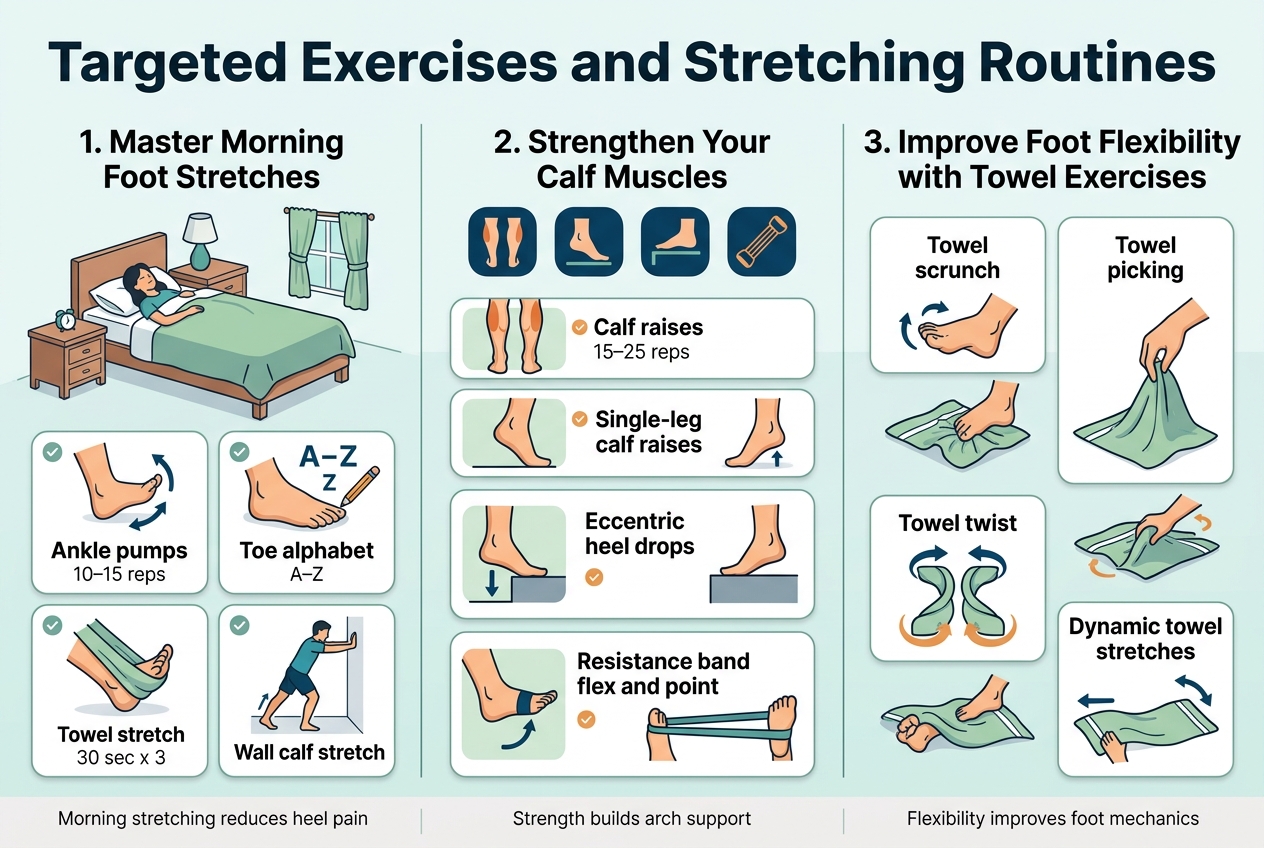
Morning heel pain strikes hardest when you take those first steps out of bed. Your plantar fascia tightens overnight, making that initial contact with the floor feel like stepping on broken glass. The key to reducing this morning heel pain lies in gentle stretching before you even stand up.

Start with ankle pumps while still lying in bed. Point your toes toward the ceiling, then flex them back toward your shin. Repeat this motion 10-15 times to wake up your foot muscles gradually. Next, perform alphabet draws with your toes – simply trace the letters A through Z in the air using your big toe as a pencil. This movement activates multiple muscle groups and improves circulation.

The towel stretch works wonders for plantar fasciitis treatment. Keep a towel by your bedside and loop it around the ball of your foot while your leg extends straight. Gently pull the towel toward you, feeling the stretch along your calf and the bottom of your foot. Hold for 30 seconds and repeat three times on each foot.

Standing calf stretches against your bedroom wall complete your morning routine. Place your hands flat against the wall, step your affected foot back about three feet, and lean forward while keeping your heel on the ground. This targets the gastrocnemius muscle, which directly impacts plantar fascia tension.

Strengthen Your Calf Muscles

Weak calf muscles often contribute to plantar fasciitis by failing to support your foot’s natural arch properly. Building strength in these muscles creates a stable foundation that reduces stress on your plantar fascia during daily activities.

Calf raises represent the gold standard for strengthening these crucial muscles. Stand with your feet hip-width apart, slowly rise onto your toes, hold for three seconds, then lower back down with control. Start with 15 repetitions and gradually increase to 25 as your strength improves. For added challenge, perform single-leg calf raises or hold dumbbells.

Eccentric heel drops provide exceptional benefits for heel pain relief. Stand on a step with just the balls of your feet on the edge, allowing your heels to hang off. Slowly lower your heels below the step level, feeling a deep stretch in your calves. Use your opposite foot to push back to the starting position, then repeat the controlled lowering motion. This exercise specifically targets the Achilles tendon and calf muscle connection.

Resistance band exercises add variety and progressive overload to your routine. Sit with your legs extended and loop a resistance band around the ball of your foot. Point your toes against the band’s resistance, then slowly flex them back. This movement pattern strengthens both your calf muscles and the small stabilizing muscles in your feet.

Improve Foot Flexibility with Towel Exercises

Towel exercises offer incredible versatility for plantar fasciitis exercises while requiring minimal equipment. These movements target specific areas that traditional stretching often misses, making them essential components of any comprehensive foot pain physiotherapy program.

The towel scrunch exercise builds strength in your foot’s intrinsic muscles. Place a small towel flat on the floor and use only your toes to scrunch it toward you. Perform 10-15 repetitions, focusing on using your toes rather than your whole foot. Add marbles or small objects to the towel for increased difficulty as you progress.

Towel picking challenges your toe dexterity and arch support muscles. Spread a towel on the floor and practice picking it up using only your toes, then transferring it from one foot to the other. This exercise improves coordination while strengthening the muscles responsible for maintaining your foot’s arch structure.

The towel twist exercise targets rotational flexibility often overlooked in basic stretching routines. Sit in a chair with a towel under your affected foot. Use your foot to twist the towel clockwise and counterclockwise, engaging muscles throughout your foot and ankle. This movement pattern helps restore normal foot mechanics and reduces compensatory movement patterns that can perpetuate plantar fasciitis symptoms.

Dynamic towel stretches combine flexibility work with functional movement. Place the towel under your foot and perform pointing and flexing motions while maintaining tension on the towel. This creates active stretching that better prepares your foot for weight-bearing activities than passive stretching alone.

Professional Treatment Options

Professional Treatment Options

Physical Therapy Benefits and Techniques

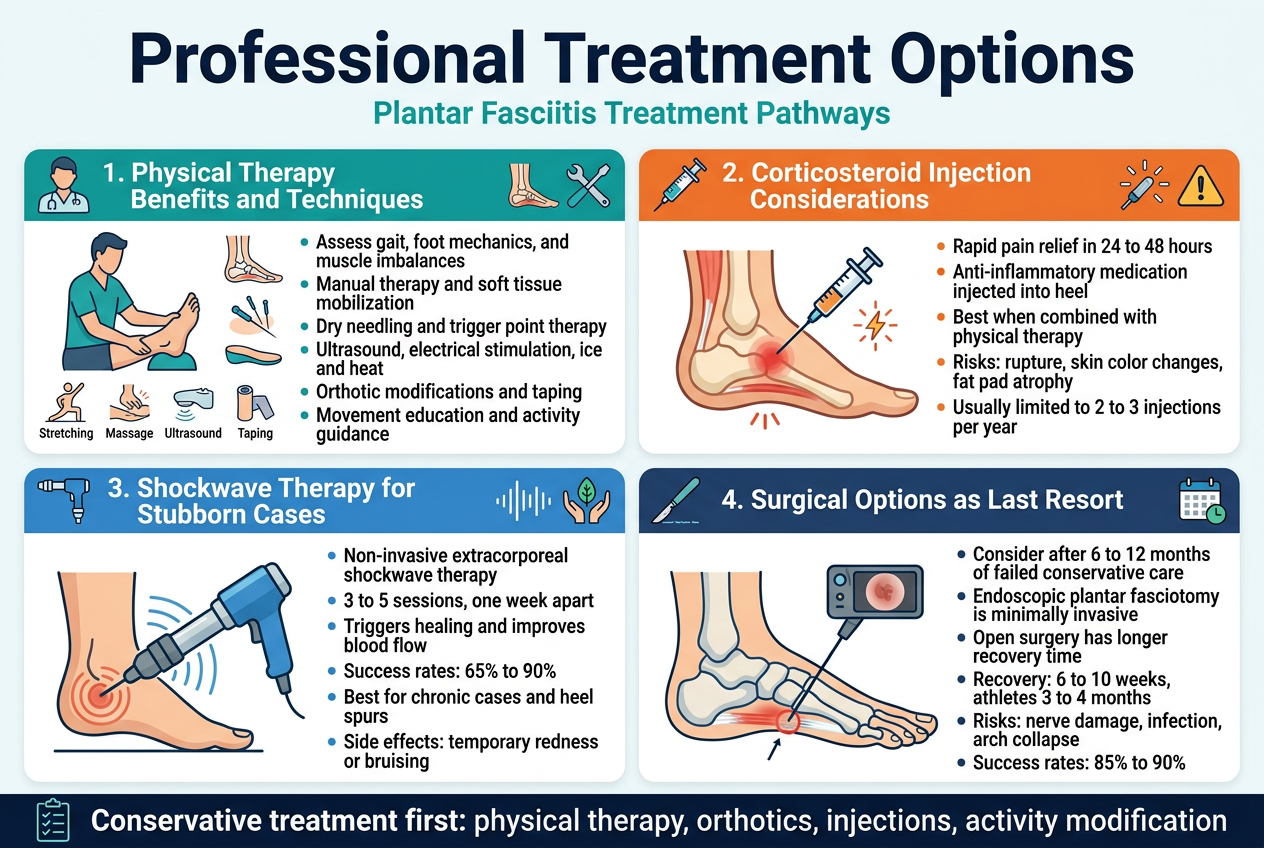
Working with a qualified physiotherapist offers the most comprehensive approach to plantar fasciitis treatment. Physical therapy goes beyond basic stretching to address biomechanical issues that contribute to your heel pain. A skilled physiotherapist will assess your gait, foot mechanics, and muscle imbalances to create a personalized treatment plan.

Manual therapy techniques like soft tissue mobilization and joint manipulation help restore normal foot movement patterns. Your therapist might use specialized tools for instrument-assisted soft tissue mobilization, breaking down scar tissue in the plantar fascia. Dry needling and trigger point therapy target specific muscle knots that refer pain to your heel.

Therapeutic modalities such as ultrasound, electrical stimulation, and ice/heat therapy accelerate healing and provide immediate pain relief. These treatments increase blood flow to the affected area and reduce inflammation. Your physiotherapist will also teach you proper taping techniques and recommend orthotic modifications tailored to your specific foot structure.

The real value lies in learning movement patterns that prevent future episodes. A good physiotherapist educates you about activities to avoid during acute phases and gradually reintroduces high-impact exercises as your condition improves.

Corticosteroid Injection Considerations

Corticosteroid injections offer rapid pain relief for severe plantar fasciitis cases that don’t respond to conservative treatment. These injections deliver powerful anti-inflammatory medication directly to the inflamed plantar fascia, providing relief that can last several months.

The procedure involves injecting a corticosteroid, typically combined with a local anesthetic, into the most tender area of your heel. Most patients experience significant pain reduction within 24-48 hours. The anti-inflammatory effect helps break the cycle of pain and inflammation that keeps your condition active.

However, these injections aren’t without risks. Repeated corticosteroid injections can weaken the plantar fascia, potentially leading to rupture. This complication, while rare, can cause worse long-term problems than the original condition. Most healthcare providers limit patients to two or three injections per year.

Side effects might include temporary increased pain at the injection site, skin color changes, or fat pad atrophy under the heel. The injection itself can be quite painful, though the discomfort typically subsides quickly. Some patients experience a temporary increase in blood sugar levels, particularly those with diabetes.

Timing matters with corticosteroid injections. They work best when combined with other treatments like physical therapy and activity modification, not as standalone solutions.

Shockwave Therapy for Stubborn Cases

Extracorporeal shockwave therapy (ESWT) represents a breakthrough treatment for chronic plantar fasciitis that hasn’t responded to traditional methods. This non-invasive procedure uses high-energy sound waves to stimulate healing in damaged tissue and break up calcific deposits.

The treatment works by creating controlled micro-trauma in the plantar fascia, triggering your body’s natural healing response. This process increases blood flow to the area, promotes new blood vessel formation, and helps dissolve calcium buildups that contribute to heel spurs. Most patients require three to five sessions scheduled one week apart.

During treatment, a specialized device delivers focused shockwaves to the exact location of your pain. Sessions typically last 15-20 minutes, and while some discomfort occurs during the procedure, it’s generally well-tolerated. Many patients notice improvement within a few weeks, with continued progress over several months.

Success rates for shockwave therapy range from 65-90%, making it an excellent option before considering surgery. The treatment works particularly well for patients with heel spurs or chronic cases lasting more than six months. Side effects are minimal, usually limited to temporary redness or minor bruising at the treatment site.

Not everyone qualifies for shockwave therapy. Pregnant women, patients with blood clotting disorders, or those taking certain medications may not be candidates for this treatment.

Surgical Options as Last Resort

Surgery becomes necessary when conservative treatments fail after 6-12 months of consistent effort. Plantar fascia release surgery aims to reduce tension in the plantar fascia by partially cutting the ligament, allowing it to lengthen and reduce stress on the heel bone attachment.

The most common procedure is endoscopic plantar fasciotomy, performed through small incisions using a tiny camera for guidance. This minimally invasive approach reduces recovery time and surgical risks compared to open surgery. Surgeons cut approximately 50% of the plantar fascia fibers, leaving enough intact tissue to maintain foot arch support.

Traditional open surgery involves a larger incision and direct visualization of the plantar fascia. While this approach allows for more precise tissue removal and treatment of heel spurs, it requires longer recovery periods and carries higher complication risks.

Recovery typically takes 6-10 weeks for return to normal activities, with athletes requiring 3-4 months before resuming full sports participation. Physical therapy starts within days of surgery to prevent scar tissue formation and maintain ankle mobility.

Surgical risks include nerve damage, infection, arch collapse, and incomplete pain relief. Some patients develop chronic pain or require additional procedures. Success rates hover around 85-90%, but the irreversible nature of surgery makes it truly a last resort option.

Most surgeons require documented failure of conservative treatment, including physical therapy, orthotics, injections, and activity modification, before recommending surgical intervention.

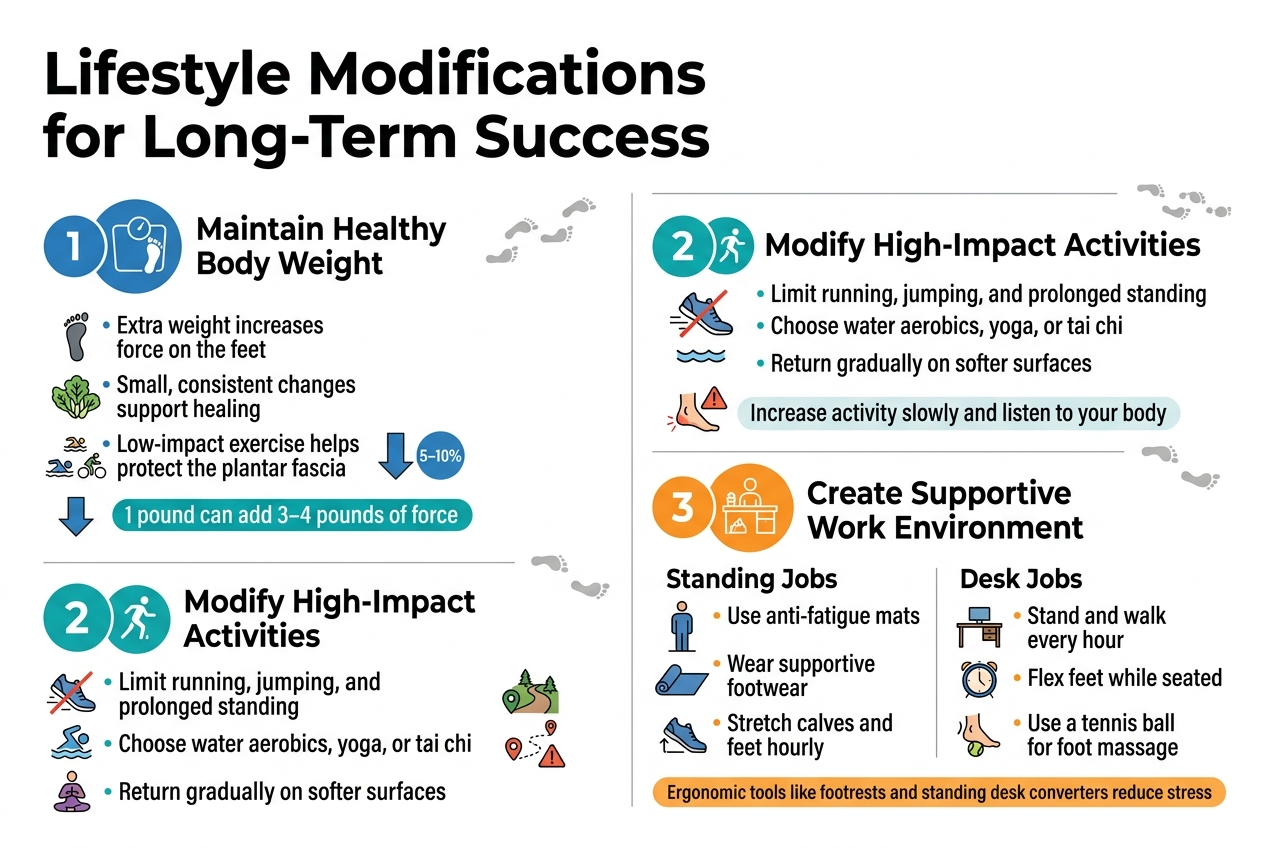
Lifestyle Modifications for Long-Term Success

Lifestyle Modifications for Long-Term Success

Maintain Healthy Body Weight

Extra pounds put tremendous pressure on your feet, especially the delicate plantar fascia tissue. Each additional pound of body weight translates to roughly three to four pounds of extra force on your feet when walking. This increased load makes healing from plantar fasciitis much more challenging and can trigger flare-ups even after successful treatment.

Weight management doesn’t require drastic measures. Small, consistent changes often yield the best long-term results. Focus on nutrient-dense foods that reduce inflammation naturally – think colorful vegetables, lean proteins, and omega-3 rich fish. These foods support tissue healing while helping you maintain a healthy weight.

Low-impact activities work best during recovery. Swimming, cycling, and elliptical training allow you to stay active without aggravating foot pain. Even a 5-10% reduction in body weight can significantly decrease the mechanical stress on your plantar fascia, accelerating your recovery timeline.

Modify High-Impact Activities

Running, jumping, and prolonged standing on hard surfaces can derail your plantar fasciitis treatment progress. This doesn’t mean giving up your favorite activities forever – it means making smart adjustments during healing and beyond.

Replace high-impact exercises with gentler alternatives that keep you moving without triggering morning heel pain. Water aerobics provides excellent cardiovascular benefits while the buoyancy reduces foot stress. Yoga and tai chi improve flexibility and strength while being kind to your feet.

When you’re ready to return to higher-impact activities, do it gradually. Start with every other day, shorter durations, and always on softer surfaces when possible. Trail running on dirt paths beats pounding pavement every time. Listen to your body – if heel pain returns, scale back and allow more recovery time.

Create Supportive Work Environment

Your work environment plays a huge role in plantar fasciitis management, especially if you spend long hours on your feet or sit at a desk all day. Both scenarios can contribute to foot problems, but simple workplace modifications make a significant difference.

For standing jobs, invest in anti-fatigue mats and wear supportive footwear throughout your shift. Take regular breaks to stretch your calves and feet. Even 30-second calf stretches every hour help prevent tissue tightening.

Desk workers face different challenges. Prolonged sitting can cause calf muscles and plantar fascia to shorten, leading to painful morning first steps. Set hourly reminders to stand, walk, and perform gentle foot flexing exercises. Keep a tennis ball under your desk for foot massages during phone calls.

Consider ergonomic adjustments like footrests or standing desk converters. These tools help you vary your position throughout the day, reducing repetitive stress on your feet and supporting better overall posture.

conclusion

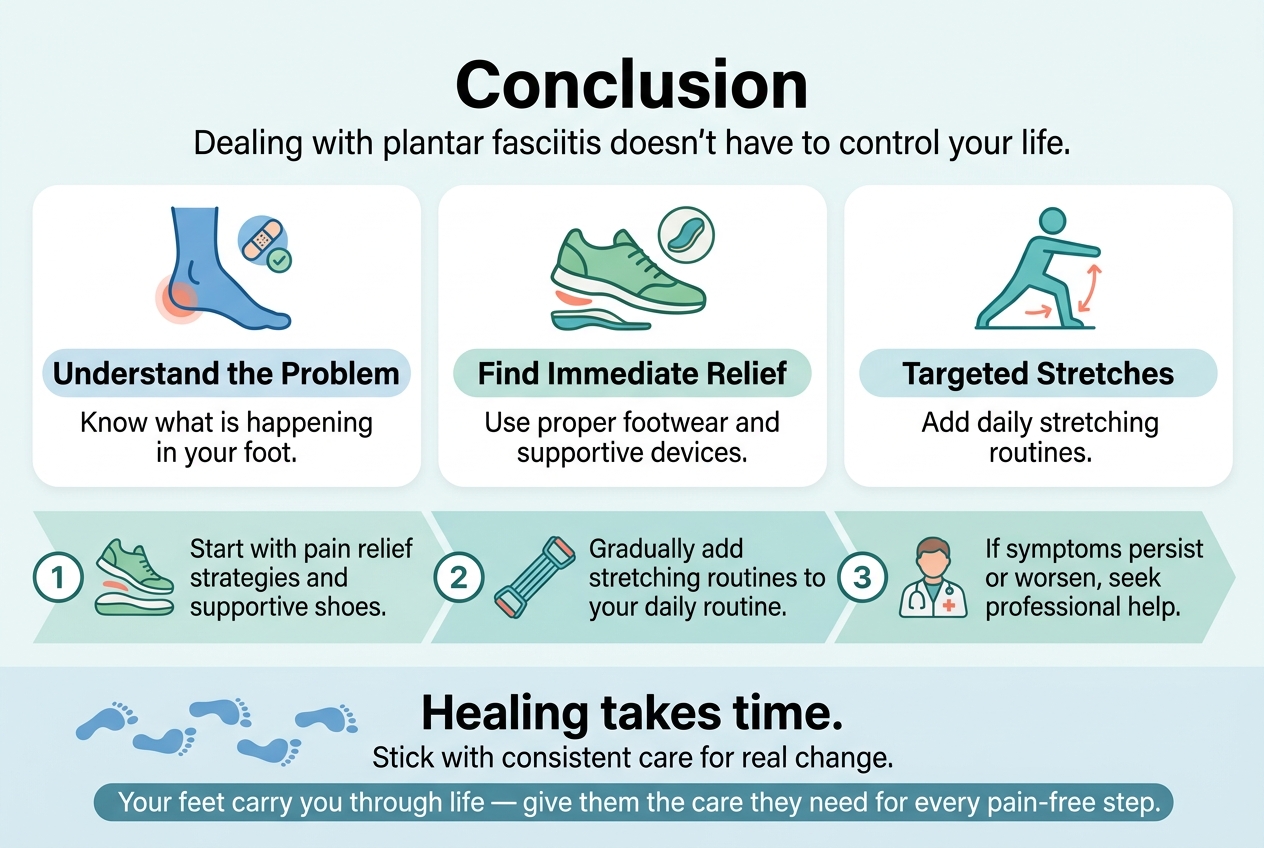
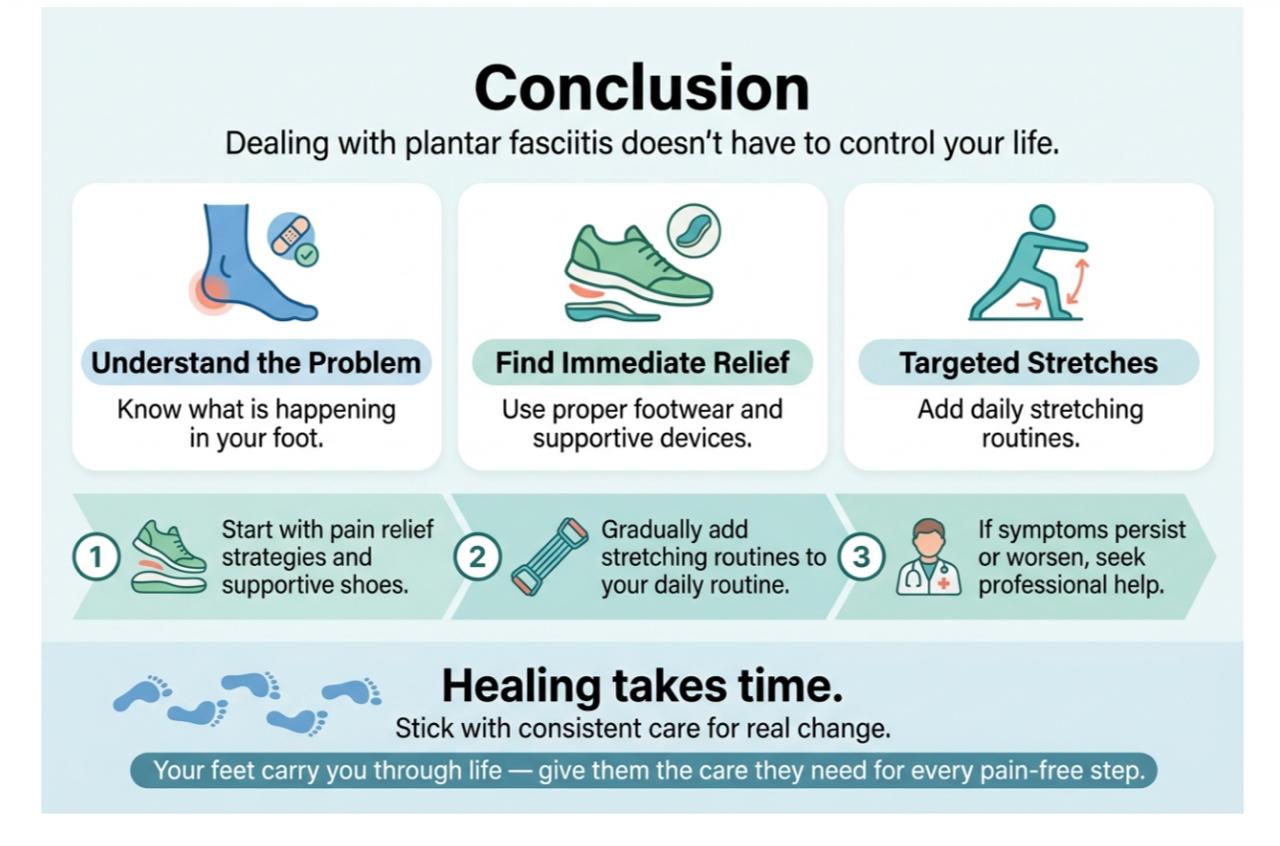
Dealing with plantar fasciitis doesn’t have to control your life. You now have a complete toolkit – from understanding what’s happening in your foot to finding immediate relief through proper footwear, supportive devices, and targeted stretches. The exercises and lifestyle changes we’ve covered can make a real difference when you stick with them consistently.

Remember, healing takes time, and what works best often combines several approaches. Start with the pain relief strategies and supportive shoes, then gradually add stretching routines to your daily routine. If your symptoms persist or worsen, don’t hesitate to seek professional help. Your feet carry you through life – giving them the care and attention they need will pay off with every pain-free step you take.

TREATMENT OF LOW BACKPAIN

TREATMENT OF LOW BACKPAIN

Complete Guide to Low Back Pain Treatment in Bhavnagar
Lower back pain affects millions of people and can turn simple daily activities into painful challenges. If you’re dealing with chronic low back pain, sciatica, or general back discomfort in Bhavnagar, you’re not alone – and more importantly, effective treatment options are available right here in your city.
This guide is for anyone experiencing lower back pain, from office workers dealing with muscle strain to athletes managing sports injuries. Whether your pain started recently or you’ve been struggling for months, you’ll find practical solutions that can help you get back to living without constant discomfort.
We’ll walk you through understanding what’s actually causing your pain so you can target the right treatment approach. You’ll discover non-surgical treatment options including physiotherapy techniques that have helped thousands of patients find real relief. Finally, we’ll share proven prevention strategies you can use to protect your back and avoid future pain episodes.
The best physiotherapist for back pain in Bhavnagar, Dr. Laxmi Gurumukhani, has helped countless patients recover using evidence-based treatments that focus on long-term healing rather than just temporary pain relief. Her physiotherapy clinic specializes in non-surgical back pain treatment that gets to the root of the problem.
Ready to take control of your back pain? Let’s explore the treatment options that can help you reclaim your active, pain-free life.
Understanding Your Lower Back Pain for Effective Recovery

Identify Common Causes and Risk Factors
Lower back pain affects millions globally, with causes ranging from muscle strains and poor posture to herniated discs and spinal arthritis. Common risk factors include prolonged sitting, heavy lifting, age-related wear, obesity, and sedentary lifestyle. Understanding your specific triggers helps guide effective Low Back Pain Treatment in Bhavnagar approaches.
Occupational hazards like repetitive bending, twisting motions, and prolonged standing significantly increase injury risk. Past injuries, genetics, and psychological stress also contribute to pain development. Identifying these patterns allows the Best Physiotherapist for Back Pain in Bhavnagar to create targeted treatment plans addressing root causes rather than just symptoms.
Recognize Warning Signs That Require Immediate Medical Attention


Immediate Medical Care Required
Symptoms to Monitor


Severe neurological symptoms
Numbness, tingling in legs

Bowel/bladder dysfunction
Loss of control, incontinence

Progressive weakness
Inability to lift foot/toes

Fever with back pain
Signs of infection


Red flags include sudden severe pain after trauma, progressive leg weakness, or loss of sensation. These symptoms may indicate serious conditions requiring urgent evaluation beyond standard Physiotherapy for Low Back Pain in Bhavnagar. Don’t ignore persistent night pain or fever accompanying back discomfort.
Distinguish Between Acute and Chronic Pain Patterns
Acute pain develops suddenly, lasting days to weeks, often from specific injuries or movements. This type typically responds well to rest, ice, and early mobility. Chronic Low Back Pain Treatment Bhavnagar becomes necessary when discomfort persists beyond three months, requiring comprehensive management strategies.
Chronic patterns involve complex pain cycles, muscle deconditioning, and often psychological components. Understanding these differences helps patients set realistic expectations and choose appropriate interventions, whether seeking Sciatica Treatment in Bhavnagar or comprehensive rehabilitation programs.
Non-Surgical Treatment Options That Provide Real Relief

Targeted Physical Therapy Exercises for Strengthening
Physical therapy forms the foundation of effective Non-Surgical Back Pain Treatment Bhavnagar, combining specific movements that rebuild strength and flexibility. A qualified Best Physiotherapist for Back Pain in Bhavnagar designs personalized exercise programs targeting core muscles, hip flexors, and spinal stabilizers that support your lower back.
Dr. Laxmi Gurumukhani Physiotherapy Bhavnagar emphasizes progressive strengthening routines that include pelvic tilts, bridge exercises, and controlled spinal movements. These targeted approaches help patients with Chronic Low Back Pain Treatment Bhavnagar regain function while preventing future injuries through improved muscle coordination and endurance.
Pain Management Through Medication and Natural Remedies
Pain relief strategies combine prescription medications with proven natural alternatives for comprehensive Low Back Pain Treatment in Bhavnagar. Anti-inflammatory drugs reduce swelling while muscle relaxants address spasms, creating space for healing and movement restoration.
Natural remedies like turmeric supplements, ginger extracts, and topical arnica provide additional relief without side effects. Many Back Pain Specialist in Bhavnagar professionals recommend combining these approaches with proper hydration and anti-inflammatory diets to maximize healing potential and reduce dependency on pharmaceutical interventions.
Heat and Cold Therapy Applications for Faster Healing
Temperature therapy offers immediate relief and accelerated healing for patients seeking Lower Back Pain Relief Clinic Bhavnagar services. Cold therapy reduces inflammation during acute episodes, while heat therapy increases blood flow and relaxes tight muscles during chronic phases.
Professional Physiotherapy for Low Back Pain in Bhavnagar clinics use alternating hot-cold treatments, ultrasound therapy, and infrared heat to penetrate deep tissues. This combination approach helps patients with Sciatica Treatment in Bhavnagar by reducing nerve irritation and improving circulation to damaged areas.
Professional Massage and Manual Therapy Benefits
Manual therapy techniques break up scar tissue and restore normal movement patterns through skilled hands-on treatment. Licensed massage therapists work alongside physiotherapists to address muscle tension, trigger points, and fascial restrictions that contribute to ongoing pain.
Back Pain Physiotherapy Near Me searches often lead patients to clinics offering myofascial release, deep tissue massage, and spinal manipulation. These treatments improve joint mobility, reduce muscle guarding, and enhance the effectiveness of exercise programs by preparing tissues for movement and strengthening activities.
Active Recovery Strategies You Can Implement at Home

Gentle Stretching Routines for Daily Pain Management
Simple stretching exercises can dramatically reduce back pain when performed consistently. Cat-cow stretches, knee-to-chest pulls, and gentle spinal twists help loosen tight muscles and improve flexibility. Hold each stretch for 20-30 seconds and repeat 2-3 times daily. These movements increase blood flow to affected areas and prevent muscle stiffness that worsens pain.
Start slowly and listen to your body’s signals. If any stretch causes sharp pain, stop immediately and consider consulting a physiotherapist for back pain in Bhavnagar for proper guidance. Consistency matters more than intensity – gentle daily stretching provides better long-term relief than occasional aggressive stretching sessions.
Proper Sleep Positioning to Support Spinal Alignment
Your sleeping position directly impacts back pain recovery and prevention. Side sleeping with a pillow between your knees maintains proper spinal alignment and reduces pressure on the lower back. Back sleepers should place a small pillow under their knees to maintain the natural curve of the spine.
Avoid stomach sleeping as it forces your neck into awkward positions and flattens the natural lumbar curve. A medium-firm mattress provides optimal support without being too rigid. Replace worn mattresses that no longer maintain their shape, as poor support during sleep can undo the progress made through other treatments.
Ergonomic Workplace Adjustments That Prevent Further Injury
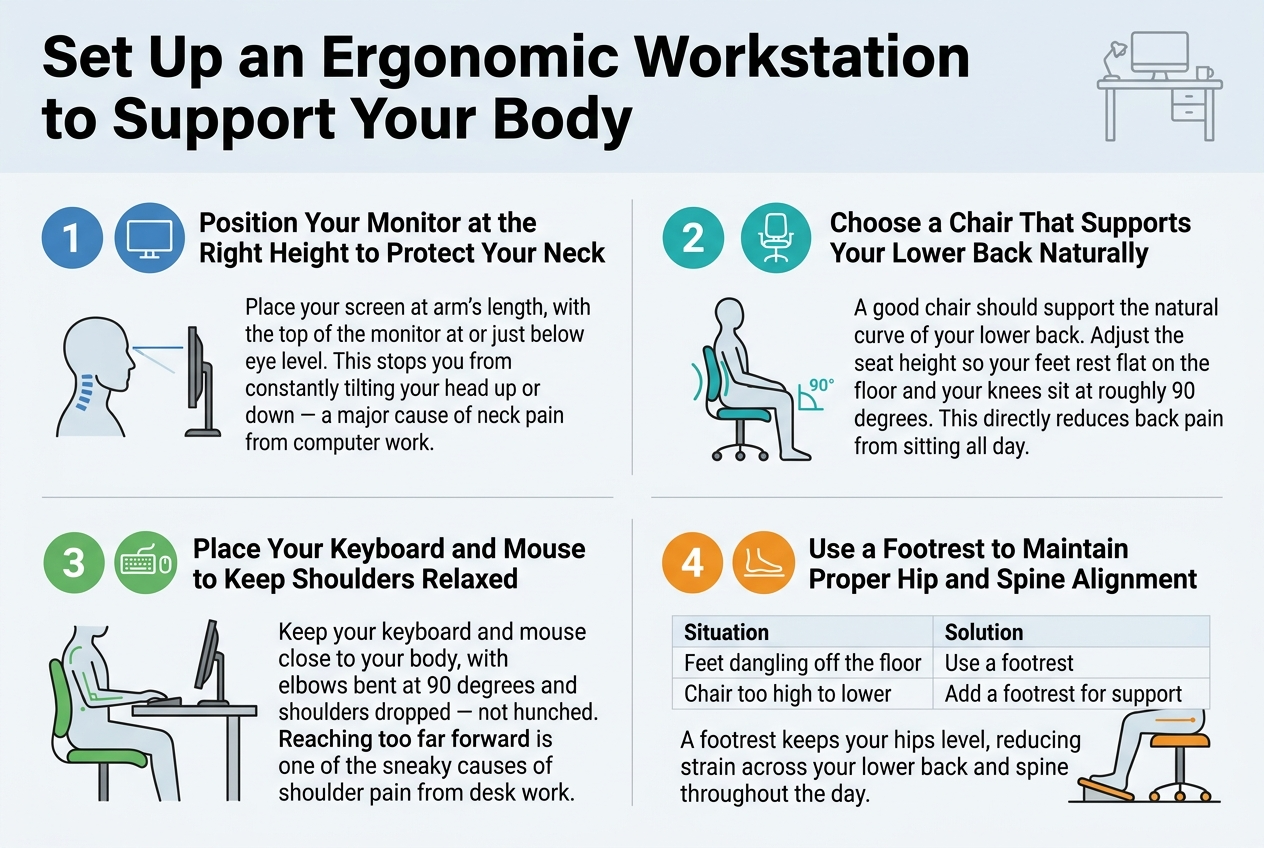
Workplace setup plays a crucial role in back pain management and prevention. Position your computer monitor at eye level to prevent neck strain that contributes to upper back tension. Keep your feet flat on the floor with knees at 90 degrees, and ensure your chair supports the natural curve of your lower back.
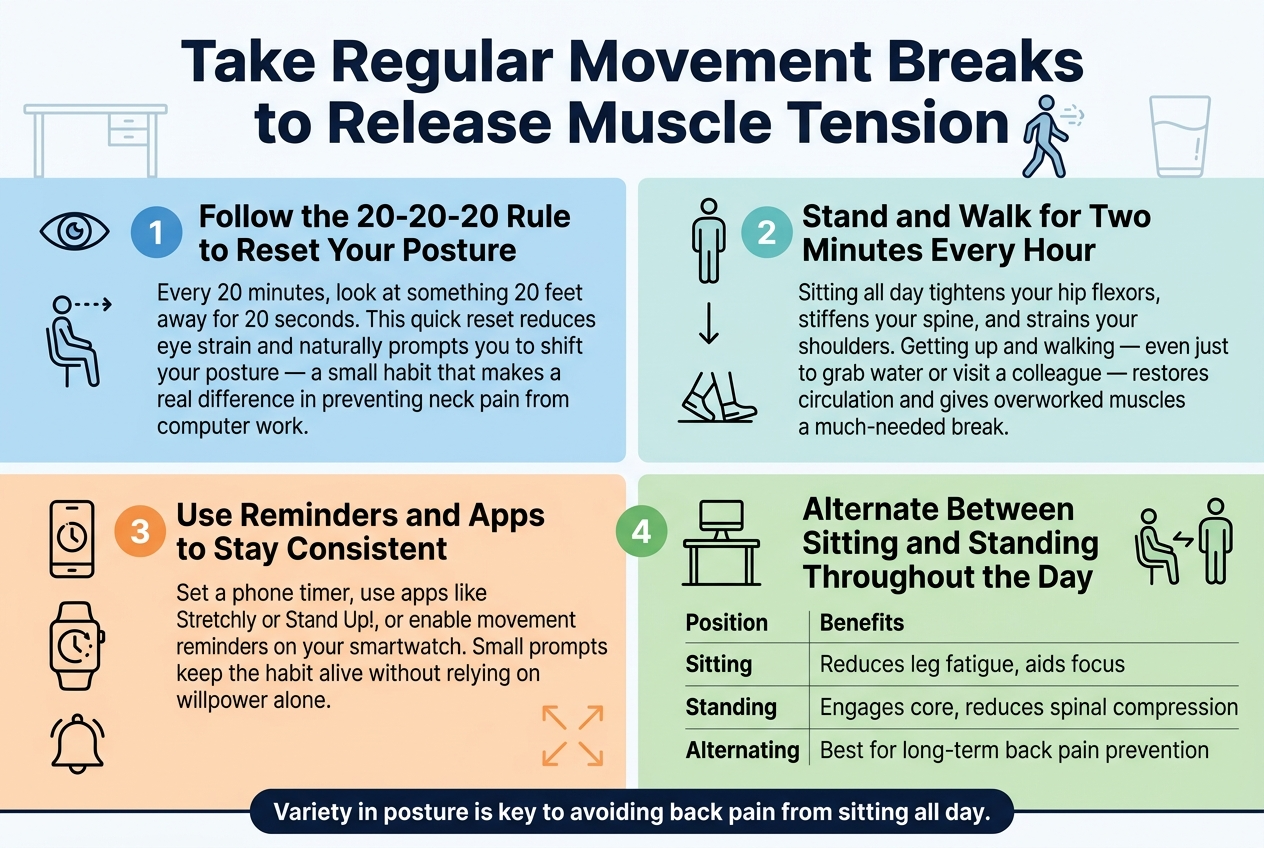
Take regular breaks every 30-60 minutes to stand, stretch, and walk around. Use a document holder to avoid repeatedly looking down, and position frequently used items within easy reach to prevent twisting and overreaching. These simple adjustments can prevent chronic low back pain from worsening throughout your workday.
Low-Impact Exercise Programs for Long-Term Strength
Building core strength through low-impact exercises creates natural support for your spine. Swimming, walking, and stationary cycling provide cardiovascular benefits without jarring movements that aggravate back pain. Water exercises are particularly effective as buoyancy reduces pressure on joints while providing resistance for muscle strengthening.
Yoga and Pilates focus specifically on core stability and flexibility. Start with beginner classes or online videos designed for people with back pain. Progressive strength training using light weights or resistance bands helps build the muscle endurance needed to support proper posture throughout daily activities.
Stress Reduction Techniques That Minimize Pain Flare-ups
Chronic stress significantly contributes to muscle tension and pain perception. Deep breathing exercises, meditation, and progressive muscle relaxation can break the stress-pain cycle. Practice these techniques for 10-15 minutes daily, especially during high-stress periods when pain typically worsens.
Regular stress management reduces cortisol levels that contribute to inflammation and pain sensitivity. Consider activities like gentle yoga, tai chi, or even regular walks in nature. Professional guidance from a back pain specialist in Bhavnagar can help you develop a comprehensive approach combining physical therapy with stress management techniques for optimal results.
Advanced Medical Interventions When Conservative Methods Fail

Steroid Injections for Targeted Inflammation Relief
Steroid injections deliver powerful anti-inflammatory medication directly to the source of pain, providing significant relief for chronic low back pain sufferers in Bhavnagar. These targeted treatments can reduce inflammation around nerve roots and spinal joints, offering pain relief that lasts several months.
Chiropractic Care and Spinal Manipulation Benefits
Chiropractic spinal manipulation helps restore proper joint movement and reduces nerve irritability. Many patients experience immediate improvement in mobility and pain levels after treatment sessions. Best physiotherapists for back pain in Bhavnagar often combine chiropractic techniques with other therapies for optimal results.
Acupuncture and Alternative Therapy Success Rates
Acupuncture shows promising results for non-surgical back pain treatment, with studies indicating 60-70% success rates for chronic conditions. This ancient practice stimulates specific points to release natural pain-relieving chemicals in the body. Dr. Laxmi Gurumukhani physiotherapy centers in Bhavnagar integrate these alternative approaches alongside conventional treatments for comprehensive care.
Prevention Strategies to Stop Future Back Pain Episodes

Core Strengthening Exercises for Spinal Support
Building a strong core creates the foundation your spine needs to stay healthy and pain-free. Focus on planks, bird dogs, and dead bugs – these exercises target the deep stabilizing muscles that act like a natural back brace. Start with 10-15 seconds and gradually increase duration as your strength improves.
Proper Lifting Techniques That Protect Your Back
Your lifting technique makes all the difference between a healthy back and future injury. Always bend at your knees, keep the load close to your body, and engage your core before lifting. Turn with your feet, not your spine, and ask for help with heavy objects over 25 pounds.
Maintaining Healthy Weight for Reduced Spinal Pressure
Extra pounds put tremendous stress on your lower back, especially around your midsection. Every pound of belly weight adds four pounds of pressure to your spine. Even losing 5-10 pounds can significantly reduce back pain and prevent future episodes from occurring.
Building Movement Habits That Keep Your Spine Flexible
Daily movement keeps your spine flexible and prevents stiffness that leads to pain. Take walking breaks every hour, perform gentle stretches throughout the day, and avoid staying in one position too long. Simple activities like cat-cow stretches or walking around the block can make a huge difference in your spinal health.

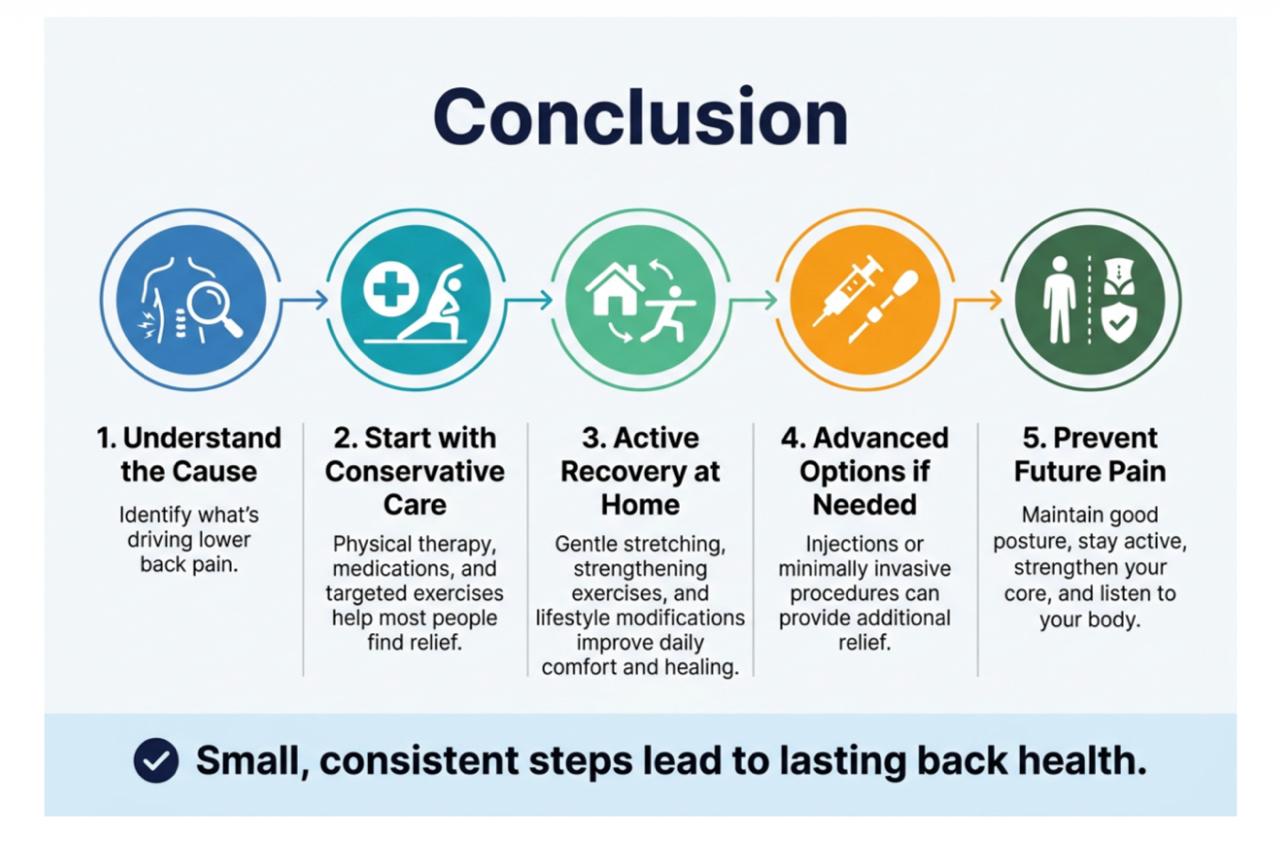
Lower back pain affects millions of people, but the good news is that effective treatment options exist for every stage of recovery. From understanding what’s causing your pain to exploring non-surgical treatments like physical therapy, medications, and targeted exercises, most people find significant relief without needing invasive procedures. The active recovery strategies you can do at home – including gentle stretching, strengthening exercises, and lifestyle modifications – often make the biggest difference in your day-to-day comfort and long-term healing.
When conservative treatments aren’t enough, advanced medical interventions like injections or minimally invasive procedures can provide the relief you need to get back to living fully. The real key to lasting success lies in prevention – maintaining good posture, staying active, strengthening your core, and listening to your body’s signals. Don’t let back pain control your life when so many proven treatment options are available. Start with the basics, work with healthcare professionals who understand your specific situation, and remember that small, consistent steps toward better back health can lead to dramatic improvements in how you feel every single day.

MANAGING PLANTER FASCITIS

MANAGING PLANTER FASCITIS

Managing Plantar Fasciitis: Your Complete Guide to Heel Pain Relief
Morning heel pain got you limping to the bathroom every day? You’re dealing with plantar fasciitis, and you’re not alone. This common foot condition affects millions of people who want practical solutions that actually work.
This guide is for anyone struggling with heel pain – whether you’re a runner dealing with sudden onset pain, someone whose job keeps you on your feet all day, or just tired of that stabbing sensation with your first steps each morning.
We’ll walk through immediate pain relief strategies you can start today, plus essential footwear changes that make a real difference in your daily comfort. You’ll also discover targeted plantar fasciitis exercises and professional treatment options, including when it’s time to see a specialist like Dr. Laxmi Gurumukhani for expert plantar fasciitis treatment.
Ready to get back on your feet without pain? Let’s dive into what works for lasting heel pain relief.
Understanding Your Foot Pain Condition

Recognize Early Warning Signs and Symptoms
The most telling sign of plantar fasciitis is sharp, stabbing heel pain that strikes hardest during your first steps in the morning. This morning heel pain feels like walking on broken glass and typically eases as you move around, only to return after sitting or lying down for extended periods.
Beyond the classic morning stiffness, watch for pain that develops along the bottom of your foot, particularly near the heel bone. This discomfort often radiates toward your arch and can range from a dull ache to intense burning sensations. Many people describe the feeling as having a stone stuck in their shoe or experiencing deep bruising in the heel area.
Pain typically worsens after physical activity rather than during it. You might feel fine during your morning jog but experience increased discomfort later in the day. Standing for long periods, climbing stairs, or walking on hard surfaces can intensify symptoms. Some people also notice swelling around the heel or increased tenderness when pressing on the bottom of the foot.
The progression of symptoms often follows a predictable pattern. Initial discomfort may seem minor and sporadic, but without proper attention, it can develop into persistent, debilitating pain that affects daily activities like walking, working, or exercising.
Identify Common Risk Factors and Triggers
Several factors increase your likelihood of developing plantar fasciitis, with age being a primary consideration. People between 40 and 60 face the highest risk as the plantar fascia naturally loses elasticity and becomes more prone to tiny tears and inflammation.
Your foot structure plays a significant role in plantar fasciitis development. Flat feet, high arches, or abnormal walking patterns create uneven weight distribution across the foot, placing extra stress on the plantar fascia. People with tight Achilles tendons or calf muscles also face increased risk because this tightness limits ankle flexibility and strains the heel area.
Weight-bearing activities and occupational hazards contribute significantly to heel pain development. Jobs requiring prolonged standing on hard surfaces – like teaching, factory work, or retail – create repetitive stress on the feet. Sudden increases in physical activity, particularly high-impact exercises like running or jumping, can overwhelm the plantar fascia’s capacity to adapt.
Excess body weight compounds these risks by increasing the load on your feet with every step. Poor footwear choices, including worn-out shoes, high heels, or completely flat shoes without arch support, fail to provide adequate cushioning and support for the plantar fascia.
Distinguish Between Plantar Fasciitis and Other Foot Conditions
Plantar fasciitis often gets confused with other foot problems, but specific characteristics help differentiate it from similar conditions. Unlike Achilles tendonitis, which causes pain at the back of the heel and along the tendon, plantar fasciitis pain concentrates on the bottom of the heel and arch area.
Heel spurs frequently accompany plantar fasciitis but aren’t always the pain source. While heel spur treatment may be discussed alongside plantar fasciitis treatment, the sharp pain typically comes from the inflamed plantar fascia rather than the bony growth itself. X-rays can reveal heel spurs, but their presence doesn’t automatically indicate they’re causing your discomfort.
Tarsal tunnel syndrome mimics plantar fasciitis but includes numbness, tingling, or burning sensations that extend into the toes. This condition involves nerve compression rather than fascia inflammation. Stress fractures in the heel bone cause constant, throbbing pain that worsens with any weight-bearing activity, unlike plantar fasciitis pain that often improves with movement.


Condition
Pain Location
Pain Timing
Additional Symptoms


Plantar Fasciitis
Bottom of heel/arch
Worst in morning
Stiffness after rest

Achilles Tendonitis
Back of heel
During activity
Tendon thickening

Heel Spur
Bottom of heel
Variable
Often painless

Tarsal Tunnel
Heel to toes
Constant
Numbness, tingling


Fat pad atrophy, common in older adults, causes diffuse heel pain that feels like walking on a thin cushion. This condition lacks the sharp, localized pain characteristic of plantar fasciitis and doesn’t show the typical morning stiffness pattern.
Immediate Pain Relief Strategies

Apply Ice Therapy for Acute Inflammation
Cold therapy works wonders for reducing inflammation and numbing heel pain relief when plantar fasciitis flares up. Apply an ice pack wrapped in a thin towel to the bottom of your foot for 15-20 minutes, 3-4 times daily. Never place ice directly on your skin to avoid frostbite.
A frozen water bottle makes an excellent alternative – roll it under your foot while sitting, combining ice therapy with gentle massage. This technique helps break up scar tissue while providing cooling relief. For morning heel pain, try icing your feet before getting out of bed to reduce that first-step agony.
Use Over-the-Counter Pain Medications Safely
Non-steroidal anti-inflammatory drugs (NSAIDs) like ibuprofen and naproxen reduce both pain and inflammation associated with plantar fasciitis treatment. Follow dosing instructions carefully and take with food to prevent stomach irritation.
Acetaminophen offers pain relief without anti-inflammatory properties, making it suitable for those who can’t tolerate NSAIDs. Always consult your healthcare provider before starting any medication regimen, especially if you have existing health conditions or take other medications.


Medication Type
Dosage
Benefits
Precautions


Ibuprofen
200-400mg every 6-8 hours
Reduces pain and inflammation
Take with food

Naproxen
220mg every 8-12 hours
Longer-lasting relief
Monitor stomach health

Acetaminophen
650mg every 6 hours
Safe for sensitive stomachs
Watch liver function


Perform Gentle Stretching Techniques
Simple plantar fasciitis exercises can provide immediate relief while preventing future flare-ups. The towel stretch works perfectly for morning stiffness – sit on your bed with a towel looped around the ball of your foot, gently pulling your toes toward your shin.
Calf stretches target tight muscles that contribute to plantar fascia tension. Stand arm’s length from a wall, place your hands flat against it, and step your affected foot back. Keep your heel down while leaning forward to stretch your calf muscle.
Rolling a tennis ball under your foot provides targeted pressure to tight spots in the plantar fascia. Apply gentle pressure while rolling from heel to toe, spending extra time on tender areas.
Elevate Your Feet to Reduce Swelling
Elevation helps gravity drain excess fluid from inflamed tissues, reducing swelling and pressure on the plantar fascia. Raise your feet above heart level for 15-20 minutes several times throughout the day.
Use pillows to prop your feet up while watching TV or reading. At work, place a footstool under your desk to keep feet elevated during breaks. This simple technique works especially well after long periods of standing or walking that aggravate foot pain.
Combine elevation with ice therapy for maximum benefit – the cold reduces inflammation while elevation promotes drainage of inflammatory fluids from the affected area.
Essential Footwear and Support Solutions

Choose Proper Athletic and Daily Shoes
Your choice of footwear plays a critical role in plantar fasciitis treatment and heel pain relief. Well-designed shoes provide the foundation your feet need to heal and prevent further injury. Look for shoes with excellent arch support, cushioned heel areas, and rigid sole construction that prevents excessive foot flexing.
Athletic shoes should feature motion control technology and deep heel cups that cradle your foot properly. Replace running or walking shoes every 300-400 miles, as worn-out soles lose their shock-absorbing properties. Avoid flat shoes, flip-flops, and high heels, which place excessive strain on your plantar fascia.
For daily wear, choose leather or synthetic shoes with lace-up closures that allow proper fit adjustment. The toe box should provide adequate room without being too loose. Many people find relief by selecting shoes with a slight heel elevation (1/2 to 3/4 inch) rather than completely flat soles.
Select Effective Arch Support Inserts
Over-the-counter arch support inserts can provide immediate morning heel pain relief when custom orthotics aren’t available. These inserts work by redistributing pressure across your foot and supporting the plantar fascia during weight-bearing activities.
Rigid or semi-rigid inserts typically offer better support than soft gel versions for plantar fasciitis treatment. Look for inserts made from materials like EVA foam, carbon fiber, or thermoplastic that maintain their shape under body weight. The insert should match your foot type – high arches need different support than flat feet.
Popular options include heel cups that specifically target heel pain, full-length insoles that provide comprehensive support, and 3/4-length inserts that fit in most shoe types. Replace inserts every 6-12 months depending on usage, as they lose effectiveness over time.
Consider Night Splints for Recovery
Night splints represent one of the most effective conservative treatments for plantar fasciitis. These devices maintain your foot in a dorsiflexed position while sleeping, preventing the plantar fascia from tightening overnight and reducing morning heel pain.
Two main types exist: rigid posterior splints that extend up the back of your leg, and more comfortable sock-style splints that provide gentler stretching. Most people tolerate the sock-style versions better for long-term use, though rigid splints may provide faster initial results.
Start wearing night splints for short periods to build tolerance, gradually increasing to full nights. Most people experience significant improvement within 4-6 weeks of consistent use. The key is maintaining proper ankle positioning at approximately 90 degrees throughout sleep.
Evaluate Custom Orthotics Benefits
Custom orthotics from a qualified professional represent the gold standard for foot pain physiotherapy support. Unlike over-the-counter options, these devices are crafted specifically for your foot structure, gait pattern, and condition severity.
A qualified physiotherapist or podiatrist creates custom orthotics through detailed foot impressions, gait analysis, and biomechanical assessment. The resulting devices provide precise arch support, heel cushioning, and motion control tailored to your needs. Materials range from rigid thermoplastics for maximum control to softer accommodative materials for comfort.
While custom orthotics require higher initial investment, they often provide superior long-term results compared to generic inserts. Most insurance plans cover custom orthotics when prescribed for medical conditions like plantar fasciitis. The devices typically last 3-5 years with proper care, making them cost-effective over time.
Professional fitting ensures optimal positioning and comfort, with follow-up adjustments as needed during the healing process.
Targeted Exercises and Stretching Routines

Master Morning Foot Stretches
Morning heel pain strikes hardest when you take those first steps out of bed. Your plantar fascia tightens overnight, making that initial contact with the floor feel like stepping on broken glass. The key to reducing this morning heel pain lies in gentle stretching before you even stand up.
Start with ankle pumps while still lying in bed. Point your toes toward the ceiling, then flex them back toward your shin. Repeat this motion 10-15 times to wake up your foot muscles gradually. Next, perform alphabet draws with your toes – simply trace the letters A through Z in the air using your big toe as a pencil. This movement activates multiple muscle groups and improves circulation.
The towel stretch works wonders for plantar fasciitis treatment. Keep a towel by your bedside and loop it around the ball of your foot while your leg extends straight. Gently pull the towel toward you, feeling the stretch along your calf and the bottom of your foot. Hold for 30 seconds and repeat three times on each foot.
Standing calf stretches against your bedroom wall complete your morning routine. Place your hands flat against the wall, step your affected foot back about three feet, and lean forward while keeping your heel on the ground. This targets the gastrocnemius muscle, which directly impacts plantar fascia tension.
Strengthen Your Calf Muscles
Weak calf muscles often contribute to plantar fasciitis by failing to support your foot’s natural arch properly. Building strength in these muscles creates a stable foundation that reduces stress on your plantar fascia during daily activities.
Calf raises represent the gold standard for strengthening these crucial muscles. Stand with your feet hip-width apart, slowly rise onto your toes, hold for three seconds, then lower back down with control. Start with 15 repetitions and gradually increase to 25 as your strength improves. For added challenge, perform single-leg calf raises or hold dumbbells.
Eccentric heel drops provide exceptional benefits for heel pain relief. Stand on a step with just the balls of your feet on the edge, allowing your heels to hang off. Slowly lower your heels below the step level, feeling a deep stretch in your calves. Use your opposite foot to push back to the starting position, then repeat the controlled lowering motion. This exercise specifically targets the Achilles tendon and calf muscle connection.
Resistance band exercises add variety and progressive overload to your routine. Sit with your legs extended and loop a resistance band around the ball of your foot. Point your toes against the band’s resistance, then slowly flex them back. This movement pattern strengthens both your calf muscles and the small stabilizing muscles in your feet.
Improve Foot Flexibility with Towel Exercises
Towel exercises offer incredible versatility for plantar fasciitis exercises while requiring minimal equipment. These movements target specific areas that traditional stretching often misses, making them essential components of any comprehensive foot pain physiotherapy program.
The towel scrunch exercise builds strength in your foot’s intrinsic muscles. Place a small towel flat on the floor and use only your toes to scrunch it toward you. Perform 10-15 repetitions, focusing on using your toes rather than your whole foot. Add marbles or small objects to the towel for increased difficulty as you progress.
Towel picking challenges your toe dexterity and arch support muscles. Spread a towel on the floor and practice picking it up using only your toes, then transferring it from one foot to the other. This exercise improves coordination while strengthening the muscles responsible for maintaining your foot’s arch structure.
The towel twist exercise targets rotational flexibility often overlooked in basic stretching routines. Sit in a chair with a towel under your affected foot. Use your foot to twist the towel clockwise and counterclockwise, engaging muscles throughout your foot and ankle. This movement pattern helps restore normal foot mechanics and reduces compensatory movement patterns that can perpetuate plantar fasciitis symptoms.
Dynamic towel stretches combine flexibility work with functional movement. Place the towel under your foot and perform pointing and flexing motions while maintaining tension on the towel. This creates active stretching that better prepares your foot for weight-bearing activities than passive stretching alone.
Professional Treatment Options

Physical Therapy Benefits and Techniques
Working with a qualified physiotherapist offers the most comprehensive approach to plantar fasciitis treatment. Physical therapy goes beyond basic stretching to address biomechanical issues that contribute to your heel pain. A skilled physiotherapist will assess your gait, foot mechanics, and muscle imbalances to create a personalized treatment plan.
Manual therapy techniques like soft tissue mobilization and joint manipulation help restore normal foot movement patterns. Your therapist might use specialized tools for instrument-assisted soft tissue mobilization, breaking down scar tissue in the plantar fascia. Dry needling and trigger point therapy target specific muscle knots that refer pain to your heel.
Therapeutic modalities such as ultrasound, electrical stimulation, and ice/heat therapy accelerate healing and provide immediate pain relief. These treatments increase blood flow to the affected area and reduce inflammation. Your physiotherapist will also teach you proper taping techniques and recommend orthotic modifications tailored to your specific foot structure.
The real value lies in learning movement patterns that prevent future episodes. A good physiotherapist educates you about activities to avoid during acute phases and gradually reintroduces high-impact exercises as your condition improves.
Corticosteroid Injection Considerations
Corticosteroid injections offer rapid pain relief for severe plantar fasciitis cases that don’t respond to conservative treatment. These injections deliver powerful anti-inflammatory medication directly to the inflamed plantar fascia, providing relief that can last several months.
The procedure involves injecting a corticosteroid, typically combined with a local anesthetic, into the most tender area of your heel. Most patients experience significant pain reduction within 24-48 hours. The anti-inflammatory effect helps break the cycle of pain and inflammation that keeps your condition active.
However, these injections aren’t without risks. Repeated corticosteroid injections can weaken the plantar fascia, potentially leading to rupture. This complication, while rare, can cause worse long-term problems than the original condition. Most healthcare providers limit patients to two or three injections per year.
Side effects might include temporary increased pain at the injection site, skin color changes, or fat pad atrophy under the heel. The injection itself can be quite painful, though the discomfort typically subsides quickly. Some patients experience a temporary increase in blood sugar levels, particularly those with diabetes.
Timing matters with corticosteroid injections. They work best when combined with other treatments like physical therapy and activity modification, not as standalone solutions.
Shockwave Therapy for Stubborn Cases
Extracorporeal shockwave therapy (ESWT) represents a breakthrough treatment for chronic plantar fasciitis that hasn’t responded to traditional methods. This non-invasive procedure uses high-energy sound waves to stimulate healing in damaged tissue and break up calcific deposits.
The treatment works by creating controlled micro-trauma in the plantar fascia, triggering your body’s natural healing response. This process increases blood flow to the area, promotes new blood vessel formation, and helps dissolve calcium buildups that contribute to heel spurs. Most patients require three to five sessions scheduled one week apart.
During treatment, a specialized device delivers focused shockwaves to the exact location of your pain. Sessions typically last 15-20 minutes, and while some discomfort occurs during the procedure, it’s generally well-tolerated. Many patients notice improvement within a few weeks, with continued progress over several months.
Success rates for shockwave therapy range from 65-90%, making it an excellent option before considering surgery. The treatment works particularly well for patients with heel spurs or chronic cases lasting more than six months. Side effects are minimal, usually limited to temporary redness or minor bruising at the treatment site.
Not everyone qualifies for shockwave therapy. Pregnant women, patients with blood clotting disorders, or those taking certain medications may not be candidates for this treatment.
Surgical Options as Last Resort
Surgery becomes necessary when conservative treatments fail after 6-12 months of consistent effort. Plantar fascia release surgery aims to reduce tension in the plantar fascia by partially cutting the ligament, allowing it to lengthen and reduce stress on the heel bone attachment.
The most common procedure is endoscopic plantar fasciotomy, performed through small incisions using a tiny camera for guidance. This minimally invasive approach reduces recovery time and surgical risks compared to open surgery. Surgeons cut approximately 50% of the plantar fascia fibers, leaving enough intact tissue to maintain foot arch support.
Traditional open surgery involves a larger incision and direct visualization of the plantar fascia. While this approach allows for more precise tissue removal and treatment of heel spurs, it requires longer recovery periods and carries higher complication risks.
Recovery typically takes 6-10 weeks for return to normal activities, with athletes requiring 3-4 months before resuming full sports participation. Physical therapy starts within days of surgery to prevent scar tissue formation and maintain ankle mobility.
Surgical risks include nerve damage, infection, arch collapse, and incomplete pain relief. Some patients develop chronic pain or require additional procedures. Success rates hover around 85-90%, but the irreversible nature of surgery makes it truly a last resort option.
Most surgeons require documented failure of conservative treatment, including physical therapy, orthotics, injections, and activity modification, before recommending surgical intervention.
Lifestyle Modifications for Long-Term Success

Maintain Healthy Body Weight
Extra pounds put tremendous pressure on your feet, especially the delicate plantar fascia tissue. Each additional pound of body weight translates to roughly three to four pounds of extra force on your feet when walking. This increased load makes healing from plantar fasciitis much more challenging and can trigger flare-ups even after successful treatment.
Weight management doesn’t require drastic measures. Small, consistent changes often yield the best long-term results. Focus on nutrient-dense foods that reduce inflammation naturally – think colorful vegetables, lean proteins, and omega-3 rich fish. These foods support tissue healing while helping you maintain a healthy weight.
Low-impact activities work best during recovery. Swimming, cycling, and elliptical training allow you to stay active without aggravating foot pain. Even a 5-10% reduction in body weight can significantly decrease the mechanical stress on your plantar fascia, accelerating your recovery timeline.
Modify High-Impact Activities
Running, jumping, and prolonged standing on hard surfaces can derail your plantar fasciitis treatment progress. This doesn’t mean giving up your favorite activities forever – it means making smart adjustments during healing and beyond.
Replace high-impact exercises with gentler alternatives that keep you moving without triggering morning heel pain. Water aerobics provides excellent cardiovascular benefits while the buoyancy reduces foot stress. Yoga and tai chi improve flexibility and strength while being kind to your feet.
When you’re ready to return to higher-impact activities, do it gradually. Start with every other day, shorter durations, and always on softer surfaces when possible. Trail running on dirt paths beats pounding pavement every time. Listen to your body – if heel pain returns, scale back and allow more recovery time.
Create Supportive Work Environment
Your work environment plays a huge role in plantar fasciitis management, especially if you spend long hours on your feet or sit at a desk all day. Both scenarios can contribute to foot problems, but simple workplace modifications make a significant difference.
For standing jobs, invest in anti-fatigue mats and wear supportive footwear throughout your shift. Take regular breaks to stretch your calves and feet. Even 30-second calf stretches every hour help prevent tissue tightening.
Desk workers face different challenges. Prolonged sitting can cause calf muscles and plantar fascia to shorten, leading to painful morning first steps. Set hourly reminders to stand, walk, and perform gentle foot flexing exercises. Keep a tennis ball under your desk for foot massages during phone calls.
Consider ergonomic adjustments like footrests or standing desk converters. These tools help you vary your position throughout the day, reducing repetitive stress on your feet and supporting better overall posture.

Dealing with plantar fasciitis doesn’t have to control your life. You now have a complete toolkit – from understanding what’s happening in your foot to finding immediate relief through proper footwear, supportive devices, and targeted stretches. The exercises and lifestyle changes we’ve covered can make a real difference when you stick with them consistently.
Remember, healing takes time, and what works best often combines several approaches. Start with the pain relief strategies and supportive shoes, then gradually add stretching routines to your daily routine. If your symptoms persist or worsen, don’t hesitate to seek professional help. Your feet carry you through life – giving them the care and attention they need will pay off with every pain-free step you take.

Tennis Elbow

🎾 ટેનિસ એલ્બો (Tennis Elbow) શું છે?
દુખાવો કેમ થાય છે અને કઈ સારવાર અસરકારક છે
ટેનિસ એલ્બો નામ સાંભળતાં રમવાથી ઇજા થાય એવુ લાગે છે, પરંતુ હકીકતમાં આ સમસ્યા ખેલાડીઓ કરતાં સામાન્ય લોકોમાં વધુ જોવા મળે છે. હાથની કોણી ના (elbow)ની બહારની બાજુએ થતો સતત દુખાવો અને કમજોરી એ તેની મુખ્ય ઓળખ છે.
🤔 ટેનિસ એલ્બો કેમ થાય છે?
ટેનિસ એલ્બો એટલે કે Lateral Epicondylitis. જ્યારે હાથની પેશીઓ અને ટેન્ડન પર વારંવાર દબાણ પડે ત્યારે ત્યાં સૂક્ષ્મ ઈજા (micro-tears) પડે છે.
આમ થવાનું કારણ:
સતત મોબાઇલ કે કમ્પ્યુટરનો વધુ ઉપયોગ
વજન ઉઠાવવાનું કામ
રસોઈ, કપડા ધોવા, સફાઈ જેવા રોજિંદા કામ
ખોટી રીતે વ્યાયામ કરવો
લાંબા સમયથી એક જ હાથે કામ કરવું
🚨 લક્ષણો
કોણીની બહારની બાજુએ દુખાવો
વસ્તુ પકડવામાં તકલીફ
હાથ ફેરવતાં અથવા કાંડા હલાવતા દુખાવો
હાથમાં કમજોરી અનુભવવું
જો શરૂઆતમાં ધ્યાન ન આપો, તો દુખાવો લાંબા સમય સુધી રહી શકે છે.
🧠 સારવાર શું છે?
ટેનિસ એલ્બોનું સૌથી સારા પરિણામ ફિઝિયોથેરાપીથી મળે છે. દવા માત્ર દુખાવો દબાવે છે, જ્યારે ફિઝિયોથેરાપી મૂળ કારણ પર કામ કરે છે.
અસરકારક ફિઝિયોથેરાપી ઉપચાર:
Forearm Stretch – હાથની પેશીઓ ખેંચીને આરામ આપે
Palm Stretch – કાંડા અને પેશીઓમાં ફલેક્સિબિલિટી વધે
Towel Slide Exercise – પેશીઓની નિયંત્રણ શક્તિ સુધારે
Manual Therapy – નિષ્ણાત દ્વારા કરાતી હાથથી સારવાર
ખાસ લેસર થેરાપી (Special Laser Therapy)
આ આધુનિક ટેકનોલોજીથી:
સોજો ઝડપથી ઘટે
દુખાવો ઓછી સમયમાં ઘટે
ટેન્ડનનું હીલિંગ ઝડપી થાય
સર્જરીની જરૂરિયાત ઘણી વાર ટળી જાય
યોગ્ય સારવાર કેમ જરૂરી છે?
દરેક દર્દી અલગ હોય છે. તેથી
Personalized Care
Customized Treatment Plan
Modern Physiotherapy Techniques
આ બધું સાથે મળીને જ સાચો અને લાંબો આરામ આપે છે.
🩺 નિષ્ણાતની સલાહ લેવી કેમ જરૂરી?
જો તમે સતત કોણીનો દુખાવો સહન કરી રહ્યા છો, તો તેને “નાનું દુખાવો” કહીને અવગણશો નહીં. યોગ્ય સમયે યોગ્ય સારવાર લેશો તો લાંબા સમયની તકલીફથી બચી શકાય.
📞 વિશ્વસનીય ફિઝિયોથેરાપી સલાહ માટે સંપર્ક કરો
Consultant Physiotherapist
Dr. Laxmi J. Gurumukhani
MO NO 9898355080

Reclaim Your Strength: The Ultimate Postpartum Healing Guide

Reclaim Your Strength: The Ultimate Postpartum Healing Guide

Bringing a new life into the world is a miraculous journey, but it also brings immense changes to your body. After nine months of carrying your baby, the postpartum period is a critical time for rest, bonding, and, most importantly, healing. While many new mothers focus on the baby, it’s essential to prioritize your own physical recovery.

Many women experience issues like back pain, abdominal weakness, or bladder leakage, often thinking it’s just a “normal” part of being a new mom. The truth is, you don’t have to live with this discomfort. Professional guidance through physiotherapy after pregnancy is one of the most effective ways to ensure a complete and safe recovery.

What Happens to Your Body After Childbirth?

Pregnancy and delivery put incredible stress on your body. Some common physical challenges new mothers face include:

  • Diastasis Recti: The separation of the abdominal muscles.
  • Pelvic Floor Weakness: The muscles supporting your bladder, bowel, and uterus can become stretched and weakened, leading to incontinence or pelvic pain.
  • Back and Pelvic Pain: Caused by hormonal changes, postural shifts from carrying and feeding your baby, and core muscle weakness.
  • Postural Issues: The weight of your growing belly and new childcare duties can lead to slouching and discomfort.

How a Physiotherapist Can Help You Heal

A physiotherapist specializing in postpartum care creates a personalized plan to address your specific needs. Here’s how they help you reclaim your strength:

  1. Healing Diastasis Recti
    A physiotherapist will assess the degree of abdominal separation and teach you specific, safe exercises to gently bring the muscles back together. This is crucial for rebuilding core strength and preventing a “mummy tummy.”
  2. Restoring Your Pelvic Floor
    This is more than just doing Kegels! A physio will teach you how to correctly engage and relax your pelvic floor muscles. This helps to resolve incontinence, support your internal organs, and improve sexual function.
  3. Relieving Aches and Pains
    Through manual therapy, gentle stretches, and strengthening exercises, your physiotherapist can effectively treat the back, hip, and pelvic pain that is so common after childbirth.
  4. Guiding a Safe Return to Exercise
    Jumping back into your old fitness routine too soon can do more harm than good. A physiotherapist provides a clear, gradual plan to help you return to activities like running, gym workouts, or yoga without risking injury.

Invest in Your Postpartum Recovery

Your body has done something amazing. Now, it’s time to give it the care and attention it deserves. Physiotherapy after pregnancy isn’t a luxury; it’s a vital part of your postpartum journey that helps you build a strong foundation for motherhood.

Ready to feel strong, confident, and pain-free? Contact Dr. Laxmi’s Physio Clinic to schedule a postpartum assessment and start your personalized healing plan today.

5 Shocking Physiotherapy Myths You Still Believe

5 Shocking Physiotherapy Myths You Still Believe

Physiotherapy is one of the most effective ways to manage pain, recover from injury, and improve overall physical well-being. Yet, despite its proven benefits, there are still many misconceptions floating around that can prevent people from seeking the help they need.

It’s time to set the record straight. Today, we’re tackling the most common physiotherapy myths and facts to give you a clear picture of what this powerful healthcare profession is all about.

Myth 1: Physiotherapy is Only for Major Injuries or After Surgery.

Fact: This is one of the biggest myths! While physiotherapy is crucial for post-surgical and injury rehabilitation, its scope is much broader. Physiotherapy is a proactive form of healthcare that helps with:

  • Chronic Pain Management: Conditions like arthritis, back pain, and frequent headaches.
  • Posture Correction: Addressing issues caused by desk jobs and modern lifestyles.
  • Performance Enhancement: Helping athletes improve their form and prevent injuries.
  • Preventative Care: Identifying and correcting muscle imbalances before they become a problem.

Myth 2: Physiotherapy is Always Painful.

Fact: The phrase “no pain, no gain” does not apply here. The primary goal of a physiotherapist is to relieve your pain, not create more of it. While some exercises or manual therapy techniques might cause mild, temporary discomfort (often described as “good pain”), your therapist will always work within your comfort threshold. Communication is key, and treatment should never be unbearable.

Myth 3: I Need a Doctor’s Referral to See a Physiotherapist.

Fact: In India and many other countries, physiotherapists are primary healthcare practitioners. This means you do not need a referral from a doctor to book an appointment. You can directly consult a physiotherapist for an assessment of your aches, pains, or mobility issues. This direct access saves you time and helps you get treatment faster.

Myth 4: A Physiotherapist Will Just Give Me a Sheet of Exercises.

Fact: A home exercise program is a vital part of your recovery, but it’s only one piece of the puzzle. A typical physiotherapy session involves much more:

  • A Detailed Assessment: To diagnose the root cause of your problem.
  • Manual Therapy: Hands-on techniques like joint mobilization and soft tissue release.
  • Personalized Education: Helping you understand your condition and how to manage it.
  • Progressive Treatment: Your plan is constantly adjusted based on your progress.

Myth 5: Any Exercise or Massage is the Same as Physiotherapy.

Fact: This is a dangerous misconception. Physiotherapy is a regulated health profession performed by university-educated experts with in-depth knowledge of anatomy, physiology, and pathology. While a massage therapist or personal trainer can be great for general wellness, only a qualified physiotherapist can diagnose a medical condition and prescribe a specific, clinical treatment plan to address it safely and effectively.

Don’t Let Myths Hold You Back

By understanding these physiotherapy myths and facts, you can make informed decisions about your health. Physiotherapy is a collaborative, evidence-based approach to helping you move and feel your best.

Have more questions or ready to experience the true benefits of physiotherapy? Contact Dr. Laxmi’s Physio Clinic today and get a personalized plan based on facts, not fiction!

5 Effortless Habits for a Remarkably Healthy Spine

5 Effortless Habits for a Remarkably Healthy Spine

Your spine is your body’s central support system, yet most of us don’t think about its health until it starts sending out pain signals. The truth is, a healthy, pain-free back isn’t the result of a single grand gesture, but the sum of small, positive habits practiced every day.

You don’t need a complicated routine to care for your back. By integrating a few simple changes into your daily life, you can significantly improve your spinal health and prevent future problems. Here are 5 essential spine health tips physiotherapy experts recommend for everyone.

1. Start Your Day with a Gentle Stretch

After hours of being still, your spine can feel stiff in the morning. Instead of jumping straight out of bed, take just two minutes to wake it up gently.

  • What to do: While lying on your back, gently pull both knees to your chest and hold for 20-30 seconds to stretch your lower back. Then, perform a few Cat-Cow stretches on your hands and knees to mobilize your entire spine. This simple routine improves circulation and reduces morning stiffness.

2. Perfect Your Sitting Posture

In our modern world, “sitting is the new smoking.” Hours spent slouched at a desk or on the sofa can put immense strain on your spine.

  • What to do: Sit with your back straight and your shoulders relaxed. Your feet should be flat on the floor, and your knees at a 90-degree angle. Ensure your screen is at eye level to avoid “text neck.” Most importantly, get up and move around for at least a minute every 30-45 minutes.

3. Hydrate Your Spine

Did you know that drinking enough water is crucial for your back? The discs between your vertebrae are made mostly of water. They act as shock absorbers for your spine.

  • What to do: Aim to drink water consistently throughout the day. When you’re well-hydrated, your discs stay plump and healthy, allowing them to cushion your bones effectively. Dehydration can cause them to shrink, leading to potential pain and stiffness.

4. Lift Smart, Not Hard

Improper lifting is one of the most common causes of acute back injuries. The golden rule is simple but often forgotten.

  • What to do: Always lift with your legs, not your back. Bend at your knees, not your waist. Keep the object close to your body and engage your core muscles as you stand up. Avoid twisting your spine while lifting.

5. Sleep in a Spine-Friendly Position

You spend about a third of your life in bed, so your sleeping position has a huge impact on your spine’s health.

  • What to do: The best positions are sleeping on your back or your side. If you’re a back sleeper, place a small pillow under your knees. If you’re a side sleeper, place a pillow between your knees. This helps maintain the natural curve of your spine and reduces strain. Avoid sleeping on your stomach, as it forces your neck into an unnatural position.

Your Spine Will Thank You

Incorporating these spine health tips physiotherapy pros swear by doesn’t require a major life overhaul. By being mindful of these small habits, you are making a long-term investment in a strong, mobile, and pain-free future.

If you are already experiencing persistent back pain, it’s a sign to seek professional help.

Contact Dr. Laxmi’s Physio Clinic today for a personalized assessment and a plan to get your spine health back on track!

How to Beat Arthritis Pain with Expert Physiotherapy

How to Beat Arthritis Pain with Expert Physiotherapy

Living with arthritis can feel like a constant battle against your own body. The chronic joint pain, stiffness, and swelling can make even simple daily tasks, like opening a jar or climbing stairs, feel monumental. While there is no cure for arthritis, there is a powerful, non-surgical way to manage its symptoms and reclaim your life: physiotherapy.

Many people believe that an arthritic joint should be rested as much as possible, but this is a common myth. In reality, controlled and specific movement is one of the best things you can do. Let’s explore how physiotherapy for arthritis relief can be your greatest ally in this fight.

What is the Role of a Physiotherapist in Arthritis Care?

A physiotherapist is a movement expert who creates a personalized treatment plan to help you move better and feel better. Instead of just masking the pain, they address the underlying physical issues caused by arthritis.

Here’s how they help:

  1. Personalized Exercise Programs
    This is the cornerstone of arthritis management. Your physiotherapist will design a program tailored to your specific needs, which typically includes:
  • Strengthening Exercises: Building up the muscles around the affected joints provides better support and stability, which reduces stress on the joint itself.
  • Range-of-Motion Exercises: These gentle movements help to reduce stiffness, improve flexibility, and lubricate the joints.
  • Low-Impact Aerobics: Activities like stationary cycling or walking help with overall fitness, weight management, and pain relief without jarring the joints.
  1. Pain Management Techniques
    In addition to exercise, physiotherapists use various drug-free techniques to provide immediate relief from pain and inflammation. This can include:
  • Heat and Cold Therapy: Applying heat can relax muscles and soothe stiff joints, while cold packs can help reduce swelling and numb acute pain.
  • Manual Therapy: Gentle hands-on techniques to mobilize the joints and soft tissues, improving movement and reducing pain.
  1. Education on Joint Protection
    A crucial part of physiotherapy for arthritis relief is learning how to perform daily activities without putting unnecessary strain on your joints. Your therapist will teach you:
  • Proper body mechanics for lifting, bending, and carrying.
  • The use of assistive devices (like canes or jar openers) if needed.
  • Strategies for pacing your activities to avoid flare-ups.
  1. Improving Balance and Mobility
    Arthritis can affect your balance, increasing the risk of falls. A physiotherapist will incorporate balance exercises into your routine, helping you walk with more confidence and stability.

The Goal: A Better Quality of Life

The ultimate aim of physiotherapy is not just to reduce pain, but to empower you. It gives you the tools and confidence to manage your condition, stay active, and continue doing the things you love. By improving strength, flexibility, and function, physiotherapy helps you break the cycle of pain and inactivity.
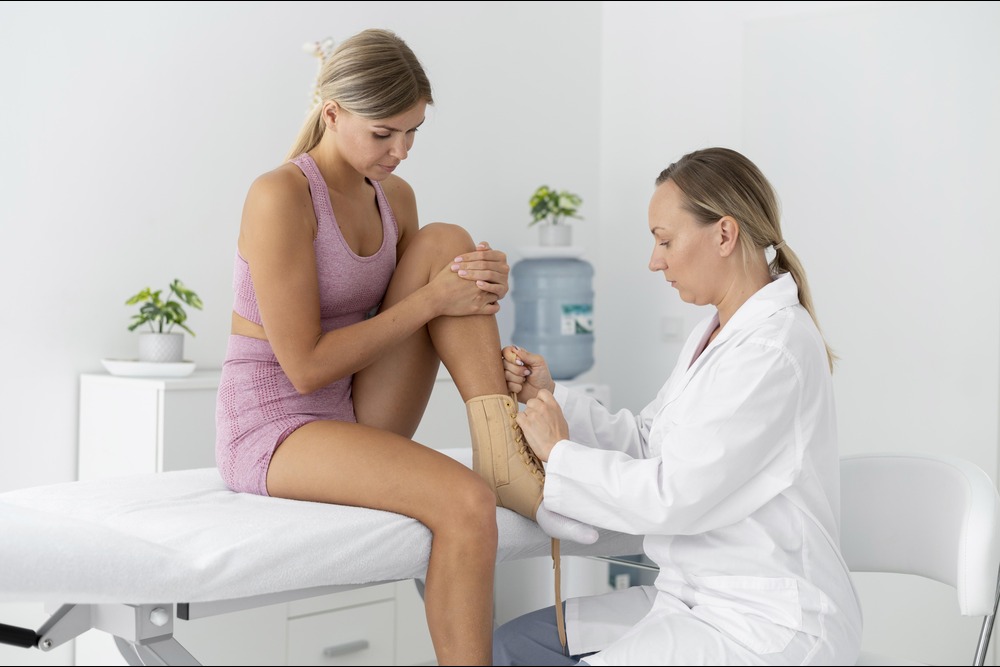
Don’t let arthritis dictate the terms of your life. Take a proactive step towards managing your joint pain and improving your mobility.

Ready to move more freely? Contact Dr. Laxmi’s Physio Clinic today for a comprehensive assessment and a personalized arthritis management plan.

Bounce Back Stronger: The Ultimate Guide to Physio

Bounce Back Stronger: The Ultimate Guide to Physio

Watching your child score a goal or hit a boundary is a moment of pure joy. Youth sports teach discipline, teamwork, and resilience. But with all the running, jumping, and tackling, injuries can, and often do, happen. When they do, the common advice is to “just rest it.” However, this approach can lead to a slow recovery and a higher risk of re-injury.

For young, growing bodies, a specialized approach is needed. This is where physiotherapy for sports injuries plays a game-changing role in helping young athletes bounce back safely and stronger than before.

Why Young Athletes Need Specialized Care

A child’s body isn’t just a smaller version of an adult’s. Their bones are still growing, and their muscles and ligaments are developing. An injury that might be minor for an adult can have a more significant impact on a child if not managed correctly. A physiotherapist understands these unique differences and tailors the recovery plan accordingly.

How Physiotherapy Helps Young Athletes Recover

A physiotherapist does much more than just treat the injury; they build a foundation for a healthier athletic future.

  1. Accurate Diagnosis and a Personalized Plan
    First, a skilled physiotherapist will conduct a thorough assessment to understand the exact nature of the injury. Based on this, they create a customized recovery roadmap that outlines specific goals and timelines, giving both the parent and the young athlete a clear path forward.
  2. Pain and Swelling Management
    Instead of relying solely on medication, physiotherapy uses techniques like ice/heat therapy, gentle movements, and manual therapy to effectively manage pain and reduce swelling. This promotes natural healing right from the start.
  3. Restoring Strength and Flexibility
    An injury often leads to muscle weakness and stiffness around the affected area. A physiotherapist designs a program of targeted exercises to safely rebuild strength, restore the full range of motion, and ensure the injured area can handle the demands of the sport.
  4. Correcting Biomechanics to Prevent Re-injury
    This is perhaps the most crucial benefit. Often, an injury is caused by an underlying issue—like poor running form, muscle imbalances, or incorrect technique. A physiotherapist identifies and corrects these faulty movement patterns, drastically reducing the risk of the same injury happening again.
  5. A Safe and Phased Return to Sport
    Returning to the game too soon is a common mistake that leads to setbacks. A physiotherapist guides the athlete through a gradual “return-to-play” protocol. They ensure the athlete can run, jump, and change direction confidently and pain-free before giving them the green light to compete.

Don’t Leave Recovery to Chance

An injury can be a frustrating and emotional experience for a young athlete. Professional guidance ensures they are not just healing, but also learning how to take better care of their bodies for the long run. Proper physiotherapy for sports injuries transforms a setback into a comeback.

Is your young athlete sidelined by an injury? Contact Dr. Laxmi’s Physio Clinic to get an expert assessment and a personalized plan to get them back in the game safely and confidently

For young, growing bodies, a specialized approach is needed. This is where physiotherapy for sports injuries plays a game-changing role in helping young athletes bounce back safely and stronger than before.

Why Young Athletes Need Specialized Care

A child’s body isn’t just a smaller version of an adult’s. Their bones are still growing, and their muscles and ligaments are developing. An injury that might be minor for an adult can have a more significant impact on a child if not managed correctly. A physiotherapist understands these unique differences and tailors the recovery plan accordingly.

How Physiotherapy Helps Young Athletes Recover

A physiotherapist does much more than just treat the injury; they build a foundation for a healthier athletic future.

  1. Accurate Diagnosis and a Personalized Plan
    First, a skilled physiotherapist will conduct a thorough assessment to understand the exact nature of the injury. Based on this, they create a customized recovery roadmap that outlines specific goals and timelines, giving both the parent and the young athlete a clear path forward.
  2. Pain and Swelling Management
    Instead of relying solely on medication, physiotherapy uses techniques like ice/heat therapy, gentle movements, and manual therapy to effectively manage pain and reduce swelling. This promotes natural healing right from the start.
  3. Restoring Strength and Flexibility
    An injury often leads to muscle weakness and stiffness around the affected area. A physiotherapist designs a program of targeted exercises to safely rebuild strength, restore the full range of motion, and ensure the injured area can handle the demands of the sport.
  4. Correcting Biomechanics to Prevent Re-injury
    This is perhaps the most crucial benefit. Often, an injury is caused by an underlying issue—like poor running form, muscle imbalances, or incorrect technique. A physiotherapist identifies and corrects these faulty movement patterns, drastically reducing the risk of the same injury happening again.
  5. A Safe and Phased Return to Sport
    Returning to the game too soon is a common mistake that leads to setbacks. A physiotherapist guides the athlete through a gradual “return-to-play” protocol. They ensure the athlete can run, jump, and change direction confidently and pain-free before giving them the green light to compete.

Don’t Leave Recovery to Chance

An injury can be a frustrating and emotional experience for a young athlete. Professional guidance ensures they are not just healing, but also learning how to take better care of their bodies for the long run. Proper physiotherapy for sports injuries transforms a setback into a comeback.

Is your young athlete sidelined by an injury? Contact Dr. Laxmi’s Physio Clinic to get an expert assessment and a personalized plan to get them back in the game safely and confidently.

The Painkiller Trap: Why Physio is Your Best Bet

The Painkiller Trap: Why Physio is Your Best Bet

When a sharp pain strikes your back or a joint begins to ache, what’s your first instinct? For many, it’s to reach into the medicine cabinet for a painkiller. It’s fast, it’s easy, and it offers quick relief. But is it the best solution for your body in the long run?

This brings us to a crucial debate for anyone dealing with persistent pain: physiotherapy vs painkillers. While one offers a temporary pause button for your discomfort, the other provides a permanent solution. Let’s break down why.

The Painkiller Promise: A Short-Term Fix

Painkillers, or analgesics, work by blocking the pain signals sent to your brain. They are incredibly effective at providing rapid, short-term relief, which can be necessary in cases of acute injury or immediately after surgery.

However, they come with significant downsides:

  • They Mask the Problem: A painkiller is like turning off a fire alarm while the fire is still burning. It doesn’t fix the underlying cause of your pain—be it a muscle imbalance, a weak core, or poor posture.
  • Risk of Side Effects: Long-term use of painkillers can lead to stomach issues, kidney problems, and other health complications.
  • Potential for Dependency: Over-reliance on medication can lead to a cycle where you need more pills to achieve the same effect.

The Physiotherapy Approach: A Long-Term Solution

Physiotherapy takes a completely different approach. A physiotherapist acts like a body detective, working to uncover the root cause of your pain instead of just silencing the symptoms.

Here’s how physiotherapy empowers you:

  • It Heals the Cause: Through a detailed assessment, a physiotherapist identifies the specific weaknesses, stiffness, or movement patterns causing your pain. They then create a personalized plan to correct these issues.
  • It’s an Active Approach: Physiotherapy involves targeted exercises, stretches, and manual therapy. This active participation strengthens your body, improves mobility, and makes you more resilient to future injuries.
  • It Educates and Empowers: A good physiotherapist teaches you about your body. You learn how to move correctly, improve your posture, and manage your condition independently, giving you control over your health.

The Real Difference: Physiotherapy vs. Painkillers

Factor

Painkillers

Physiotherapy

Goal

Mask the symptom (pain)

Heal the root cause

Approach

Passive (you take a pill)

Active (you participate in recovery)

Duration

Short-term, temporary relief

Long-term, sustainable results

Outcome

Pain often returns

Prevents future recurrence

Side Effect

Risk of health issues

Improved strength and mobility

Which One Should You Choose?

While painkillers can have a place in managing severe, acute pain under a doctor’s guidance, they are not a solution for chronic or recurring issues. For lasting relief that truly heals your body, physiotherapy is the undisputed winner.

Choosing physiotherapy is an investment in your long-term health. It’s about moving from a cycle of pain and pills to a future of strength, mobility, and freedom from discomfort.

Ready to stop masking the pain and start healing it? Contact Dr. Laxmi’s Physio Clinic today to discover a permanent solution to your pain.

5 Effortless Tips to Defeat Agonizing Neck Pain

5 Effortless Tips to Defeat Agonizing Neck Pain

Do you ever look up from your phone and feel a sharp, nagging pain in your neck and shoulders? You’re experiencing a modern-day epidemic known as “text neck.” That constant downward gaze puts immense strain on your spine, leading to stiffness, headaches, and chronic pain.

While it’s impossible to give up our phones, you don’t have to live with the discomfort. The solution lies in a few simple, yet powerful, neck pain physiotherapy tips that can counteract the daily strain and bring you lasting relief.

Why Does Looking at Your Phone Hurt Your Neck?

Your head is heavy! When you hold it in a neutral position, your neck muscles can support it easily. However, for every inch you tilt your head forward, you dramatically increase the pressure on your cervical spine. Over time, this leads to muscle strain, nerve irritation, and postural problems.

Here are 5 physiotherapist-approved tips to fight back against text neck.

1. Master the Chin Tuck

This is the single most effective exercise to relieve neck strain and retrain your posture.

  • How to do it: Sit or stand tall, looking straight ahead.
  • Gently glide your chin and head straight back, as if you’re making a double chin.
  • You should feel a stretch at the back of your neck.
  • Hold for 5 seconds, then relax.
  • Repeat 10 times, several times a day.

2. Squeeze Your Shoulder Blades (Scapular Retraction)

Hunching forward weakens the muscles in your upper back. This exercise strengthens them, helping to pull your shoulders back into a healthier position.

  • How to do it: Sit or stand with your arms by your sides.
  • Gently squeeze your shoulder blades together, as if you’re trying to hold a pencil between them.
  • Hold for 5-10 seconds, making sure not to shrug your shoulders up.
  • Release and repeat 10-15 times.

3. Open Your Chest with a Doorway Stretch

Constant slouching tightens your chest muscles, pulling your shoulders forward. This stretch helps to open them up.

  • How to do it: Stand in an open doorway and place your forearms on the frame, with your elbows slightly below shoulder height.
  • Step forward with one foot until you feel a gentle stretch across your chest.
  • Hold for 20-30 seconds.
  • Repeat 2-3 times.

4. Change How You Hold Your Phone

This is a preventative habit that makes a huge difference. Instead of looking down at your phone, bring your phone up to eye level. Prop your elbows on a table or use your other hand to support your device. This simple change keeps your neck in a neutral, happy position.

5. Take Frequent “Look Up” Breaks

Your neck muscles aren’t designed to hold one position for long periods. Set a timer or reminder to take a break every 20-30 minutes. During your break, simply look up, roll your shoulders back, and do a few chin tucks. This resets your posture and prevents stiffness from setting in.

Your Next Step to a Pain-Free Neck

By incorporating these neck pain physiotherapy tips into your daily routine, you can significantly reduce strain and improve your posture. However, if your pain is severe or persistent, it’s a sign you need professional guidance.

Don’t let text neck control your life. Contact Dr. Laxmi’s Physio Clinic for a personalized assessment and a targeted treatment plan to eliminate your neck pain for good!

Slouch No More: Your Ultimate Guide to Perfect Posture

Slouch No More: Your Ultimate Guide to Perfect Posture

Do you find yourself slumping over your desk, hunching over your phone, or feeling that familiar ache in your neck and shoulders at the end of the day? If so, you’re not alone. Our modern lifestyles have made poor posture a widespread problem, leading to chronic pain, fatigue, and even headaches.

While you might try to sit up straight when you remember, lasting change requires more than just willpower. This is where physiotherapy for posture correction comes in as a powerful, effective solution to retrain your body for the long term.

Why Does Bad Posture Happen?

Poor posture is often a result of muscle imbalances that develop over time. Certain muscles, like those in your chest and the front of your shoulders, become tight and shortened. Meanwhile, other muscles, particularly in your upper back and core, become weak and stretched out.

This imbalance pulls your body out of its natural alignment, causing that classic “slouched” look.

How a Physiotherapist Becomes Your Posture Coach

A physiotherapist doesn’t just tell you to “sit up straight.” They act as a detective to figure out why you’re slouching and then create a personalized plan to fix it. Here’s how they help:

  1. Detailed Postural Assessment
    Your journey begins with a thorough evaluation. A physiotherapist will analyze how you sit, stand, and move to identify specific muscle weaknesses, tightness, and imbalances that are contributing to your poor posture.
  2. Targeted Strengthening Exercises
    Once the weak muscles are identified, your physiotherapist will prescribe specific exercises to strengthen them. This typically includes targeting:
  • Core Muscles: A strong core is the foundation of good posture.
  • Upper Back Muscles: Strengthening these helps pull your shoulders back and down.
  • Glutes: Strong glutes help stabilize your pelvis and support your lower back.
  1. Stretching and Flexibility Routines
    Next, you need to address the tight muscles. Your physio will guide you through stretches designed to release tension in areas like your chest, shoulders, and hips. This allows your body to return to a more natural and relaxed alignment.
  2. Manual Therapy Techniques
    In some cases, a physiotherapist may use hands-on techniques like soft tissue massage or joint mobilization to release muscle knots, reduce stiffness, and improve the mobility of your spine.
  3. Ergonomic and Lifestyle Advice
    Perhaps one of the most valuable parts of physiotherapy for posture correction is the practical advice. Your therapist will teach you how to set up your workstation correctly, lift heavy objects safely, and maintain good posture during everyday activities—from driving to sleeping.

The Long-Term Benefits

Correcting your posture is about more than just looking better. With consistent physiotherapy, you can expect:

  • Reduced back, neck, and shoulder pain.
  • Fewer headaches.
  • Increased energy levels.
  • Improved confidence.

Don’t let poor posture dictate how you feel every day. It’s a correctable problem, and with the right guidance, you can stand taller and live pain-free.

Ready to straighten things out? Contact Dr. Laxmi’s Physio Clinic today for a personalized posture assessment and start your journey to a healthier, more confident you!

Recover Faster: Post-Surgery Physiotherapy Benefits

Recover Faster: Post-Surgery Physiotherapy Benefits

After an injury or surgery, most of us think that rest is the only thing we need. While rest is important, the journey to a full recovery begins much sooner than you might think. Waiting too long to start moving can lead to stiffness, weakness, and a longer, more frustrating healing process. This is where early physiotherapy becomes essential.

Starting physiotherapy soon after your procedure is one of the most powerful steps you can take to ensure a smooth and speedy recovery. Let’s explore the crucial post-surgery physiotherapy benefits and why you shouldn’t delay your first appointment.

1. Manages Pain and Reduces Swelling

Immediately after surgery or injury, pain and swelling are your body’s natural response. While medication can help, controlled movement guided by a physiotherapist is a game-changer. Early, gentle exercises improve blood circulation, which helps flush out inflammatory substances from the affected area, naturally reducing both swelling and pain.

2. Restores Mobility and Prevents Stiffness

Have you ever heard the phrase “motion is lotion”? It’s true! When you keep a joint still for too long, the surrounding muscles and tissues can become stiff and tight, severely limiting your range of motion. Early physiotherapy introduces safe, specific movements that prevent this from happening, ensuring your joints remain flexible and functional.

3. Prevents Excessive Scar Tissue Formation

As your body heals, it forms scar tissue. If this tissue builds up excessively, it can become hard and restrictive, limiting movement and causing pain. Physiotherapists use techniques like massage and targeted stretching to ensure the scar tissue forms in a more flexible, organized way, preventing long-term complications.

4. Rebuilds Strength Safely and Effectively

Muscles around an injured or surgical site can weaken significantly (a process called atrophy) due to disuse. A physiotherapist creates a tailored exercise program that starts gently and progressively builds strength in the supporting muscles. This is crucial for protecting the repaired area and preventing re-injury. Attempting to do this on your own can often lead to setbacks.

5. Speeds Up Your Return to Daily Life

Ultimately, all these post-surgery physiotherapy benefits lead to one primary goal: getting you back to your life faster. By effectively managing pain, improving mobility, and rebuilding strength, physiotherapy accelerates the overall healing timeline. Whether you want to get back to playing sports, your job, or simply walking without pain, early physiotherapy is your fastest and safest route.

Don’t Delay Your Recovery

Think of physiotherapy not as a final step, but as the first step in your active recovery. The sooner you begin, the better your outcome will be. It provides you with the expert guidance, confidence, and a clear roadmap needed to heal properly.

If you’ve recently had surgery or sustained an injury, don’t wait for problems to arise. Contact Dr. Laxmi’s Physio Clinic to schedule an early assessment and unlock the full benefits of post-surgery physiotherapy.

7 Life-Changing Back Pain Relief Exercises at Home

7 Back Pain Relief Exercises at Home: Physio-Approved

Are you tired of that nagging ache in your back that just won’t go away? You’re not alone. Millions of people suffer from back pain, often caused by long hours of sitting, poor posture, or a sedentary lifestyle. While reaching for a painkiller might seem like a quick fix, it doesn’t address the root cause. The real secret to lasting comfort lies in movement.

Fortunately, you don’t need a gym membership to find relief. Here are 7 expert-approved back pain relief exercises at home that can help you strengthen your back, improve flexibility, and say goodbye to discomfort for good.

1. Knee-to-Chest Stretch

This simple stretch is fantastic for relieving tension in the lower back and hips. It gently elongates the lumbar spine, providing immediate relief.

  • How to do it: Lie on your back with your knees bent and feet flat on the floor.
  • Gently pull one knee towards your chest, holding it with both hands for 20-30 seconds. You should feel a comfortable stretch in your lower back.
  • Release and repeat with the other leg.
  • For a deeper stretch, pull both knees to your chest at the same time.
  • Perform 3-5 repetitions on each side.

2. Cat-Cow Stretch (Marjaryasana-Bitilasana)

A classic yoga pose, the Cat-Cow is excellent for improving spine mobility and relieving tension from your neck to your tailbone.

  • How to do it: Start on your hands and knees, with your wrists directly under your shoulders and knees under your hips.
  • Cow Pose: Inhale as you drop your belly towards the floor, lifting your chest and tailbone to the ceiling.
  • Cat Pose: Exhale as you round your spine upwards, tucking your chin to your chest and pulling your belly button in.
  • Continue flowing between these two poses for 10-15 repetitions.

3. Bird-Dog

This is a powerful exercise for improving stability in your core and lower back, which is crucial for preventing future pain.

  • How to do it: Start on your hands and knees in the same tabletop position as Cat-Cow.
  • Engage your core muscles to keep your back flat.
  • Simultaneously extend your right arm straight forward and your left leg straight back.
  • Hold for 3-5 seconds, then slowly return to the starting position.
  • Repeat on the other side (left arm, right leg). This is one rep.
  • Aim for 10-12 reps.

4. Glute Bridge

Weak glutes often contribute to lower back pain. The bridge strengthens your glutes and hamstrings, providing better support for your spine.

  • How to do it: Lie on your back with your knees bent, feet flat on the floor hip-width apart, and arms by your sides.
  • Squeeze your glutes and lift your hips off the floor until your body forms a straight line from your shoulders to your knees.
  • Hold for 5 seconds, then slowly lower your hips back down.
  • Repeat 12-15 times.

5. Pelvic Tilt

This is a subtle but incredibly effective exercise for activating deep core muscles and relieving lower back stiffness.

  • How to do it: Lie on your back with your knees bent and feet flat.
  • Gently flatten your back against the floor by tightening your abdominal muscles and tilting your pelvis upwards slightly.
  • Hold for 5-10 seconds, then relax.
  • Repeat 10-15 times.

6. Partial Crunches

Forget full sit-ups, which can strain your back. Partial crunches strengthen your core without putting unnecessary pressure on your spine.

  • How to do it: Lie on your back with knees bent and feet flat. Cross your arms over your chest or place your hands behind your head.
  • Tighten your stomach muscles and lift your head and shoulders off the floor.
  • Hold for a moment, then slowly lower back down.
  • Avoid using your neck to pull yourself up.
  • Perform 10-15 repetitions.

7. Child’s Pose (Balasana)

This resting pose is a perfect way to end your routine. It gently stretches the entire back, shoulders, and hips, promoting relaxation and reducing stress.

  • How to do it: Start on your hands and knees.
  • Sit back on your heels, then fold forward, resting your forehead on the floor.
  • Extend your arms in front of you or rest them alongside your body.
  • Breathe deeply and hold for 30-60 seconds.

Your Path to a Pain-Free Back

Incorporating these back pain relief exercises at home into your daily routine can make a world of difference. Remember to move slowly and listen to your body—never push through sharp pain.

However, if your back pain is severe or persistent, it’s crucial to seek professional guidance. A qualified physiotherapist can provide a personalized treatment plan to address the specific cause of your pain.

Ready to take the next step? Contact Dr. Laxmi’s Physio Clinic today for a comprehensive assessment and a tailored recovery plan to get you back to living life pain-free!

Radial Nerve Palsy

 Radial Nerve Palsy – What You Need to Know!
👩‍⚕️ Written by: Dr. Laxmi Gurumukhani
Jay Neuro Care & Physiotherapy Clinic
📍 G 10-11, Carlton Square, Kalanala, Bhavnagar, Gujarat
📞 989855080 | 🌐 drlaxmiphysio.com
🤔 Radial Nerve Palsy શું છે?
Radial nerve એ હાથનો એક મોટો nerve છે. આ nerve આપણને હાથ ઉંચો કરવા, કાંડુ (wrist) હલાવવા, આંગળીઓ સીધી કરવા મદદ કરે છે.
👉 જો આ nerve દબાય જાય, ખેંચાય જાય કે ઈજા થાય, તો તેને કહેવામાં આવે છે Radial Nerve Palsy
🛑 Symptoms / લક્ષણો
જો radial nerve કામ ન કરે તો:
•✋ હાથ કાંડા થી નીચે લટકી જાય (👉 “Wrist Drop”)
•✋ આંગળીઓ સીધી ન થાય
•🤲 હાથ મા ખાલી/સૂનકાર લાગે
•💪 હાથની શક્તિ ઘટે
⚡ Common Causes / કારણો
•🛏️ લાંબા સમય સુધી હાથ પર સૂઈ જવું (Sleep palsy)
•💉 ખભા કે હાથ પર injection પછી nerve દબાવું
•🤕 Accident / fracture પછી nerve દબાઈ જવું
•📦 Weight / Pressure લાંબા સમય સુધી nerve પર પડવું
🩺 Treatment / સારવાર
Good news ✅: Radial nerve palsy ઘણી વાર physiotherapy થી સારી થઈ જાય છે!
🔹 1. Physiotherapy Treatment
•✋ Splint/Brace: હાથને સીધું રાખવા માટે
•🏋️‍♀️ Exercises:
•Wrist extension exercise
•Finger stretching
•Nerve gliding
•💡 Electrical stimulation (machineથી nerve જાગૃત કરવી)
•👐 Manual therapy + strengthening
🔹 2. Lifestyle Tips
•લાંબા સમય સુધી હાથ પર સૂવું નહીં
•Regular exercise કરવી
•જો accident/fracture હોય તો proper care લેવું
🧘‍♀️ Simple Home Exercises (Under Guidance)
1️⃣ હાથને table પર રાખો, wrist ને ધીમે ધીમે ઉપર-નીચે હલાવો
2️⃣ આંગળીઓ સીધી-વાંકી કરો
3️⃣ Soft ball દબાવો અને છોડો
🌼 Conclusion
Radial nerve palsy ડરવાની બાબત નથી. ✅
સમયસર physiotherapy + regular exercise થી patient ફરી normal life જીવી શકે છે.
📞 Contact Us
👉 જો તમને કે તમારા family member ને Radial Nerve Palsy ના symptoms લાગે તો, તરત physiotherapy expert ને મળો.
👩‍⚕️ Dr. Laxmi Gurumukhani
Jay Neuro Care & Physiotherapy Clinic
📍 G 10-11, Carlton Square, Kalanala, Bhavnagar, Gujarat
📞 989855080
🌐 drlaxmiphysio.com
#RadialNervePalsy #PhysiotherapyBhavnagar #WristDropTreatment #NerveCare #JayNeuroCare

OSTEOARTHRITIS

ઘૂંટણના દુઃખાવા પર વિસ્તૃત માહિતી – કારણ, સારવાર

પરિચય
ઘૂંટણ એ આપણા શરીરનું સૌથી મોટું અને મહત્વપૂર્ણ જોડાણ છે. આપણે રોજિંદા જીવનમાં ઊભા રહેવા, ચાલવા, બેઠા થવા, સીડી ચઢવા અને ઊંચા નીચા કામ કરવા માટે ઘૂંટણ પર આધાર રાખીએ છીએ. જ્યારે આ જોડાણમાં દુઃખાવો શરૂ થાય છે ત્યારે રોજિંદા કામકાજમાં બહુ તકલીફ થતી હોય છે.

ઘૂંટણમાં દુઃખાવાનો અનુભવ દરેક ઉંમરના લોકોમાં થઈ શકે છે, પણ મુખ્યત્વે વૃદ્ધ લોકો માં અને વધુ વજન ધરાવનારા વ્યક્તિઓમાં એ વધુ જોવા મળે છે.


ઘૂંટણના દુઃખાવાના મુખ્ય કારણો

1. ઓસ્ટિઓઆર્થ્રાઇટિસ (Osteoarthritis)
આ ઘૂંટણના હાડકાં વચ્ચેના કાર્ટિલેજ ઘસાઈ જાય છે, જેના કારણે હાડકાં સીધા ઘસી દુઃખાવો થતો હોય છે. સામાન્ય રીતે વૃદ્ધાવસ્થા માં જોવા મળે છે.

2. લિગામેન્ટ ઈન્જરી
ઘૂંટણમાં ઘણા લિગામેન્ટ હોય છે જેમ કે ACL, PCL, MCL વગેરે. જો રમતી વખતે કે અકસ્માતમાં આ લિગામેન્ટ ખેંચાઈ જાય કે ફાટી જાય તો ઘૂંટણમાં તીવ્ર દુઃખાવો થાય છે.

3. મેનિસ્કસ ઈન્જરી
મેનિસ્કસ
સામાન્ય રીતે ઘુંટણ માં બે મેનીસ્કસ હોય છે જે ઘુંટણ ને વાળતાં ફાટી જાય તો ઘૂંટણ લાકડા જેવા કડક થઈ જાય છે.

4. પેટેલોફેમોરલ પેઇન સિન્ડ્રોમ
આ મોટા ભાગે યુવાઓમાં જોવા મળે છે. ઘૂંટણ ના આગળ ના ભાગમાં દુઃખાવો થાય છે ખાસ કરીને સીડી ચઢતાં કે લાંબા સમય સુધી બેઠા રહેવાથી તીવ્ર દુઃખાવો થાય છે.

5. ઘૂંટણ પર વધારે ભાર પડવો
વધારે વજન ધરાવવું, ઊંચકાવાની આદત, વધારે ઊભા રહેવું કે ઘૂંટણ વાળીને બેસવાની આદતથી પણ ઘૂંટણ દુખી શકે છે.


દુઃખાવાના લક્ષણો શું હોઈ શકે?


ઘૂંટણમાં સતત કે સમયાંતરે દુઃખાવું

પગ વાળવામાં કે સીધું કરવાનું મુશ્કેલ થવું

સોજો દેખાવો

ઘૂંટણમાંથી અવાજ આવવો (‘ખટ’ ‘ખટક’)

ચાલતી વખતે ઘૂંટણ લૂઝ લાગવું


ફિઝિયોથેરાપી કેવી રીતે ફાયદાકારક છે?


ફિઝિયોથેરાપી એ દવાઓ અને ઓપરેશન વગરની સારવાર પદ્ધતિ છે. યોગ્ય કસરતો અને સાધનો દ્વારા દુઃખાવાને ઘટાડવામાં અને ઘૂંટણ ના હલન ચલન માં સુધારવામાં મદદરૂપ બને છે.

મુખ્ય ફિઝિયોથેરાપી પગલાં:

નિયમીત કસરતો:
ખાસ ઘૂંટણ માટેની કસરતો જે પગના સ્નાયુઓ મજબૂત કરે છે. જેમ કે ક્વાડ્રિસેપ્સ સેટ, સ્ટ્રેઇટ લેગ રેઇઝ, હેમસ્ટ્રિંગ સ્ટ્રેચ વગેરે.

ઇલેક્ટ્રોથેરાપી:
જેવી કે TENS, IFT, અલ્ટ્રાસાઉન્ડ થેરાપી જે દુઃખાવો અને સોજો ઘટાડવામાં મદદરૂપ થાય છે.

હોટ અને કોલ્ડ પેક:
હાડકાં અને મસલ્સ માટે આરામદાયક હોય છે. સોજો હોય ત્યારે કોલ્ડ પેક અને દુઃખાવો હોય ત્યારે હોટ પેક ઉપયોગી છે.

ગેટ ટ્રેઇનિંગ અને બેલેન્સ ટ્રેનિંગ:
ચાલવામાં અનિયમિતતા હોય તો ચાલવાની રીત સુધારવી અને સંતુલન જાળવવા તાલીમ આપવી.

અન્ય ઘ્યાન રાખવાં જેવી બાબતો

* વજન ઓછું કરવું – દરેક કિલો વધારાના વજનથી ઘૂંટણ પર વધારે દબાણ પડે છે.

*બેઠા બેઠા પગ ઊંચા કરવાનાં વ્યાયામ કરવો.

*લાંબા સમય સુધી ઊભા ન રહેવું.

*સીડી ચઢવા-ઉતરવામાં કાળજી રાખવી.

*આરામ અને પુરતી ઊંઘ લેવી.

ડૉક્ટર કે ફિઝિયોથેરાપીસ્ટનો સંપર્ક ક્યારે કરવો?

*દુઃખાવો સતત વધતો જાય

*ઘૂંટણ માં સોજા નું વધતું પ્રમાણ

*ચાલવામાં મુશ્કેલીઓ પડવી

*દુઃખાવા ના લીધે ઊંઘ ન આવવી

*ઘરેલું ઉપાયો માટે 2-3 અઠવાડિયા પછી પણ ફર્ક ન પડે

ઘૂંટણનું સ્વાસ્થ્ય લાંબા સમય સુધી જાળવવું શક્ય છે જો આપણે સમયસર કાળજી લઈએ. ફિઝિયોથેરાપી એ ઘૂંટણના દુઃખાવાની અસરકારક અને ઓપરેશન વગરની સારવાર છે. સતત કસરત, યોગ્ય ખોરાક, વજન નિયંત્રણ અને નિષ્ણાતની સલાહથી ઘૂંટણ સ્વસ્થ રહી શકે છે.

તમે આજે કાળજી લો, જેથી કરી ભવિષ્યમાં ચાલવામાં મુશ્કેલી ન પડે!