
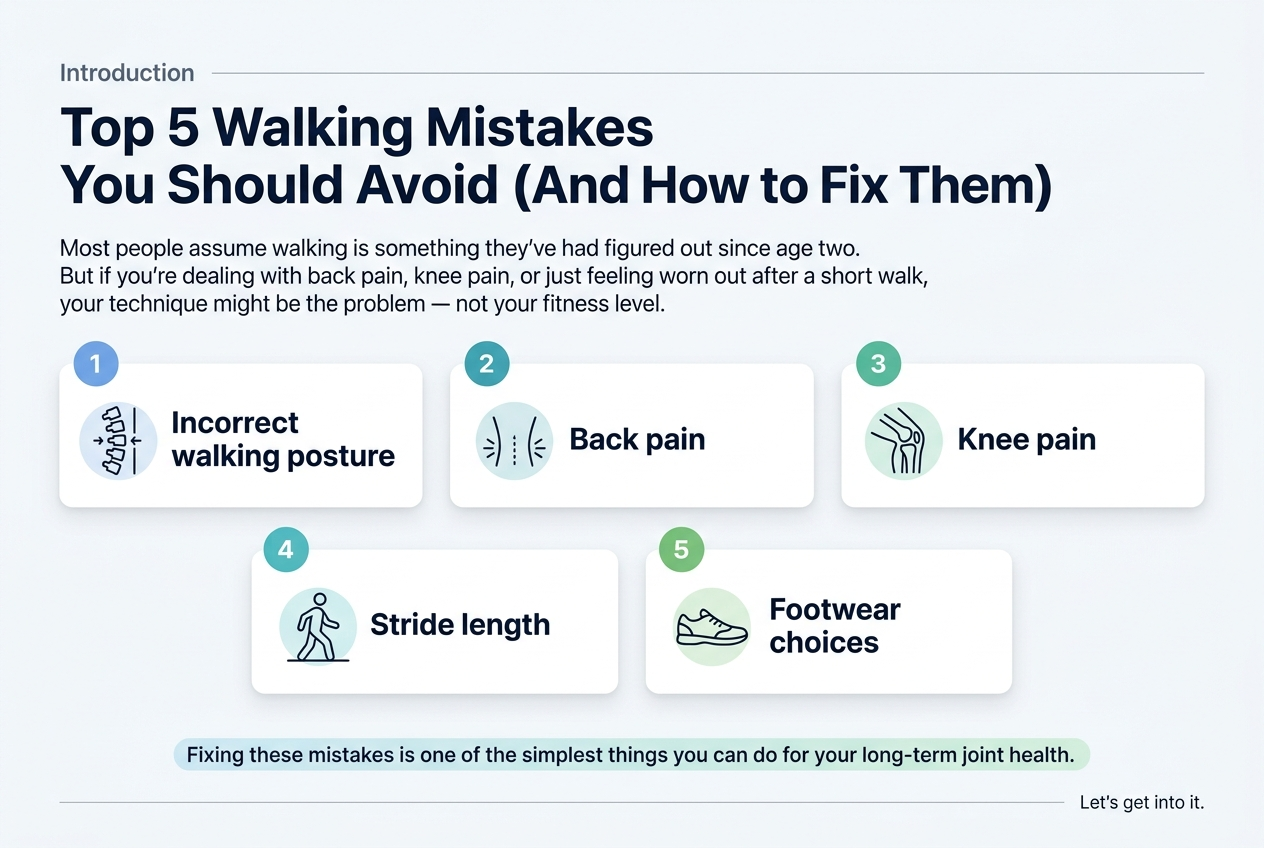
Top 5 Walking Mistakes You Should Avoid (And How to Fix Them)
Most people assume walking is something they’ve had figured out since age two. But if you’re dealing with back pain, knee pain, or just feeling worn out after a short walk, your technique might be the problem — not your fitness level.
This guide is for anyone who walks daily for health, uses walking as low-impact exercise, or has been told by a physio to “just walk more” without being shown how to do it right.
We’ll break down the most common walking mistakes people make without even realizing it — starting with incorrect walking posture, which is the root cause behind a surprising number of aches and injuries. We’ll also look at how stride length and footwear choices quietly work against your joints over time.
Whether you’re recovering from an injury or just want to get more out of your daily steps, fixing these mistakes is one of the simplest things you can do for your long-term joint health.
Let’s get into it.
Poor Posture While Walking
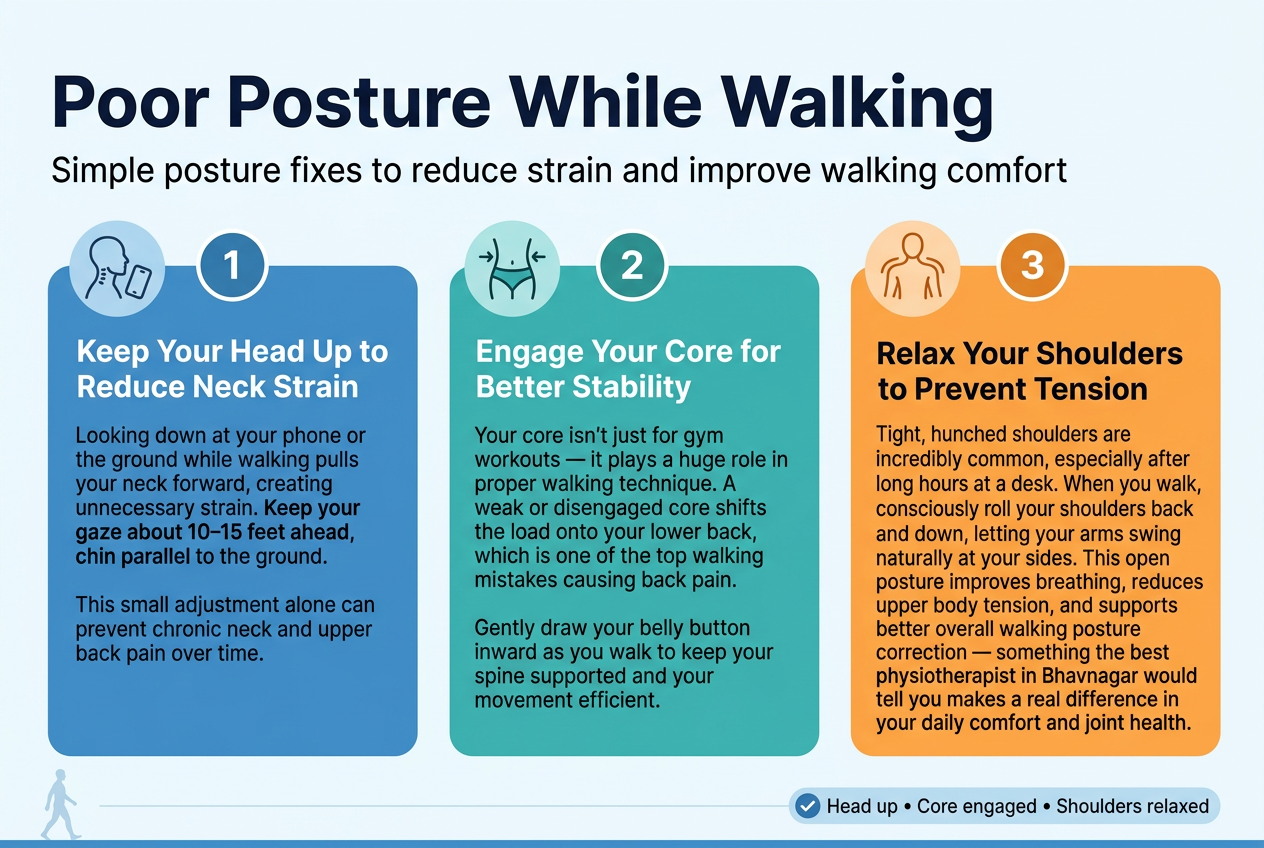
Keep Your Head Up to Reduce Neck Strain
Looking down at your phone or the ground while walking pulls your neck forward, creating unnecessary strain. Keep your gaze about 10–15 feet ahead, chin parallel to the ground. This small adjustment alone can prevent chronic neck and upper back pain over time.
Engage Your Core for Better Stability
Your core isn’t just for gym workouts — it plays a huge role in proper walking technique. A weak or disengaged core shifts the load onto your lower back, which is one of the top walking mistakes causing back pain. Gently draw your belly button inward as you walk to keep your spine supported and your movement efficient.
Relax Your Shoulders to Prevent Tension
Tight, hunched shoulders are incredibly common, especially after long hours at a desk. When you walk, consciously roll your shoulders back and down, letting your arms swing naturally at your sides. This open posture improves breathing, reduces upper body tension, and supports better overall walking posture correction — something the best physiotherapist in Bhavnagar would tell you makes a real difference in your daily comfort and joint health.
Taking the Wrong Stride Length
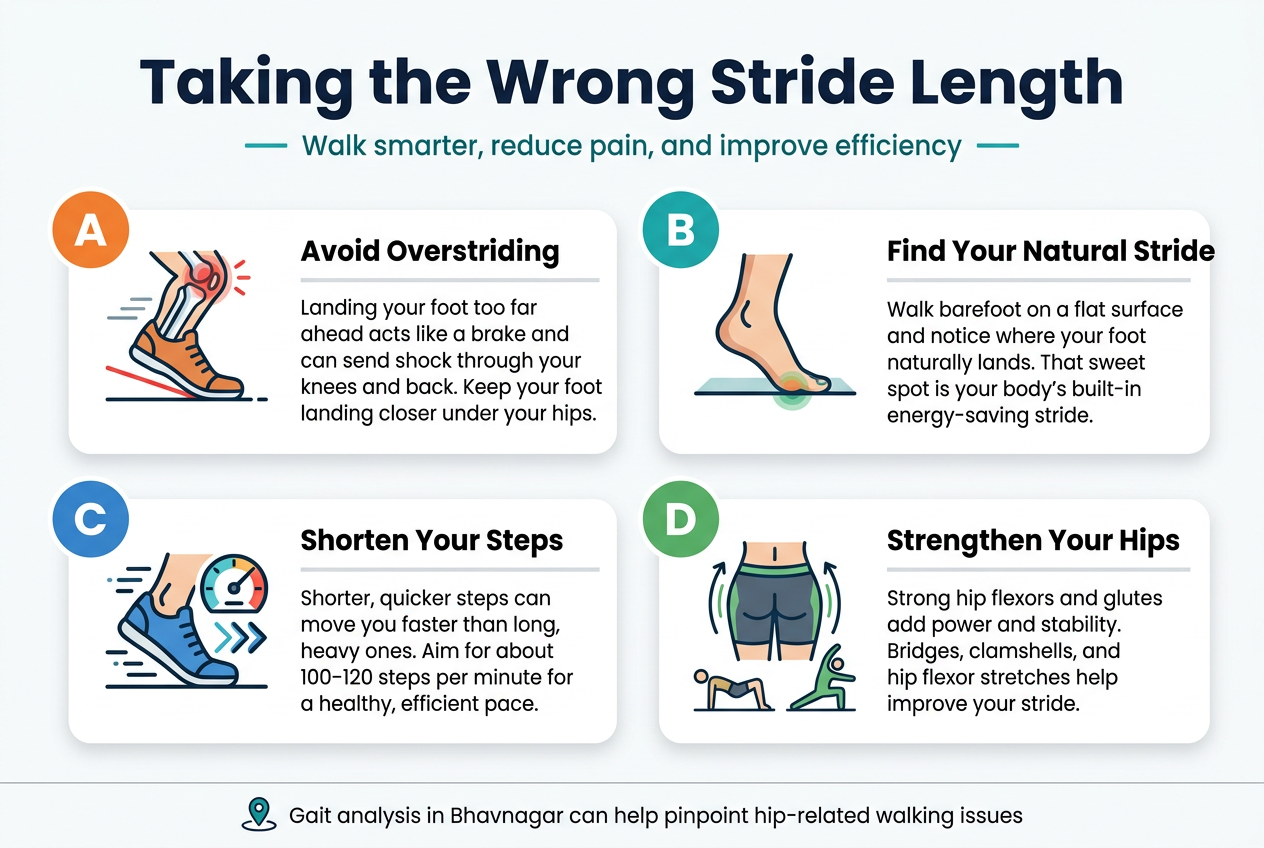
A. Avoid Overstriding to Protect Your Joints
Overstriding — landing your foot way out ahead of your body — is one of the most common walking mistakes causing knee pain and back pain. When your heel strikes too far forward, it acts like a brake, sending shock straight through your joints. Keep your foot landing closer under your hips.
B. Find Your Natural Stride for Maximum Efficiency
Your natural stride is the one that feels effortless and rhythm. A simple trick: walk barefoot on a flat surface and pay attention to where your foot naturally lands. That sweet spot is your body’s built-in, energy-saving stride length — don’t fight it.
C. Shorten Your Steps to Boost Your Speed
Shorter, quicker steps actually move you faster than long, heavy ones. Think about it like a car’s RPM — small, rapid rotations beat slow, grinding ones. Cadence (steps per minute) matters more than stride length. Aim for around 100–120 steps per minute for a healthy, efficient pace.
D. Strengthen Your Hips for a More Powerful Stride
Weak hips are a hidden culprit behind poor walking technique. Strong hip flexors and glutes give your stride real power and stability. Simple moves like bridges, clamshells, and hip flexor stretches go a long way — and a gait analysis in Bhavnagar can pinpoint exactly where your hips are letting you down.
Wearing the Wrong Footwear
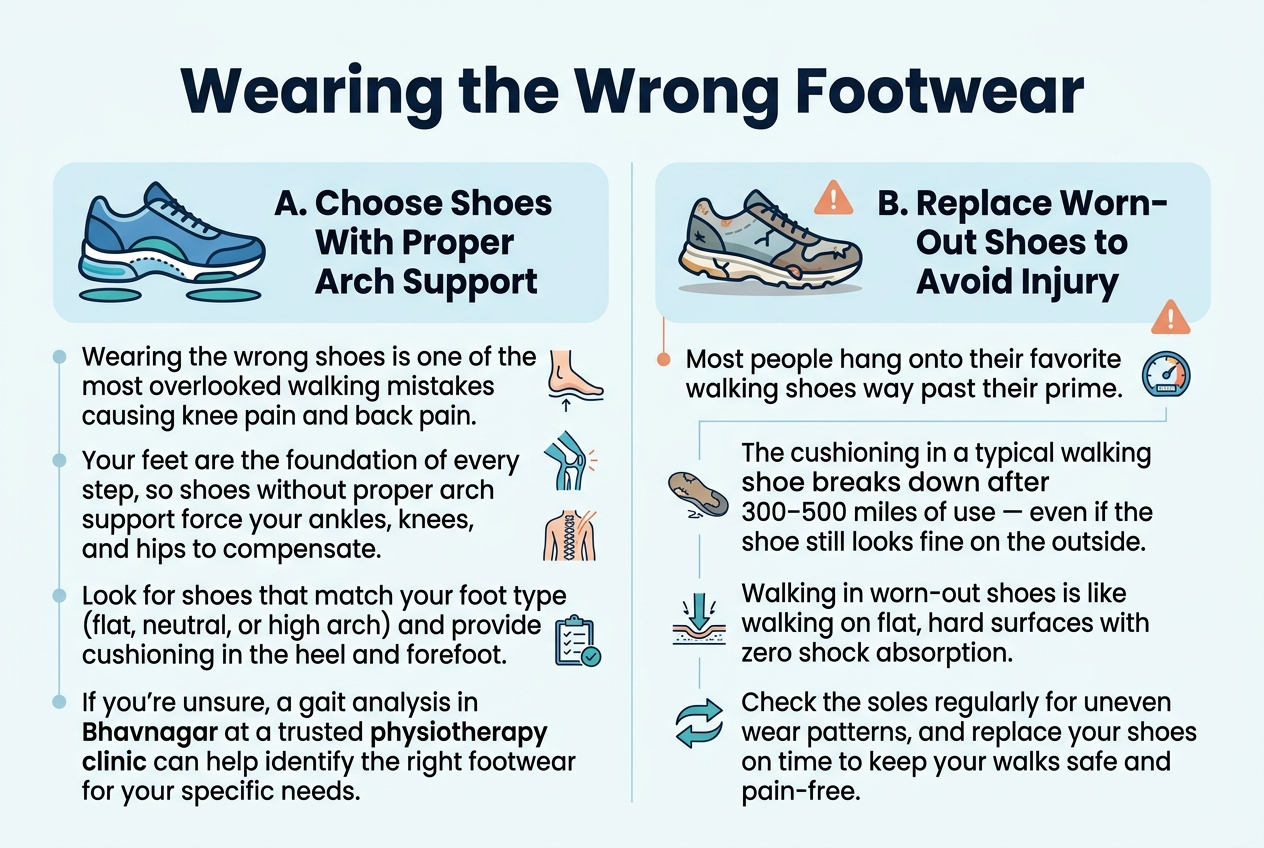
A. Choose Shoes With Proper Arch Support
Wearing the wrong shoes is one of the most overlooked walking mistakes causing knee pain and back pain. Your feet are the foundation of every step, so shoes without proper arch support force your ankles, knees, and hips to compensate — leading to discomfort and long-term joint damage. Look for shoes that match your foot type (flat, neutral, or high arch) and provide cushioning in the heel and forefoot. If you’re unsure, a gait analysis in Bhavnagar at a trusted physiotherapy clinic can help identify the right footwear for your specific needs.
B. Replace Worn-Out Shoes to Avoid Injury
Most people hang onto their favorite walking shoes way past their prime. The cushioning in a typical walking shoe breaks down after 300–500 miles of use — even if the shoe still looks fine on the outside. Walking in worn-out shoes is like walking on flat, hard surfaces with zero shock absorption, putting extra stress on your joints with every step. Check the soles regularly for uneven wear patterns, and replace your shoes on time to keep your walks safe and pain-free.
Neglecting Warm-Up and Cool-Down
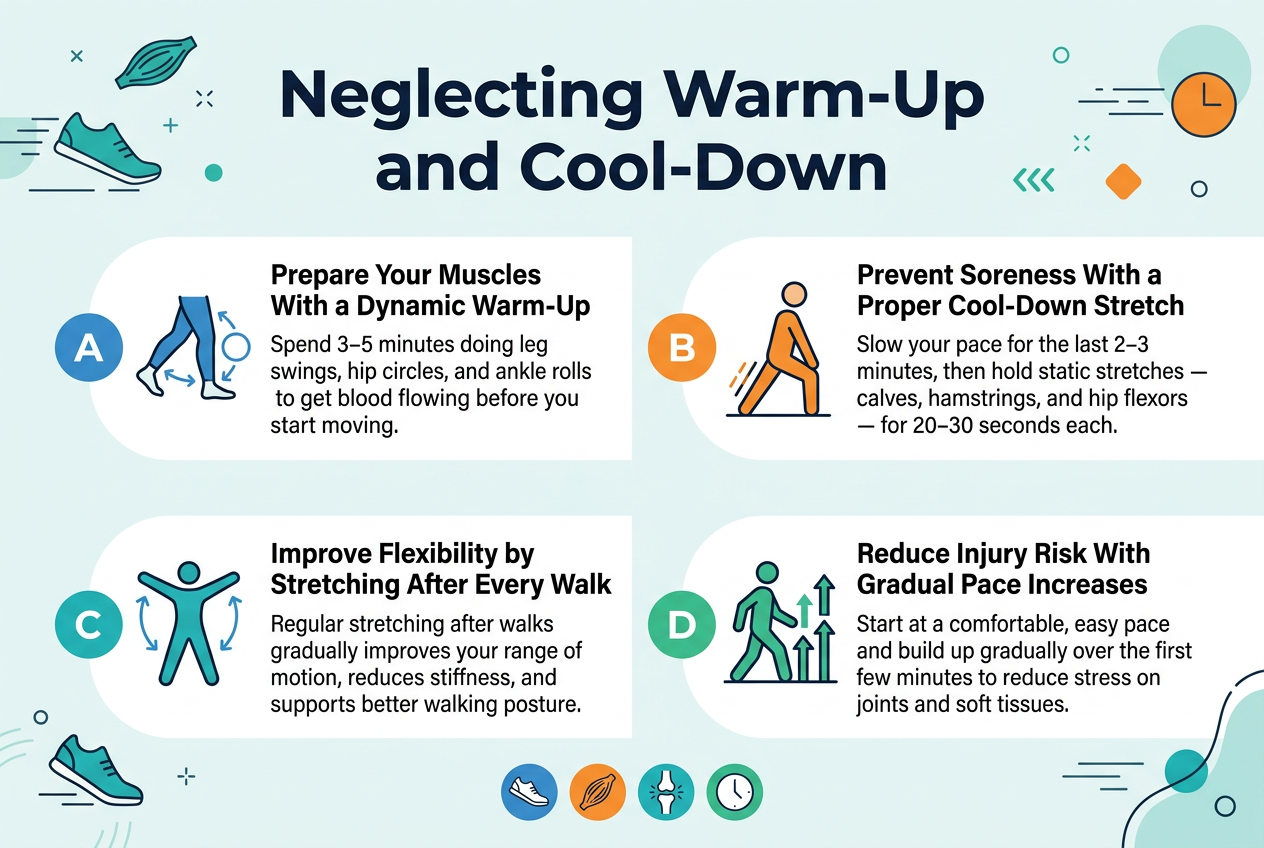
A. Prepare Your Muscles With a Dynamic Warm-Up
Jumping straight into a walk without warming up is one of the most common walking mistakes people make. Spend 3–5 minutes doing leg swings, hip circles, and ankle rolls to get blood flowing into your muscles and joints before you start moving.
B. Prevent Soreness With a Proper Cool-Down Stretch
Stopping abruptly after a brisk walk can leave your muscles tight and sore the next day. Slow your pace for the last 2–3 minutes, then hold static stretches — calves, hamstrings, and hip flexors — for 20–30 seconds each to help your body recover properly.
C. Improve Flexibility by Stretching After Every Walk
Post-walk stretching is the easiest habit to skip, yet it delivers real results over time. Regular stretching after walks gradually improves your range of motion, reduces stiffness, and supports better walking posture — which is especially helpful if you’re dealing with back pain or knee pain.
D. Reduce Injury Risk With Gradual Pace Increases
Going from zero to a fast pace immediately puts unnecessary stress on your joints and soft tissues. Start at a comfortable, easy pace and build up gradually over the first few minutes. This simple shift in proper walking technique can dramatically cut down your risk of walking mistakes causing knee pain or muscle strains.
Ignoring Breathing Techniques
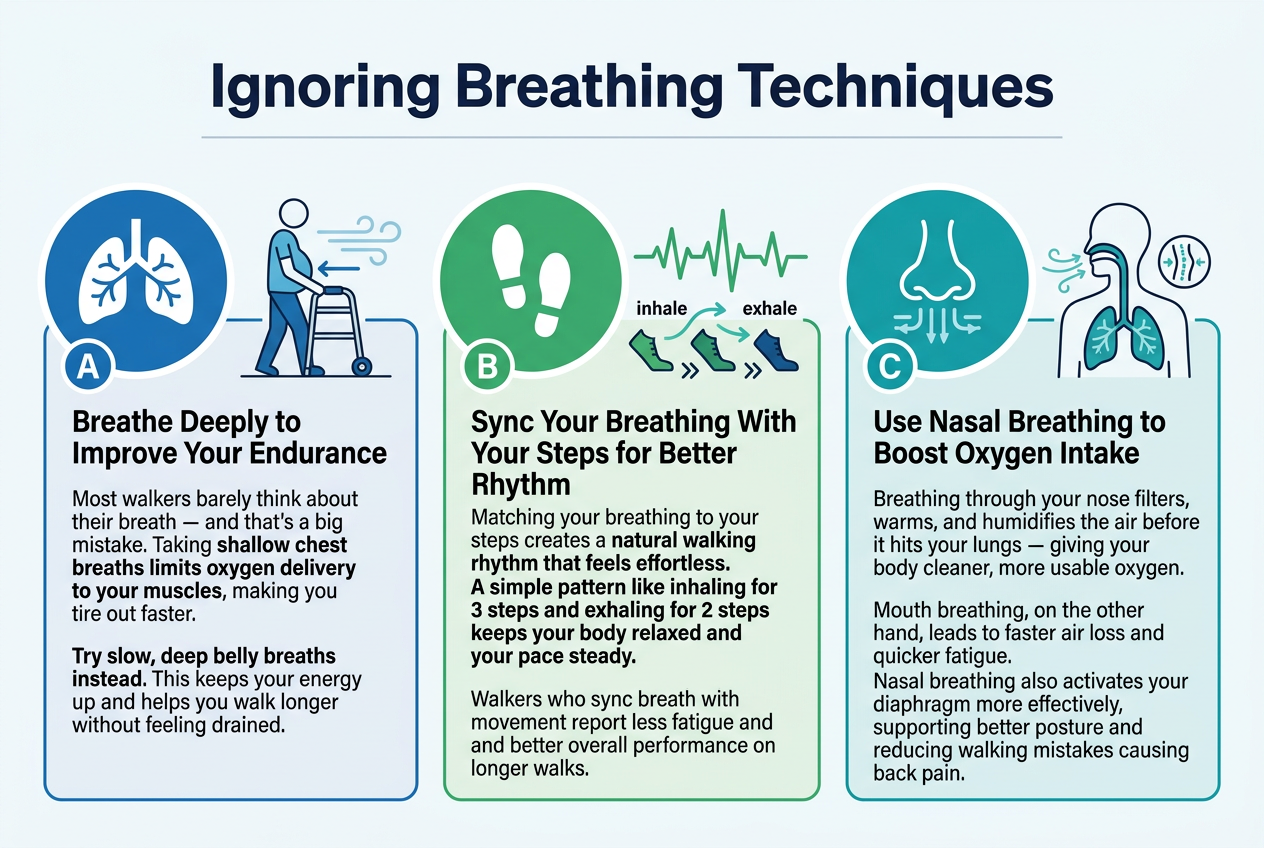
A. Breathe Deeply to Improve Your Endurance
Most walkers barely think about their breath — and that’s a big mistake. Taking shallow chest breaths limits oxygen delivery to your muscles, making you tire out faster. Try slow, deep belly breaths instead. This keeps your energy up and helps you walk longer without feeling drained.
B. Sync Your Breathing With Your Steps for Better Rhythm
Matching your breathing to your steps creates a natural walking rhythm that feels effortless. A simple pattern like inhaling for 3 steps and exhaling for 2 steps keeps your body relaxed and your pace steady. Walkers who sync breath with movement report less fatigue and better overall performance on longer walks.
C. Use Nasal Breathing to Boost Oxygen Intake
Breathing through your nose filters, warms, and humidifies the air before it hits your lungs — giving your body cleaner, more usable oxygen. Mouth breathing, on the other hand, leads to faster air loss and quicker fatigue. Nasal breathing also activates your diaphragm more effectively, supporting better posture and reducing walking mistakes causing back pain.
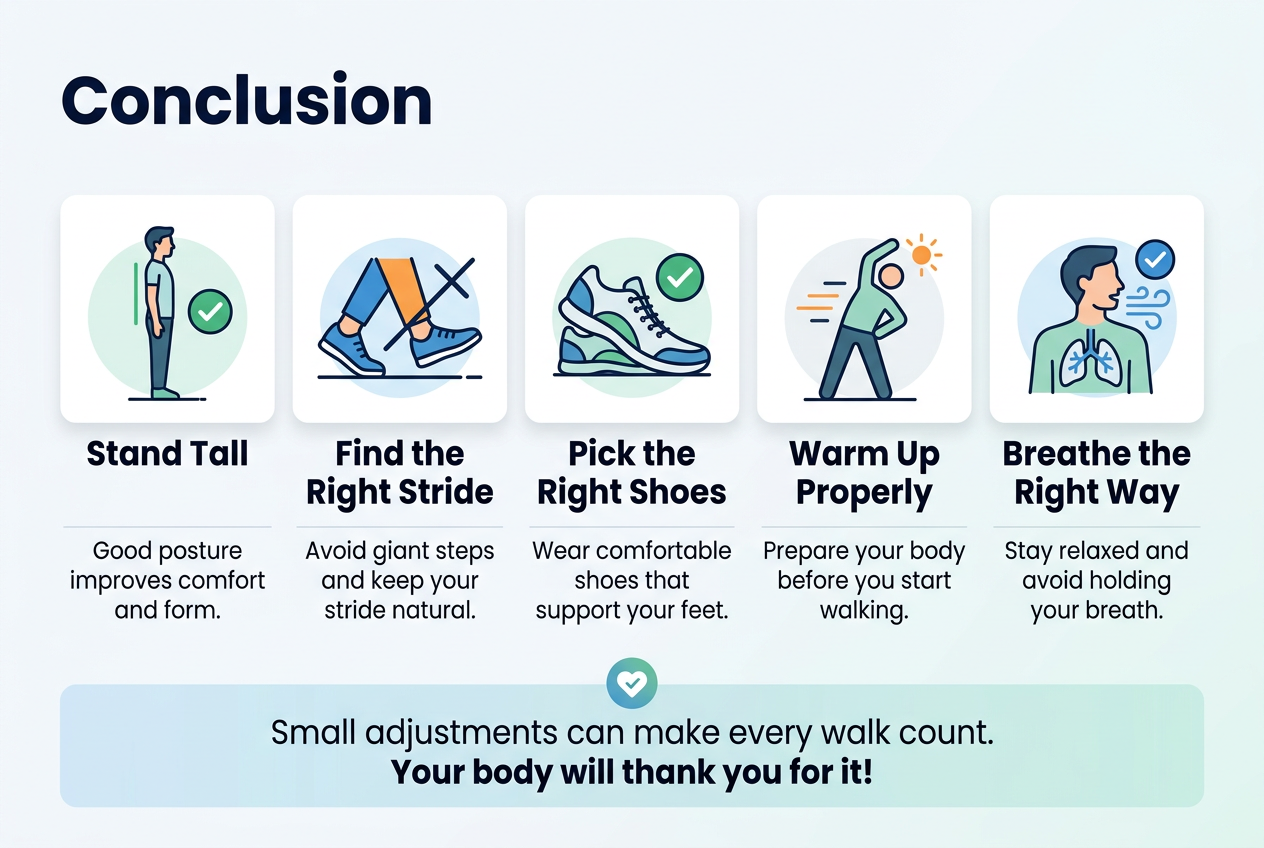
Walking is one of the simplest forms of exercise, but small habits can make a big difference in how effective and safe it is for your body. From standing tall and finding the right stride length to picking the right shoes, warming up properly, and breathing the right way — these small tweaks can completely transform your walking routine and help you avoid unnecessary pain or injury.
So next time you head out for a walk, take a moment to check in with yourself. Are you slouching? Taking giant steps? Holding your breath? A few simple adjustments can go a long way in making every walk count. Your body will thank you for it!